Awkward Corner Ideas: Choose Storage, Seating or a Quiet Display
As an Amazon Associate I earn from qualifying purchases. This article contains affiliate links.
An awkward corner can be difficult because it is not truly spare space. It may sit beside a door, connect two routes or contain a vent you still need to reach. Filling it with the smallest available shelf can make the problem worse.
Choose the function first: storage, seating, display or open circulation. Then compare a few arrangements with the same corner. An empty patch of floor is a valid result when the room already has everything it needs.
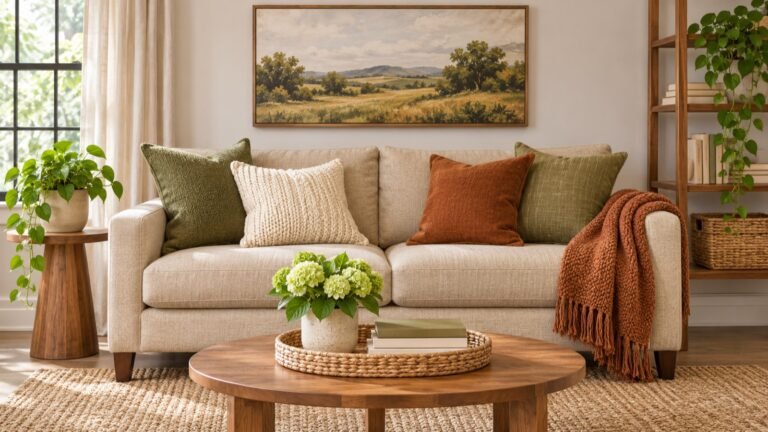
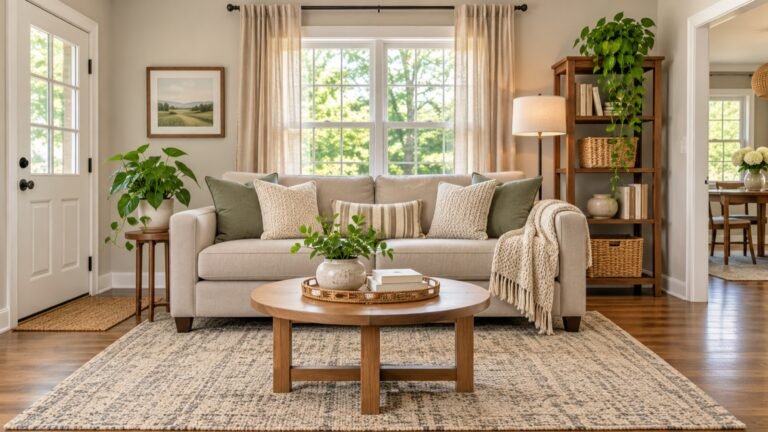
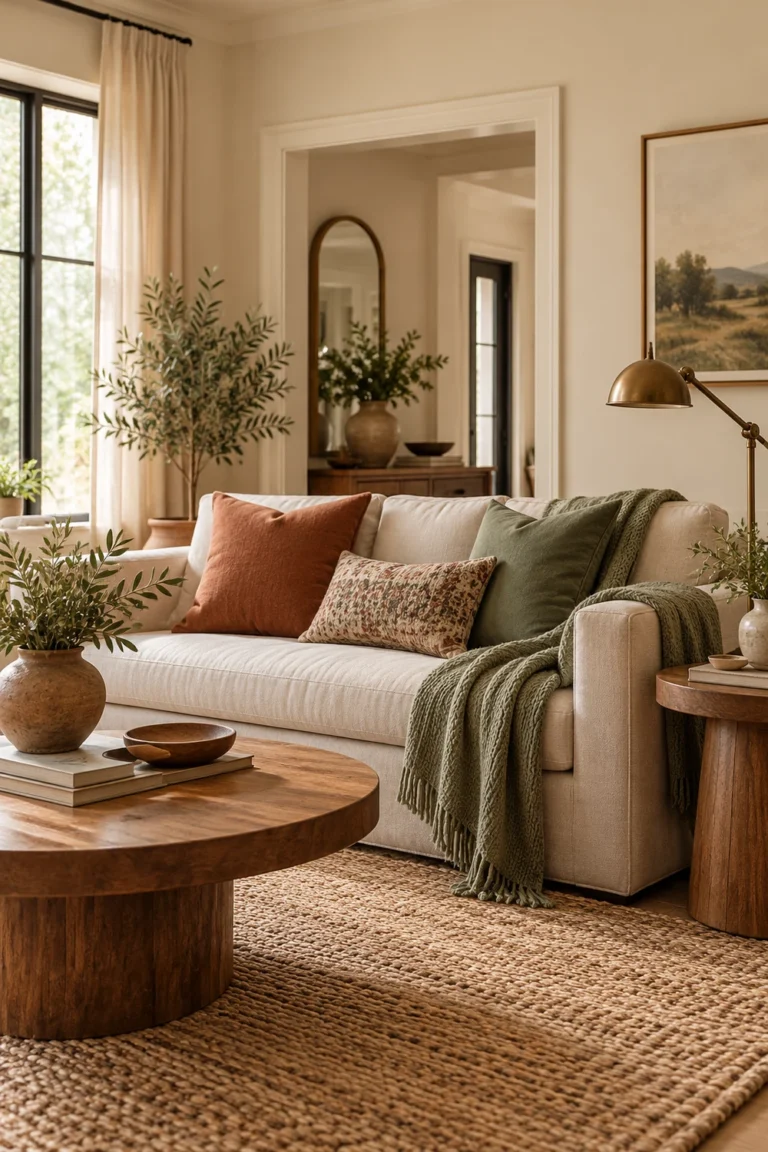
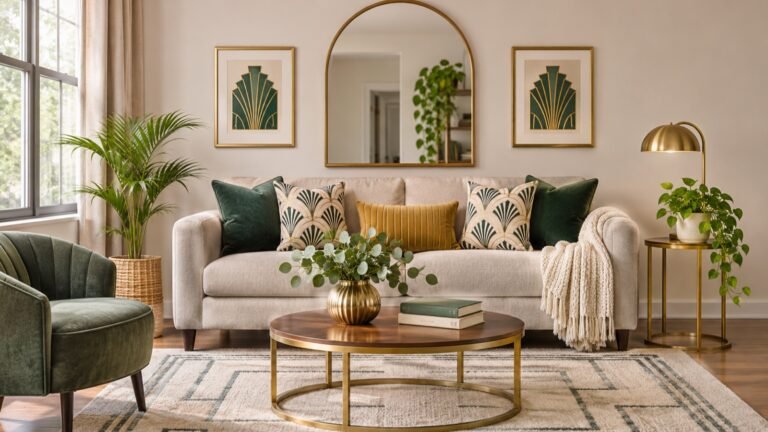
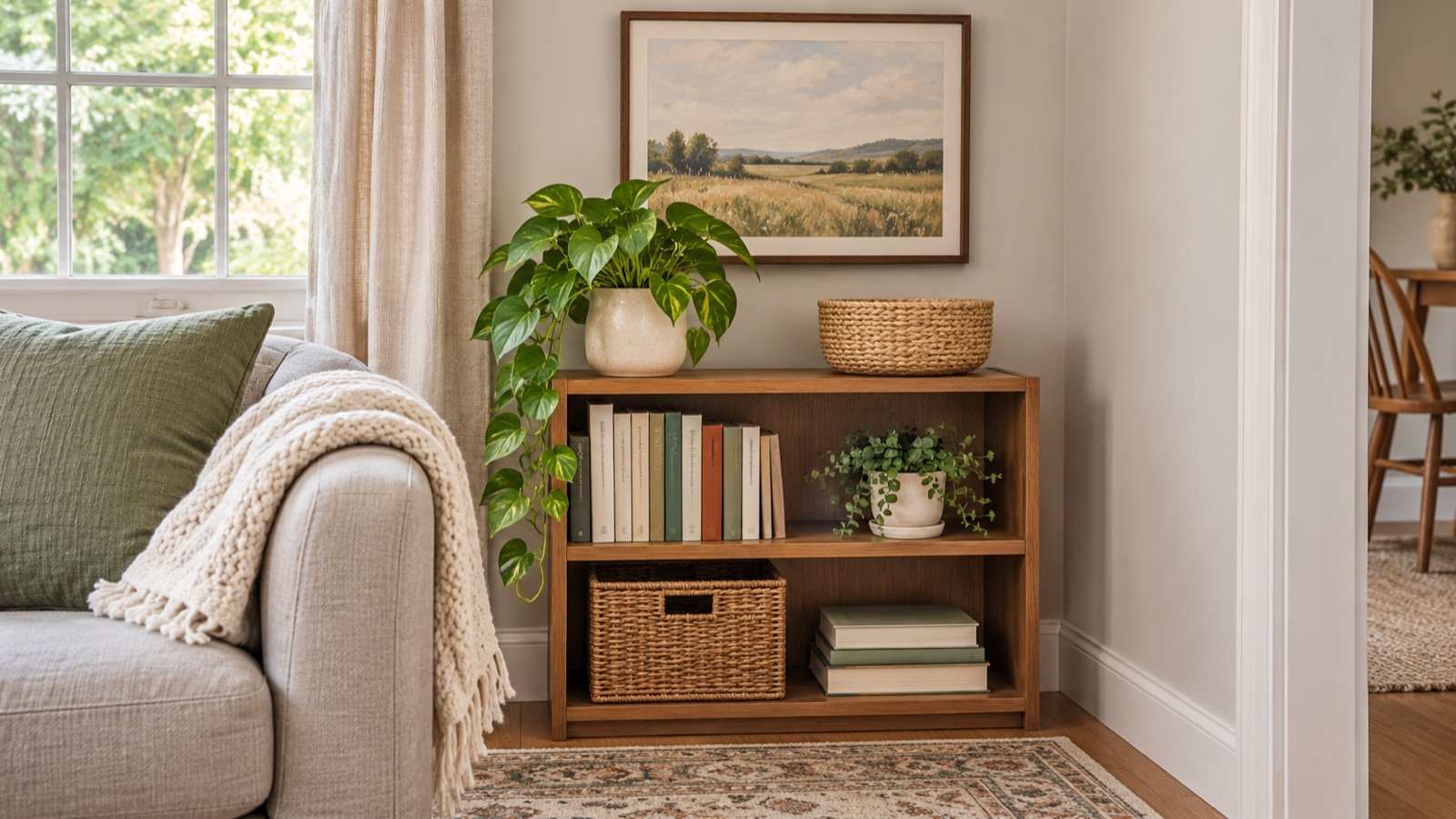
Featured image: AI-generated decorating inspiration, not a photograph of a tested makeover or a specific reviewed product.
Find out why the corner is awkward
Open nearby doors and drawers and follow the usual route past the space. Mark vents, outlets and any access points. A corner may look unused only when the room is still. Avoid treating operational space as a decorating gap. The reason it is difficult often tells you which furniture will be unsuitable before you shop.
Try a small storage function
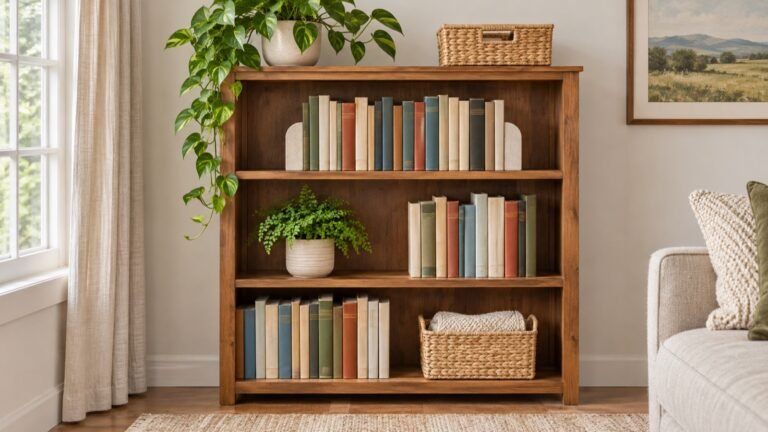
A low appropriately supported piece can hold a defined category if it does not block movement. Measure the objects first and choose a reachable arrangement. Follow anchoring and load instructions where applicable. Do not add shelves simply to create more places for unrelated items. Storage works best when it has a job elsewhere in the room already waiting for it.
Test a seat with the person included
A compact chair needs approach, legroom and space to stand, not only its base dimensions. Use an existing seat for a trial if possible. Check light and a reachable surface if the intention is reading. If sitting there feels like being placed in the route through the room, another function may be more comfortable.
Use a restrained display instead of more furniture
A securely mounted appropriate picture or a small stable arrangement on existing furniture may give the area a visual purpose. Leave nearby practical surfaces usable. Avoid placing tall fragile objects where bags, doors or people can catch them. A display should not turn a difficult corner into a more delicate obstacle.
Consider a useful lamp position
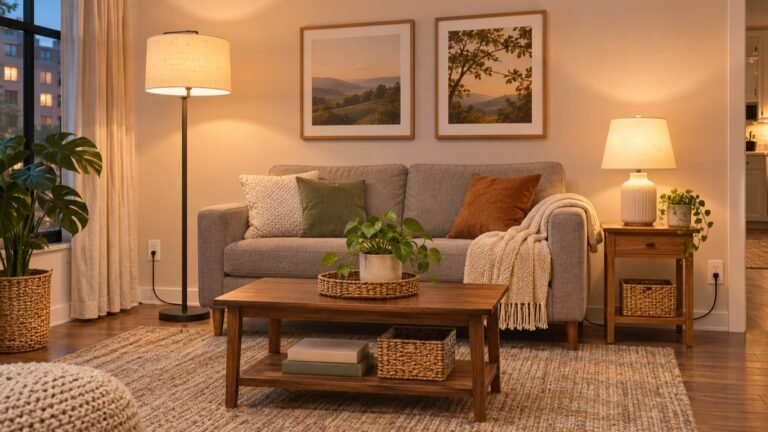
A suitable lamp may serve nearby seating without needing a complete new corner arrangement. Check the base, shade and cord route. Keep access to outlets and follow fixture instructions. The lamp belongs where it helps an activity, not merely where a photograph shows a dark patch that seems to need filling.
Keep one layout for a trial period
Live with the simplest candidate through cleaning, visitors and ordinary movement. Notice whether people avoid or shift the new object. Remove it if the corner works better open. A successful small-space decision can be deciding not to buy something, even when there is a product designed to fit the angle.
Compare the options
| Option or situation | Useful starting point | Check before choosing |
|---|---|---|
| Missing everyday storage | Small defined storage unit | Door movement and actual contents |
| A genuinely quiet seating spot | Compact suitable chair | Approach, legroom and lighting |
| Visual imbalance only | A restrained supported display | Safe placement and cleaning |
| A route or required access area | Keep open | Do not treat circulation as spare floor |
A worked planning example
Draw an illustrative 30-by-30-inch corner beside a door. A triangular shelf may fit inside the outline while the stored items project beyond it and the door handle catches the top. Mark those projections and the whole swing. If the shape only works when the door is partly closed, choose a different use. The example is a planning comparison, not a tested corner makeover.
What to compare when shopping
The links below open Amazon searches for product categories, not verified exact-product recommendations. Check the specific listing, size, variant and manufacturer instructions before purchasing. No price, availability or physical testing is implied.
Compact shelves
Check complete shape, usable shelves and anchoring.
Compare compact shelves on Amazon
Small tables
Compare stability and the route around it.
Compare small tables on Amazon Example pictured: TUTOTAK Narrow Side Table, 2-Tier Small End Table for Couch. Check fit and attachment instructions. View pictured product on Amazon.
Suitable lamps
Include base, shade, outlet and cable position.
Compare suitable lamps on Amazon Example pictured: O’Bright Adjustable Floor Lamp with Flexible Gooseneck and Rotatable Shade, E26 Socket, 10-Inch Base – Ideal for Reading, Bedside, Living Room, Brushed Nickel. Check fit and attachment instructions. View pictured product on Amazon.
For more ideas, explore living room ideas and small apartment layouts.
Frequently asked questions
What should I put in an awkward corner?
Choose a missing function first, then verify the space. Storage, seating, display or nothing may be appropriate.
Are corner shelves always efficient?
No. Their usable area and projections may not suit the objects or nearby movement.
How can I test a corner chair before buying?
Mark the complete chair footprint, approach and leg position, or try an existing suitable chair in the location.
Is leaving a corner empty a decorating mistake?
No. Clear circulation, access and visual breathing room can be useful parts of the room.