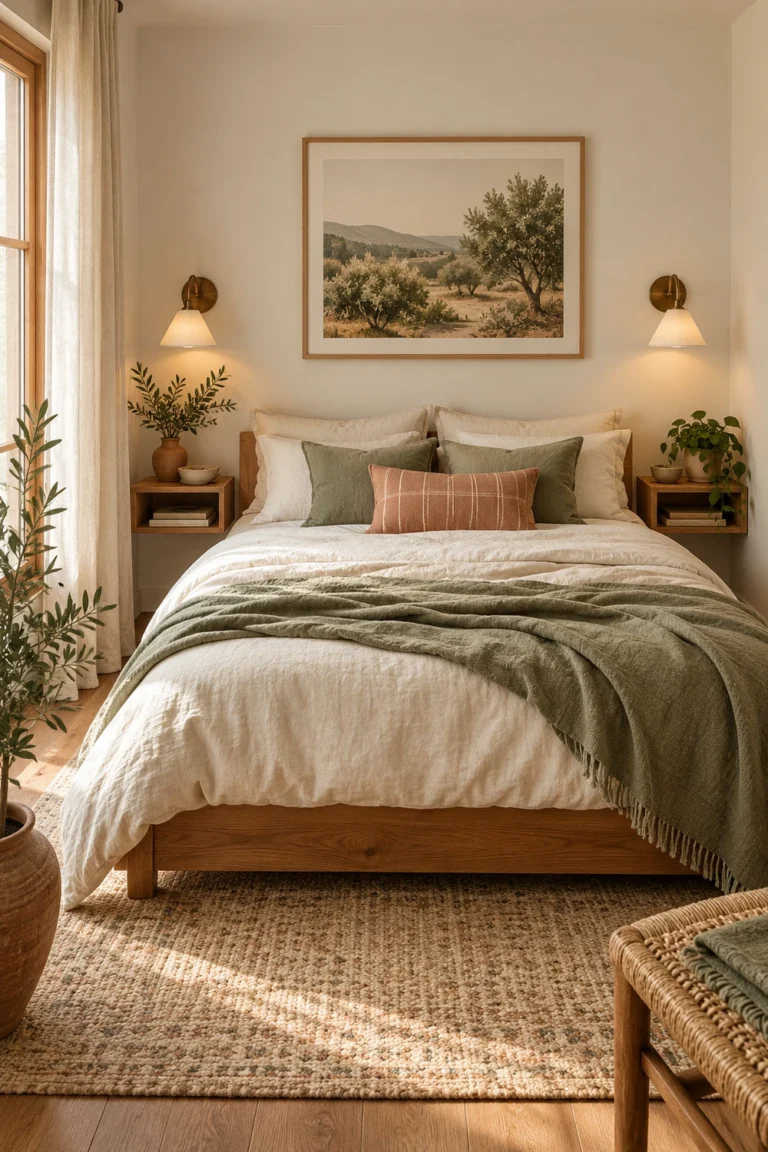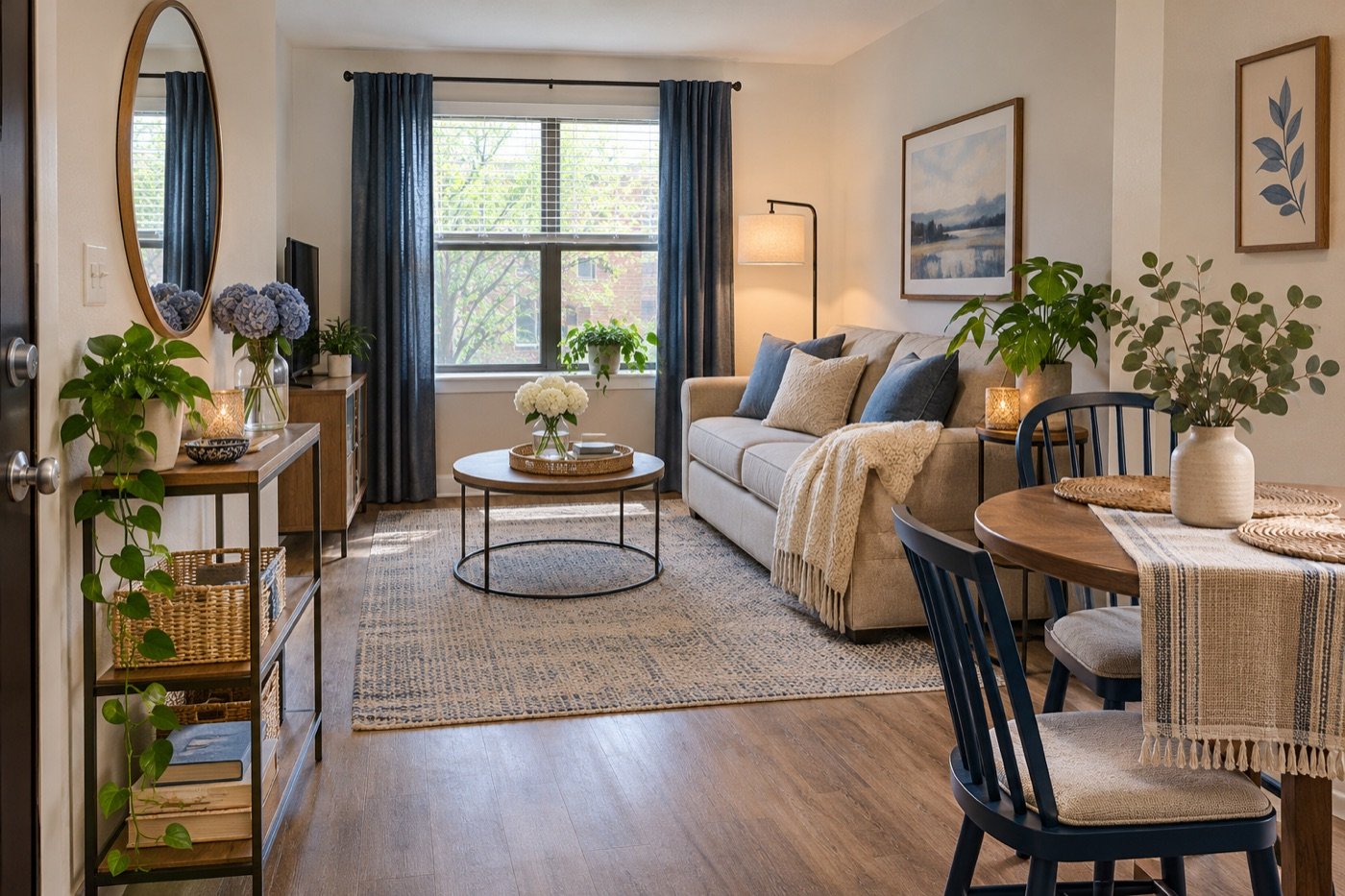
25 Small Apartment Decorating Ideas on a Budget
A small apartment asks every piece of furniture to earn its place. The sofa may share a room with your desk, the dining table may double as a work surface, and there may be little storage for seasonal decorations.
Decorating becomes easier when you solve the layout before shopping. A clear route through the room, a useful lamp, and a place for everyday belongings can change how the apartment feels without a full furniture replacement.
These small apartment decorating ideas focus on flexible choices and gradual updates. Start with the areas you use most. A budget is easier to protect when each purchase answers a specific need.
Before you begin
Measure the room and mark doors, windows, outlets, and heating or cooling equipment. Include furniture you already own. Check your lease before painting, drilling, replacing fittings, or adding window treatments.
Write down three priorities, such as a comfortable eating spot, a useful entry area, and storage for work equipment. Treat these as your shopping filter. An attractive item that solves none of them can wait.
1. Define the main walking route
Arrange furniture so you can enter, cross the room, and reach windows without squeezing around corners. Test the route while carrying laundry or shopping bags. Moving one chair may help more than replacing the sofa, and it costs nothing to try.
2. Mark furniture footprints before shopping
Use paper or a removable marking method suitable for your floor to outline a proposed piece. Include drawers opening and chairs pulling back. Measure the delivery route too. A compact table is still the wrong table if it prevents a cupboard from opening.
3. Choose one focal area
Let the bed, sofa, or dining corner take the visual lead rather than making every wall compete. Repeat one color nearby to connect the room. This gives inexpensive pieces a shared direction without requiring a perfectly matched furniture collection.
4. Use a narrow entry landing spot
A small shelf or existing cabinet can hold keys and a bag near the entrance. Leave room for the door to swing fully. Keep the surface simple so it remains usable when you arrive home with both hands full.
5. Move occasional items out of prime storage
Keep everyday belongings easiest to reach and move occasional possessions to appropriate secondary storage. Sort first rather than hiding everything in new baskets. A living room cupboard should not be filled entirely with items you use twice a year.
6. Try a table that changes size
A drop-leaf or extending table may suit a room used for several tasks. Check its dimensions both closed and open, including chair space. A folding surface is useful only if changing its position is easy enough to do regularly.
7. Let a stool serve two tasks
A sturdy stool can provide occasional seating or a place to set a book when used appropriately. Choose the height and stability for its intended jobs. Avoid treating lightweight decorative objects as seats or climbing steps.
8. Use nesting tables only if they separate easily
Nesting tables can offer extra surfaces when visitors arrive. Check where the smaller pieces will stand without blocking movement. If the tables remain permanently spread out, a single appropriately sized surface may be simpler.
9. Add useful lighting to a dark corner
Move an existing lamp where you read or work before buying decorative lighting. Check that the cord reaches safely without crossing a walkway. Better placement can make a shared room more comfortable without adding more furniture.
10. Repeat a small color palette
Choose a few colors from something you already like, such as artwork or a rug. Use them in small textiles and accessories across the apartment. The rooms can feel connected without every item matching or every wall being repainted.
11. Change cushion covers instead of cushions
If your current inserts are usable, replacing their covers is a smaller update with less storage to manage. Check dimensions and care instructions. Keep spare covers together so a seasonal change does not require another box of bulky cushions.
12. Use curtains to connect existing finishes
Choose a curtain color that relates to the walls, bedding, or seating. Confirm the fitting method is allowed and that fabric clears heaters and doors. Properly sized simple curtains can feel more intentional than elaborate fabric that does not function well.
13. Try a mirror where the view helps
Position a securely mounted or appropriately supported mirror to reflect a pleasant part of the room. Check glare and the view from normal seating height. A mirror reflecting a crowded storage corner may emphasize the very area you wanted to soften.
14. Create a compact gallery with a plan
Arrange frames on the floor first and limit the group to a defined wall area. Mix existing photographs and prints rather than buying a complete set. Use fixings suitable for the wall and frame weight, following your lease and the mounting instructions.
15. Keep open shelves selective
Display a few useful or meaningful items and leave room to remove them easily. Put visually busy supplies in suitable closed storage if possible. Filling every shelf with tiny accessories can make even inexpensive decorating cost more and take longer to maintain.
16. Use baskets after choosing categories
Decide what belongs together before buying containers. Measure the shelf and allow space for your hand to lift a basket out. One well-sized container for cables is more useful than several matching baskets filled with mixed belongings.
17. Give work equipment a closing routine
Store your laptop and everyday work items together when the dining table doubles as a desk. A shelf section or portable box can make the transition easy. Avoid building a second work zone if you only need somewhere to put a few items afterward.
18. Place a rug for the furniture arrangement
Choose a rug position that relates to seating and does not catch doors or create a trip point. Test the size with a floor outline first. A decorative layer should support the layout rather than force furniture into an awkward arrangement.
19. Reuse a bedroom piece elsewhere
A small dresser may work in a living area if its dimensions and condition suit the task. Check stability and follow anchoring instructions where applicable. Moving furniture between rooms can uncover a useful storage solution before you shop.
20. Leave space around a compact sofa
Choose side tables and storage in relation to the sofa you have. Avoid adding bulky pieces on both sides simply to create symmetry. In a narrow room, one useful table and a clear route can feel more considered than a crowded matching pair.
21. Use vertical storage within reach
A suitable wall unit can reduce the number of floor-standing pieces, but installation and anchoring matter. Put heavy items lower and keep everyday things accessible. Do not turn high shelves into difficult-to-reach storage for supplies you need constantly.
22. Style a dining table lightly
One small arrangement or useful tray is often enough when the table has several jobs. Keep decorations easy to move as a group. If you must clear a large display before every meal, simplify it until the table works for ordinary days.
23. Shop secondhand with measurements
Take your measurements and inspect condition, joints, stability, and suitability before buying. Check current recall information where relevant. A low price does not help if the piece needs repairs beyond your budget or cannot fit through your doorway.
24. Make one corner personal
Display a favorite print, a few books, or a small collection in a defined place. You do not need to decorate every surface at once. A focused personal detail can give the apartment character while leaving the rest of the room easy to use.
25. Keep a small decorating wish list
Write down missing functions and maximum dimensions before browsing. Revisit the list after living with a new layout. This helps separate a useful purchase from an appealing item that would become another storage problem.
Make a plan that suits your room
Start with a no-spend layout reset. Next, address one daily frustration such as poor reading light or scattered entryway belongings. Then add textiles or artwork to connect what is already working.
For rentals, read both your lease and the product instructions before using adhesive hooks or removable finishes. Removable products are not suitable for every surface and do not guarantee that paint will remain undamaged.
For more ideas, explore small bedroom ideas and cozy living room ideas.
Frequently asked questions
How can I decorate a small apartment cheaply?
Rearrange existing furniture, reuse pieces between rooms, change small textiles, and buy only after identifying a missing function. Measure before purchasing.
How do I make a studio apartment feel organized?
Give eating, working, relaxing, and sleeping tasks clear places or simple transition routines. Avoid adding bulky dividers before testing the walking route.
Can renters use adhesive hooks?
It depends on the lease, wall surface, product, and load. Follow the exact product instructions and obtain any permission your rental agreement requires.
Should all furniture match in a small apartment?
No. Repeated colors or materials can connect different pieces. Suitable dimensions and a usable layout matter more than a complete matching set.