Small Dining Room Ideas: Round, Drop-Leaf or Extendable Table?
As an Amazon Associate I earn from qualifying purchases. This article contains affiliate links.
A small dining room can feel generous when the table suits everyday use and awkward when the chairs have nowhere to move. Compare the complete eating arrangement, not just the tabletop shape.
A round table, drop-leaf design and extendable table solve different problems. The right choice depends on how many people eat there normally, how often you host and where the additional chairs will live. Start with ordinary days before planning the largest possible gathering.
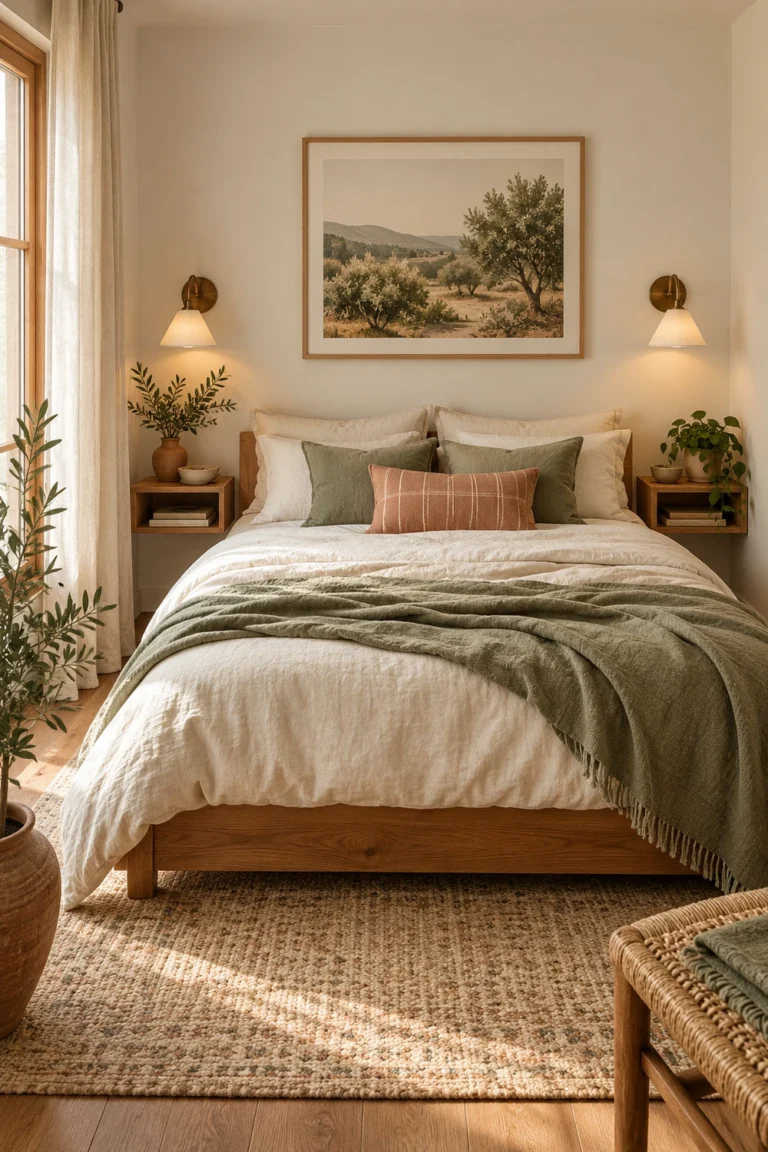
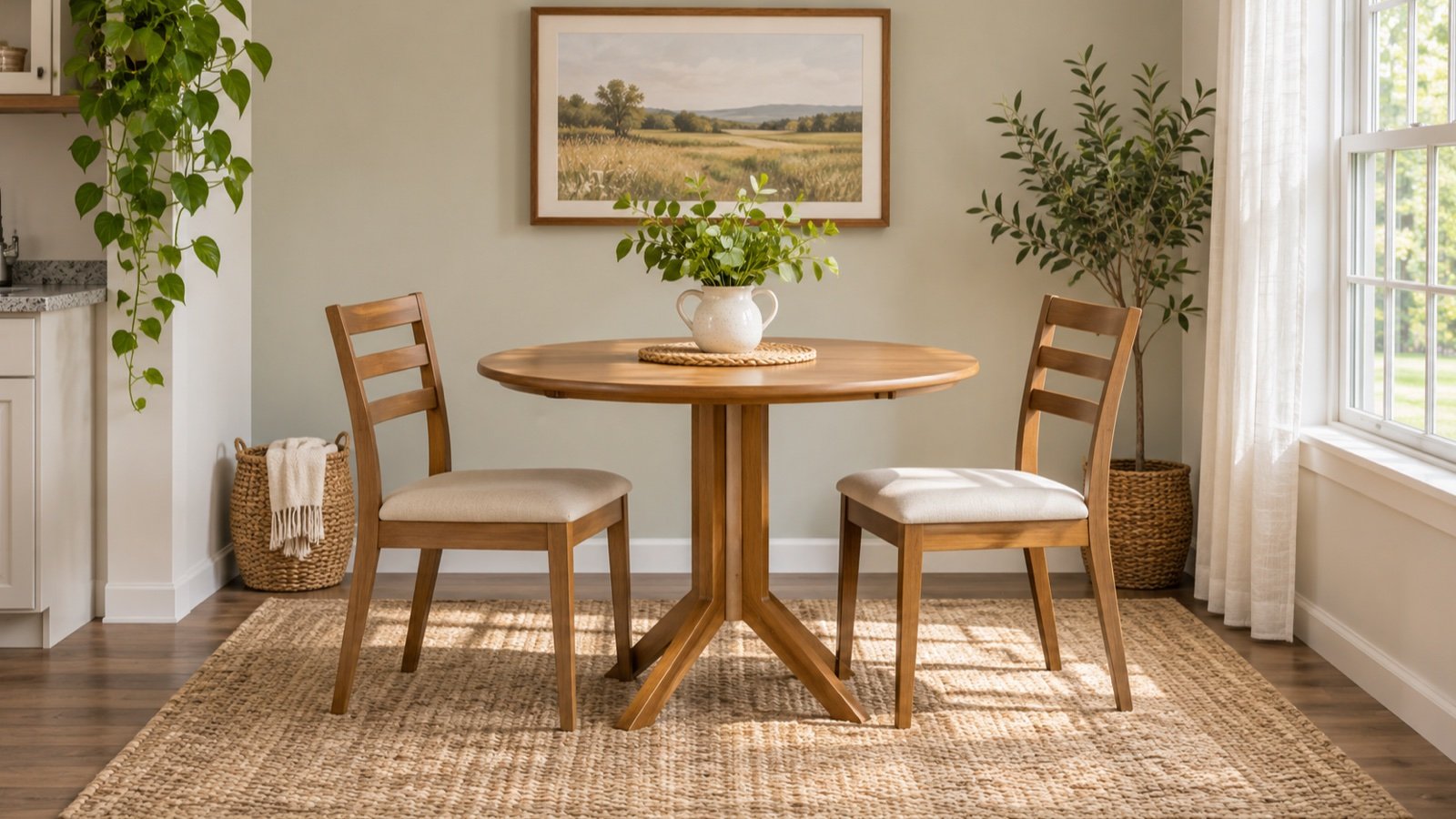
Featured image: AI-generated decorating inspiration, not a photograph of a tested makeover or a specific reviewed product.
Draw the route through the room
Mark doors, storage and the path people use when nobody is seated. Then add the table and chairs in use. Avoid counting the same strip of floor as both chair space and an always-clear passage. Check the arrangement with the actual household routine, including serving, cleaning and opening nearby drawers.
Compare a round table by the base too
A round top removes corners but does not automatically fit more people into a small room. Check the base, leg positions and usable seating. Chairs may meet the base or one another before the top feels crowded. Measure the complete footprint with seats occupied rather than relying on the diameter alone.
Test a drop-leaf design in both positions
A drop-leaf table can reduce the everyday footprint, but leaves, supports and hardware need to operate properly. Check stability and the maker's guidance for each configuration. Decide whether you will realistically open and close it as needed. If it stays permanently expanded, compare it with an ordinary fixed table of the same usable size.
Plan an extending table at full length
Measure the open table, chairs and routes before buying. Find an appropriate home for any separate leaves as directed. Check whether the extension mechanism and extra seating are manageable for the household. A larger hosting configuration is useful only if you can set it up without blocking essential access.
Choose chairs that work with the table
Check seat width, arm height and the relationship to the tabletop and base. Consider the full pull-out movement and intended use rather than choosing a slim silhouette alone. Folding or stackable chairs may suit occasional use when their storage is planned. Follow product instructions and rated use; a decorative stool is not automatically a dining chair.
Keep the surface easy to change
Use a modest centerpiece or a movable tray if the table also handles work or crafts. Keep the everyday arrangement easy to clear. A dining space becomes more flexible through simple routines as well as furniture mechanisms. Avoid buying an elaborate extending system when the real problem is nowhere to put the laptop afterward.
Compare the options
| Option or situation | Useful starting point | Check before choosing |
|---|---|---|
| Round table | A compact everyday eating group | Diameter, base and chair positions |
| Drop-leaf table | A changing daily footprint | Support and operation in both configurations |
| Extendable table | Occasional larger meals | Fully open layout and leaf storage |
| Existing fixed table | No new purchase first | Revised chairs and a clearer surface |
A worked planning example
For an illustrative comparison, mark a 36-inch round top and a 30-by-42-inch rectangular top on the floor. Neither outline includes the chairs or the space you use to move them. Add those next and open the nearby door. The better arrangement may be the one that preserves the route rather than the one with the smaller tabletop area. These are example sizes, not a seating-capacity guarantee.
What to compare when shopping
The links below open Amazon searches for product categories, not verified exact-product recommendations. Check the specific listing, size, variant and manufacturer instructions before purchasing. No price, availability or physical testing is implied. The pictured examples below link to the specific products shown; compare their current listing details before buying.
Round tables
Inspect base geometry and usable seating dimensions.
Compare round tables on Amazon Example pictured: Round Dining Table, 31.5" Tulip Table (White). View pictured product on Amazon.
Drop-leaf tables
Compare closed and open sizes and support instructions.
Compare drop-leaf tables on Amazon Example pictured: Signature Design by Ashley Gesthaven Drop Leaf Dining Table, Natural/White. View pictured product on Amazon.
Compact chairs
Check actual seat and arm dimensions with the chosen table.
Compare compact chairs on Amazon Example pictured: MAHANCRIS Dining Chair Set of 2, Rustic Wooden Kitchen Chairs with Backrest, Farmhouse Dining Chairs for Kitchen, Industrial Style Chair with Metal Frame, Easy Assembly, Rustic Brown TBHR1001. View pictured product on Amazon.
For more ideas, explore small apartment decorating and connected living spaces.
Frequently asked questions
Is a round table best for every small dining room?
No. Compare the complete seating arrangement and route with other shapes before deciding.
Should I buy an extendable table for occasional guests?
Only if its fully open arrangement and storage requirements suit the room and the way you host.
Do narrow chairs always save space?
Check their full dimensions, movement and relationship to the table. Shape alone does not establish usable seating.
Can a dining table double as a desk?
It can if the task position is appropriate and work equipment has a defined place afterward.