Small Entryway Ideas: 12 Layouts That Keep the Door Clear
As an Amazon Associate I earn from qualifying purchases. This article contains affiliate links.
A small entryway does several jobs in a few steps. It has to admit the door, catch your keys, hold a bag and let you continue into the home. A beautiful console is not much help if you have to edge around it every time you carry groceries.
Start by treating the entrance as a route rather than an empty wall to fill. Decide what must land here and what can live nearby. Sometimes the most useful layout has no table at all.
These 12 small entryway layouts are planning ideas, not measured installations in a real home. Use them to narrow the options, then test the arrangement against your own door, furniture and household routine.
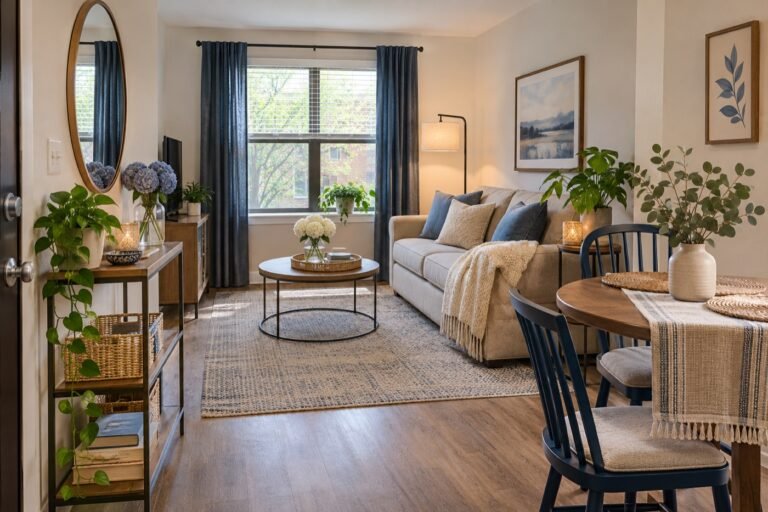
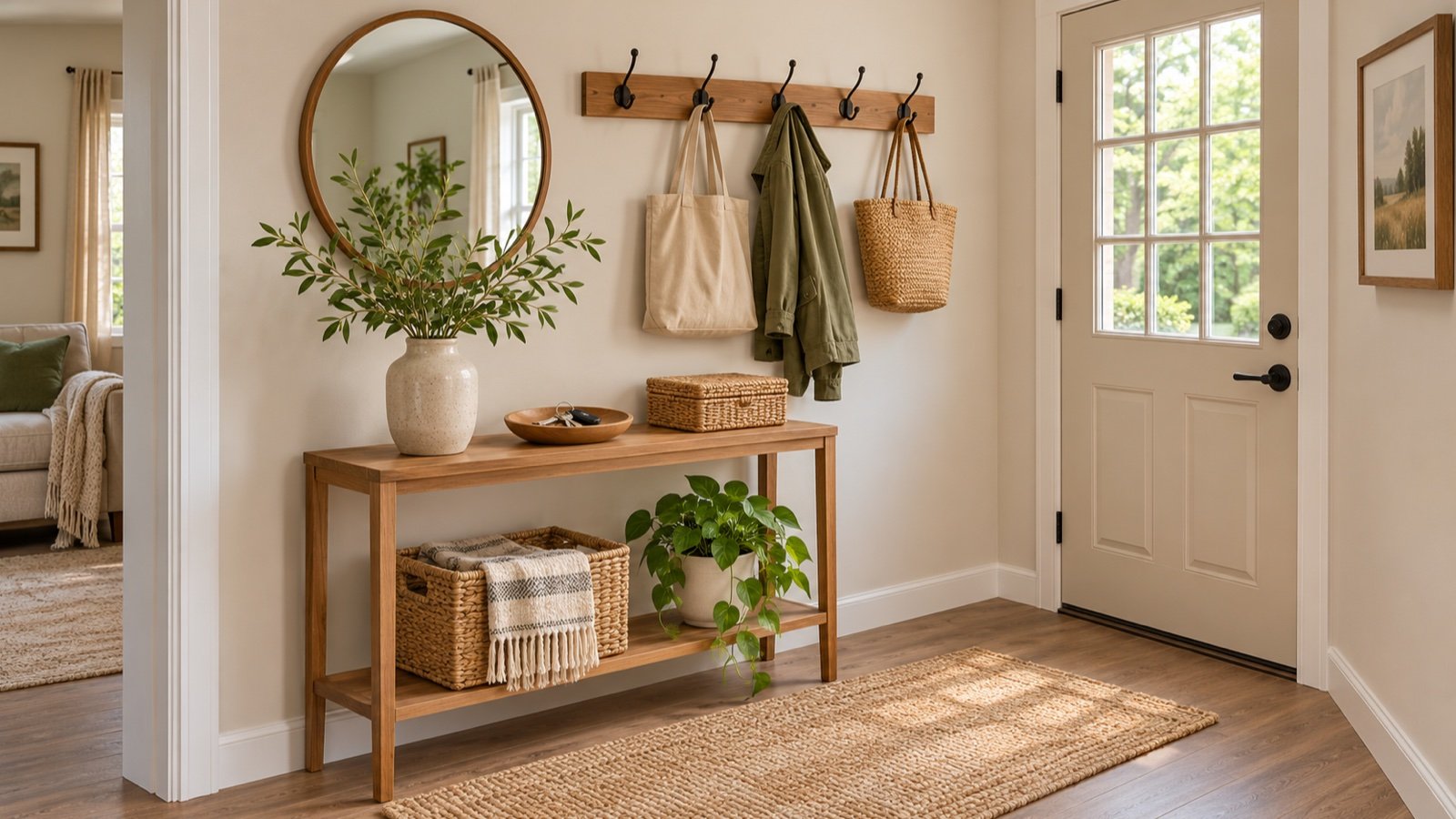
Featured image: AI-generated decorating inspiration, not a photograph of a tested makeover or a specific reviewed product.
1. A shallow console on the handle side
If you have a wall beside the door handle, a shallow console may create an easy landing place. Test the door fully open and check that bags do not catch on the table corners. Keep only a small key dish and everyday essentials on top. The most useful depth is the one that preserves your route, not the deepest table that can technically fit against the wall.
2. A wall shelf with clear space beneath
A properly supported shelf can provide a light landing surface without another piece on the floor. Choose fixings suitable for the wall and intended load, and check rental permissions where relevant. Keep the shelf from projecting into shoulder or bag height along the route. The space below can stay empty for cleaning instead of immediately becoming another storage zone.
3. Hooks and one small basket
A short run of appropriately mounted hooks can handle lightweight everyday items if there is room for them to hang. Check the depth of the actual coats or bags, not just the hooks. Place a small basket only where it does not obstruct the door. Limit the number of items so a slim wall treatment does not turn into a bulky coat pile.
4. A shoe rack beneath short outerwear
A low shoe rack may work below a modest hanging section. Leave enough height that coat hems do not rest on footwear. Measure the longest shoes and any angled shelves. Keep the everyday pairs accessible and move occasional footwear elsewhere. This arrangement works best when you can take shoes out without shifting coats or kneeling in the doorway.
5. A compact bench with a separate landing spot
A bench can make putting on shoes more convenient if there is space to sit and stand comfortably. Check stability and rated use. A wall shelf or nearby existing cabinet may hold keys so the seat stays available. Avoid covering the bench with decorative cushions if those cushions must go on the floor every morning.
6. A wall-mounted mail sorter
If paper is the main problem, a small sorter can be more useful than a console. Give incoming mail a limited compartment and review it regularly. Place it away from splashes and check the fixing method. Do not let private correspondence become part of a public entryway photograph. A paper system should reduce the pile rather than conceal an expanding stack.
7. A slim cabinet with tested door clearance
Closed storage can calm the view, but its doors or drawers need room to open. Mark the full operating footprint before buying. Check usable internal dimensions instead of relying on the outside width. Follow anchoring and installation instructions. If the cabinet cannot be used while another person passes, a simpler open arrangement may suit the entrance better.
8. A movable basket near an existing cupboard
A portable basket can carry a few everyday belongings between the entry and a nearby cupboard. It works well when the entrance itself has little permanent storage. Give the basket a defined home outside the walking route. Keep its contents light enough to move easily, and return objects to their proper places instead of allowing it to become a miscellaneous bin.
9. A mirror above useful existing furniture
If you already have a suitably sized cabinet near the door, use it before adding another table. A securely installed mirror may help with a final check on the way out. Consider its reflected view and glare. Choose support appropriate to the mirror's weight; decoration above the landing spot should not compromise the practical surface below.
10. A landing zone just beyond the entrance
The best storage location may be a few steps inside rather than beside the threshold. A nearby hallway wall or cupboard can handle bags while the doorway remains clear. Walk the route with shopping in both hands to check whether the location feels natural. Avoid adding a second temporary pile near the door if the main storage is too inconvenient to reach.
11. A shared entrance with separate small categories
Give each person a modest defined place for frequently used items. A labeled basket or suitable hook can reduce confusion without requiring a large locker system. Agree on where overflow goes. Keep the shared route clear and avoid assigning children high storage they cannot use safely. The categories should reflect daily routines, not force every person into identical storage.
12. An intentionally furniture-free entry
If the door opens directly into a tight room, keep the entrance free and place storage elsewhere. A suitable secure mat and good existing lighting may be all the area needs. Resist buying a narrow object simply because it is marketed for small spaces. Preserving an easy route can be the most successful layout decision in the room.
Compare the options
| Option or situation | Useful starting point | Check before choosing |
|---|---|---|
| Keys and one bag | Shallow console or supported shelf | Door swing and bag clearance |
| Shoes used every day | Low accessible rack | Longest pair and usable shelf height |
| No spare wall beside the door | Landing zone farther inside | Natural route from the entrance |
| Several household members | Limited separate categories | Overflow location and reachable storage |
A worked planning example
Imagine a hallway that is 48 inches wide with a proposed console 12 inches deep. Subtraction leaves 36 inches before allowing for trim, handles or any objects projecting beyond the top. That arithmetic helps compare furniture; it does not establish compliance with a building or accessibility requirement. Mark the complete footprint, open the door and walk through with a bag. If the route feels compromised, choose shallower storage or move the landing zone. Check applicable requirements for your actual home where needed.
What to compare when shopping
The links below open Amazon searches for product categories, not verified exact-product recommendations. Check the specific listing, size, variant and manufacturer instructions before purchasing. No price, availability or physical testing is implied.
Shallow consoles
Compare complete depth including handles and projecting tops.
Compare shallow consoles on Amazon
Entryway hooks
Match the fixing and load instructions to the wall and items you intend to hang.
Compare entryway hooks on Amazon
Shoe racks
Measure actual shelf depth and leave the everyday route clear.
For more ideas, explore small apartment decorating ideas and closet organization ideas.
Frequently asked questions
What furniture works in a very small entryway?
A shallow console, supported shelf or low rack may work if it preserves the route. Some entrances function better with storage a few steps farther inside.
How do I organize an entryway without a closet?
Choose a small number of accessible categories for everyday belongings and store occasional items elsewhere. Test hooks and baskets with the real items in place.
Should an entryway console be centered on the wall?
Practical access matters more than symmetry. Position it where the door, walking route and nearby furniture still work normally.
How can I decorate a tiny entrance without clutter?
Choose one useful landing spot, a restrained accent and a limited number of everyday items. Leave space to arrive with bags rather than filling every surface.