25 Closet Organization Ideas for Small Spaces
A small closet becomes frustrating when the things you wear every week are hidden behind things you rarely touch. You pull out one sweater, a stack leans sideways, and the shoes you wanted are somewhere underneath a bag.
The most useful closet organization ideas begin with access. Your everyday clothes should be easy to see, take out, and put back. Matching baskets can come later. A simple arrangement that suits your routine is more useful than a beautifully packed closet you cannot maintain.
These 25 ideas work as starting points for reach-in closets, wardrobes, and shared bedrooms. Choose the changes that solve your actual storage problem rather than trying to fit every organizer into the same space.
Before you begin
Before moving shelves, measure the inside width, depth, and usable height of your closet. Include the space lost behind sliding doors and the swing of hinged doors. Check how far drawers or baskets must pull out.
Sort clothes into what you currently wear, what needs repair, and what belongs elsewhere. Do not buy bins until you know what remains. If you plan to add rods or fixed shelving, follow the system's installation instructions and load limits.
1. Start with one everyday section
Choose a short stretch of hanging space for the clothes you reach for most often. Put these within comfortable reach instead of dividing everything equally by color. After a week, notice which items keep moving out of place. That tells you whether your categories match the way you actually dress.
2. Keep long clothes together
Hang dresses and longer coats in one area so their hems do not cover shoes or drawers. Use the space beneath shorter shirts separately. This creates storage zones from the clothes you own instead of forcing long and short garments into the same arrangement.
3. Try consistent hanger shapes
Similar hangers can make a crowded rail easier to scan. Replace only bent, unsuitable, or awkward hangers first rather than buying an entire new set. Choose support appropriate to each garment; a heavy coat and a delicate knit may need different storage methods.
4. Fold bulky knits on a shelf
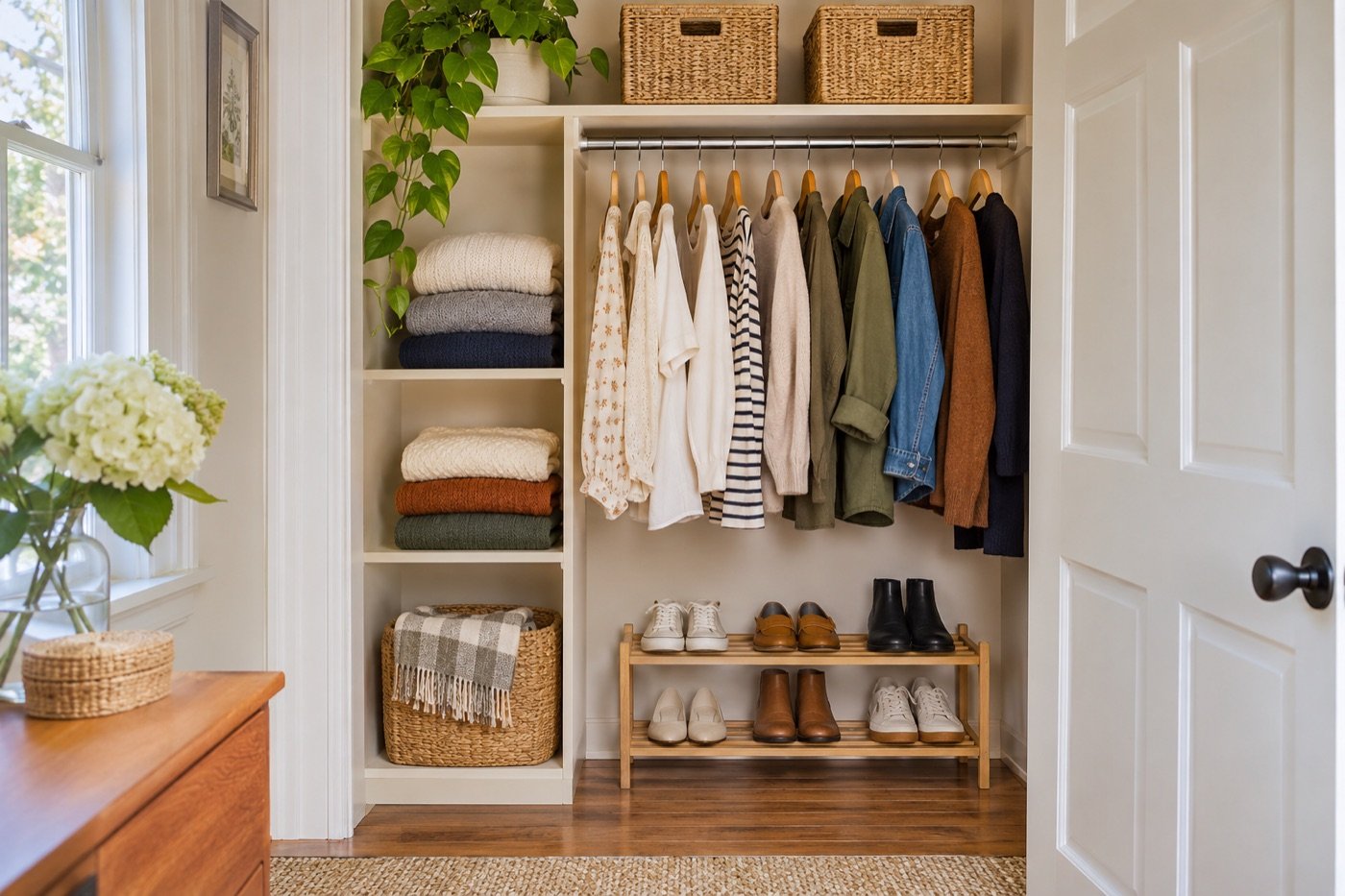
Move thick sweaters off the hanging rail if their care and construction suit folded storage. Keep stacks short enough to remove the bottom item without disturbing everything above it. If a shelf is deep, bring the everyday stack toward the front instead of creating a hidden second row.
5. Give jeans one defined space
Keep jeans together in a drawer, shelf section, or appropriate hanging organizer. Choose the method that lets you return a pair quickly. A compact stack works for a few pairs, while upright folded storage may make a larger collection easier to see.
6. Use dividers for unstable stacks
A shelf divider can separate folded categories and reduce sideways leaning. Check the shelf thickness and the divider's fixing method before buying. It should help you use an existing shelf, not make the remaining sections too narrow for your clothes.
7. Put small accessories in shallow compartments
A drawer insert or several small boxes can separate belts, hair accessories, and other little items. Start with containers you already own. Leave enough room to lift each item out; tiny compartments that require careful folding after every use can become another chore.
8. Create an easy scarf section
Fold scarves in one shallow basket or use a suitable accessory hanger. Keep delicate fabrics away from rough hooks and sharp edges. Avoid threading so many scarves through one holder that removing one pulls out the rest.
9. Use door storage cautiously
A door organizer can hold lightweight accessories if it fits the door and does not interfere with closing. Check the hook thickness, hinge movement, and product load limit. Measure with the door open and closed before deciding whether this otherwise overlooked space is genuinely usable.
10. Store shoes by current use
Keep the pairs you wear most often easiest to reach. Move occasional shoes higher or farther back, provided you can retrieve them safely. Clean and dry footwear before storing it. A smaller accessible collection on the floor is often easier to manage than a dense pile of every pair.
11. Test a low shoe shelf
A low shelf may create a second level beneath short hanging clothes. Measure the tallest footwear and the hanging garments first. Make sure the shelf does not prevent access to the back of the closet. A cardboard footprint can help you test the fit before purchasing.
12. Use clear boxes selectively
Transparent boxes can help identify occasional accessories without opening each container. They work best when the contents are already sorted and suitable for enclosed storage. Leave enough room to remove a box without unloading the entire shelf, and label anything that is not immediately obvious.
13. Label opaque baskets plainly
Use labels such as scarves, gym clothes, or spare bedding rather than vague categories like extras. The label should make it easy for anyone sharing the closet to put things back. If a basket contains several unrelated categories, revise the contents before making a prettier label.
14. Reserve upper shelves for light items
Put infrequently used, lightweight belongings on higher shelves. Keep heavy items lower and use suitable access equipment rather than standing on furniture. Do not stack containers so high that you have to pull one down without seeing what is balanced above it.
15. Make one seasonal swap zone
Store off-season clothes together after cleaning and drying them according to their care labels. Mark the container clearly so swapping seasons is straightforward. Keep a few transitional layers accessible instead of packing away every item as soon as the weather changes.
16. Protect a shared boundary
In a shared closet, give each person a clearly defined hanging section and shelf area. Different routines may need different layouts. Agree on shared storage separately so one person's overflow does not quietly take over another person's everyday space.
17. Give bags gentle support
Place bags upright on a suitable shelf or store them according to their material and structure. Avoid hanging heavy bags indefinitely from delicate handles. Keep everyday bags easy to remove and reserve a separate spot for bags used only occasionally.
18. Use the narrow side wall
A small section of side wall may suit a lightweight accessory hook if there is adequate clearance. Open and close the door while checking the space. Use fixings suitable for the wall and load; a hook that catches sleeves every morning is in the wrong place.
19. Keep the floor partly open
Clear a visible floor area so you can clean and see what has fallen. If you use floor bins, choose a small number that can be removed easily. Filling every gap with storage can make a small closet harder to use even if it holds more objects.
20. Create a repair basket with a limit
Set aside one small container for clothes needing a button, hem, or other attention. Review it regularly instead of letting it become a second wardrobe. Return repaired items promptly and decide what to do with pieces you no longer intend to fix.
21. Use a donation bag outside the main rail
Keep an accessible bag for clothes you have decided to pass on, but give it a departure date. Leaving it permanently on the closet floor simply moves the clutter. Follow your chosen recipient's condition requirements before donating.
22. Choose pull-out storage by reach
A basket is useful only if you can pull it out comfortably. Check the full extension space, nearby doors, and the weight when filled. Avoid placing a deep heavy bin above shoulder height, even if it looks like the perfect fit on paper.
23. Leave space for laundry returning
Keep a small amount of spare hanging and folding capacity so clean laundry can go straight back. If everything fits only when perfectly compressed, the closet is difficult to maintain. Remove a few rarely used items before adding another organizer.
24. Photograph a layout that works
Once the arrangement feels practical, take a simple reference photo for yourself. This can help you restore a shared or seasonal section after a reset. Use it as a reminder of categories and spacing, not a standard the closet must look perfect enough to meet every day.
25. Reset one section each week
Spend a few minutes returning misplaced items and checking the busiest shelf. Fix the category that repeatedly overflows rather than emptying the whole closet again. A small adjustment made regularly is easier to sustain than a complicated system requiring a full afternoon to restore.
Make a plan that suits your room
For a narrow reach-in closet, start with one accessible hanging zone, short folded stacks, and a clear floor area. For a shared wardrobe, establish boundaries before adding accessories. For a rental, begin with freestanding inserts and changes permitted by your lease.
Your first improvement can be free: remove unrelated items, put everyday clothes at the front, and leave enough room to return clean laundry. Buy an organizer only after identifying the exact space and task it needs to serve.
For more ideas, explore small bedroom ideas and cozy bedroom ideas.
Frequently asked questions
How do I organize a small closet without buying anything?
Sort out items that belong elsewhere, group the clothes you use most, shorten folded stacks, and reuse small boxes for accessories. Test the arrangement before purchasing organizers.
Should a small closet be organized by color or clothing type?
Begin with clothing type and frequency of use. Within a category, color order can help you find things, but it should not make putting clothes away more difficult.
What belongs on the top shelf of a closet?
Lightweight, occasional items are usually more practical than heavy everyday belongings. Keep containers manageable and use suitable equipment to reach them.
How much empty space should a closet have?
There is no single percentage that suits every closet. Leave enough space to move hangers, remove folded items, and return laundry without compressing everything tightly.