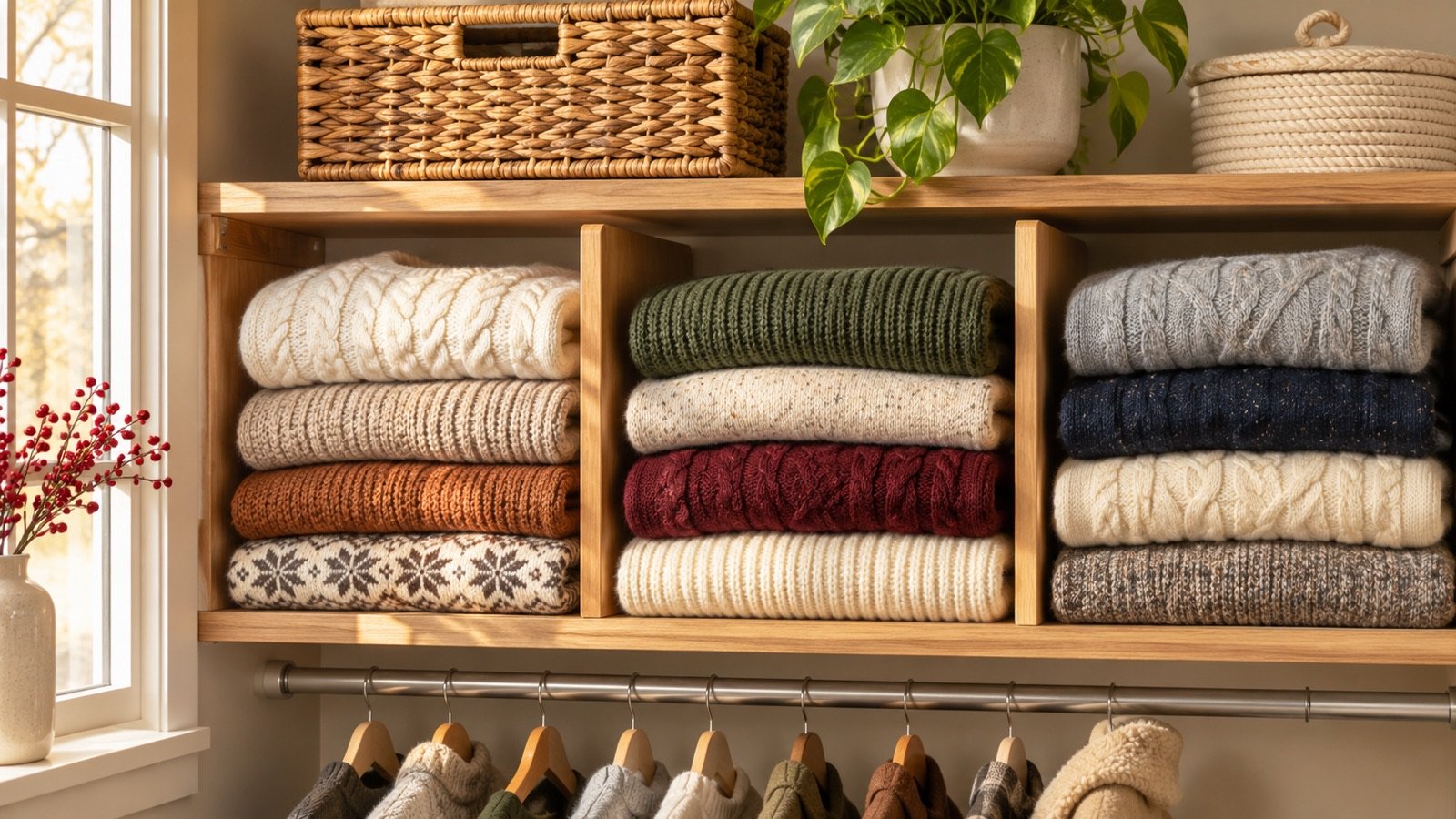
Sweater Storage Ideas For Shelves That Keep Collapsing Into Piles
This post contains affiliate links. As an Amazon Associate, I earn from qualifying purchases at no extra cost to you.
Sweater storage ideas often look simple until the first laundry load goes back on the shelf. Tall piles lean into one another, small knits disappear under bulky ones and a hanging organizer may not suit the garments' care guidance. Design the system around real folds and weekly use.
Follow each garment's care guidance, group sweaters by how often they are worn and use short manageable stacks or suitable drawers. Add a divider only where a boundary is missing. Seasonal storage may need a different arrangement from the sweaters you reach for every morning.
Featured image: AI generated decorating inspiration. It does not show a tested makeover or the exact products linked below.
Product Examples To Compare
Specific pictured items to compare after checking your own measurements and requirements.
These are product examples, not hands on test results or a ranked best products list. The picture and button for each example open the exact listed product. Check the current variant, dimensions, materials and instructions on Amazon before buying. Prices and availability can change.

Example pictured: HBlife 6 Pack Closet Organizers and Storage, Clear Shelf Dividers, Vertical Purse Organizer for Closet Perfect for Sweater, Shirts, Handbags in Bedroom and Kitchen, Acrylic Bookshelf for Organization
Check the actual shelf thickness, divider attachment and garment care guidance.
Start With The Garment Instructions
Fiber and construction matter more than a universal organizing rule.
Check the sweater's label and manufacturer advice before deciding on hanging, folding or compression. Different knits and garment details may need different treatment.
Keep care information available for unfamiliar pieces. This is an organization plan, not a substitute for material specific care. A storage method should fit the garment rather than requiring it to be squeezed into an attractive but unsuitable container.
- Read the care information.
- Separate unfamiliar or delicate pieces.
- Choose storage around the garment.
Use A Fold That Fits The Shelf
Shorter consistent stacks can be easier to retrieve than tall piles.
Try folding a few sweaters to the usable shelf depth and remove the middle item. If the pile collapses, reduce its height or change the grouping.
Bulky knits can occupy a separate section so thinner garments do not disappear underneath them. Leave enough room for a normal hand movement. A fold that is difficult to repeat will probably not survive the next wash day.
- Test the fold on a few garments.
- Separate very bulky knits.
- Try removing a middle item.
For the related room plan, see our closet organization ideas.
Add Shelf Dividers Where Stacks Drift
A boundary is useful only if it fits the shelf and contents. The same fit checks apply to linen closet organization, where shelf depth and removable stacks matter more than matching containers.
Check shelf thickness, divider attachment and any stated limits. Choose a compatible shelf product rather than assuming a drawer divider will attach correctly.
Make sure the surface and edges are suitable for the garments. A divider does not solve an overfilled shelf. If each section is packed tightly, reduce the contents or allocate a different location before adding more partitions.
- Match the divider to the shelf.
- Check edges and attachment.
- Avoid packing each section too tightly.
Consider A Drawer For Small Regular Rotation
A drawer can make the collection visible without exposing every garment.
Compare the drawer's usable depth and height with a realistic fold. Keep similar types together and avoid a tight arrangement that requires pulling at the fabric to remove one sweater.
Open the drawer fully and check whether items at the back are reachable. A removable suitable divider may help define a section, but a small collection can work without any new accessory.
- Measure the usable drawer.
- Keep garments visible and retrievable.
- Try the drawer without new dividers first.
Keep Seasonal Storage Separate
Occasional pieces should not interrupt the everyday shelf. If hats share the seasonal shelf, compare the separate support needs in our hat storage guide before packing them alongside clothing.
Prepare garments and choose storage conditions according to their care guidance. Use a suitable clearly identified container and check it periodically.
Do not assume all sweaters should be vacuum compressed or placed in the same bag. A seasonal location should be reachable enough that you can inspect and retrieve the clothes without dismantling the whole closet.
- Follow preparation and storage guidance.
- Label seasonal contents.
- Keep inspection and retrieval practical.
Test The System After A Full Laundry Cycle
An organization method needs to accommodate returned clothes.
Put the regular rotation away after its normal care routine. If the shelf only works when several sweaters are being worn, it is too full.
Leave room for the whole active group. Adjust the pile sizes before buying another container. A small amount of unused shelf capacity can make the daily routine easier than a perfectly filled arrangement.
- Allow for every active garment to return.
- Leave useful retrieval space.
- Review rather than endlessly adding bins.
Compare The Options
Use the same actual room and belongings to compare each approach.
| Situation | Option to Compare | Check First |
|---|---|---|
| Everyday folded sweaters | Short shelf stacks | Care guidance and easy retrieval |
| A small visible rotation | Suitable drawer arrangement | Usable height and gentle access |
| Seasonal garments | Material appropriate labeled storage | Preparation, conditions and inspection |
A Worked Planning Example
Illustrative measurements explain the method rather than establish a universal rule.
An illustrative shelf 12 inches high may hold several tightly stacked bulky sweaters, but removing the lower one can disturb the whole pile.
Divide the collection into shorter groups and test a different location for seasonal pieces. Do not treat the shelf's physical capacity as the amount that will be comfortable to use.
Frequently Asked Questions
Answers to related questions found in the keyword research.
How Do You Store Sweaters In A Closet?
Follow garment care guidance, then use manageable folded groups or another suitable method. Keep the active rotation reachable and separate bulky or seasonal pieces when that improves access. For the wider context, see our closet organization ideas.
Keep The Practical Choice
Choose the version that serves the way the household actually uses the room.
Keep the fold and location you can maintain without pulling or compressing garments to make them fit. The closet should make choosing a sweater easier, not give you a daily pile rebuilding job.