Hat Storage Ideas: Different Homes For Caps And Structured Hats
This post contains affiliate links. As an Amazon Associate, I earn from qualifying purchases at no extra cost to you.
Hat storage ideas need to account for shape. A soft baseball cap and a structured brimmed hat may both fit on a closet shelf, but stacking or hanging them in the same way can be unsuitable. Start by separating everyday caps from pieces that need more support.
Use the hat maker's care guidance to choose the resting position and support. Keep frequently used caps reachable and compare fitted boxes or suitable shelves for structured hats. Do not choose an organizer solely by the number of hats it claims to hold.
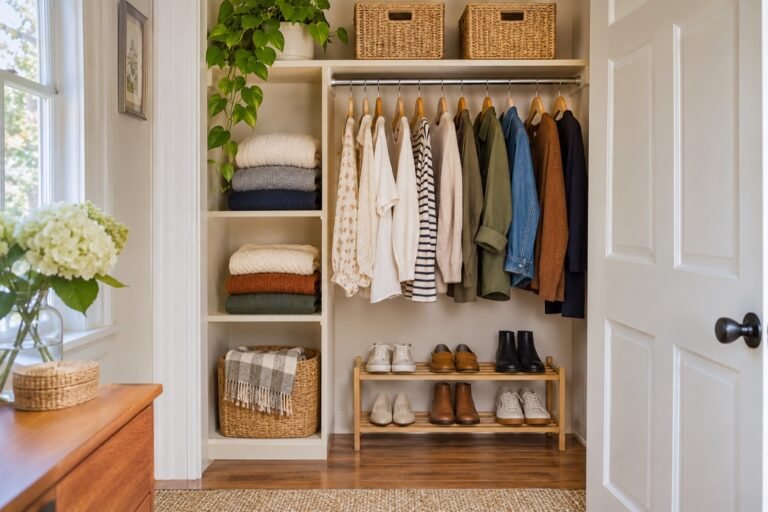
Featured image: AI generated decorating inspiration. It does not show a tested makeover or the exact products linked below.
Product Examples To Compare
Specific pictured items to compare after checking your own measurements and requirements.
These are product examples, not hands on test results or a ranked best products list. The picture and button for each example open the exact listed product. Check the current variant, dimensions, materials and instructions on Amazon before buying. Prices and availability can change.

Example pictured: Stackable Hat Storage for Baseball Caps Holds Up to 24 Caps
This example is described for baseball caps; it does not establish suitability for structured brimmed hats.
Separate Hats By Construction
The organizer needs to fit the most particular shape in the group.
Set the hats out and note rigid crowns, wide brims, soft panels and projecting decorations. Check any storage instructions before hanging or stacking them.
A compact cap rack is not necessarily suitable for a formal hat. Keep pieces with unusual requirements in their own suitable locations rather than designing the whole shelf around an average hat that does not exist in your collection.
- Check crowns, brims and decorations.
- Follow maker guidance.
- Separate hats with different support needs.
Keep The Daily Cap Easy To Return
The usual landing spot tells you where storage may work. If caps usually land beside the front door, these small entryway ideas can help you choose a reachable landing spot.
If a cap lands near the entrance, a suitable permitted hook or defined shelf zone may be more useful than a deep bedroom closet box. Check that the chosen support is appropriate for the cap and does not obstruct a door or walking route.
Keep the group small enough to see individual items. An organizer becomes less useful when every cap is hidden behind another.
- Notice the usual return location.
- Keep doors and routes clear.
- Limit the visible daily group.
For the related room plan, see our closet organization ideas.
Measure A Structured Hat Before Buying A Box
The brim and height determine the useful cavity.
Measure the complete stored shape in its recommended position. Compare the box's usable width and height rather than its outer diameter alone.
Include any supports or protective material recommended for that hat. A lid should close normally without pressing on the crown or brim. If several hats are stored together, confirm that the maker's guidance allows the proposed arrangement.
- Measure the complete stored position.
- Check the usable box interior.
- Do not use the lid to compress the hat.
Compare Shelf Storage With Hanging Organizers
Different methods create different points of contact. For the neighboring knitwear shelf, use these sweater storage ideas to keep folded clothes from crowding the hat space.
A shelf may suit an appropriately supported hat where it remains clean and accessible. A hanging product should be intended for the hat type and installed as specified.
Check permissions and the complete loaded footprint. Avoid improvised clips that pinch a delicate material or a hook arrangement that catches bags and coats. The smallest organizer is not automatically the gentlest or most usable.
- Check the contact surfaces.
- Follow the organizer's intended use.
- Allow space around the loaded arrangement.
Protect Access Without Overpacking
A full shelf should still let you remove one item normally.
Try taking the chosen hat out while neighboring belongings remain in place. Wide brims can catch shelf edges even when the hat fits inside the storage outline.
Keep seasonal pieces in suitable identified containers so the daily hat is not buried. Follow care guidance for cleaning and storage conditions. A dust cover or box does not establish that any closet environment is suitable.
- Test removal with neighboring items present.
- Keep wide brims clear of edges.
- Label occasional storage simply.
Review The Collection When The Season Changes
A small rotation is easier to maintain than a crowded display.
Move the hats currently in use into the reachable zone and check that stored pieces remain in their intended position. Keep their instructions or model information where useful.
Remove organizers that no longer suit the collection. You can create a tidy shelf without converting every hat into a decorative wall display.
- Keep the current rotation reachable.
- Inspect stored shapes periodically.
- Change the system when the collection changes.
Compare The Options
Use the same actual room and belongings to compare each approach.
| Situation | Option to Compare | Check First |
|---|---|---|
| Frequently used soft caps | Suitable reachable support or shelf zone | Cap care and easy return |
| Structured brimmed hats | Properly fitted supported box or shelf | Stored position, height and brim |
| Several occasional hats | Separate suitable identified storage | Allowed arrangement and access |
A Worked Planning Example
Illustrative measurements explain the method rather than establish a universal rule.
A structured hat with an illustrative 14 inch wide brim will not necessarily fit a box labeled 14 inches across externally. Check the interior and the hat's recommended support.
Compare the crown height as well. A slightly larger suitable container can be more useful than a tight one that requires pressure to close.
Frequently Asked Questions
Answers to related questions found in the keyword research.
How Do You Store Hats In A Closet?
Separate hats by construction and follow their care guidance. Give structured pieces suitable support and keep daily caps accessible without overcrowding the shelf or organizer. For the wider context, see our closet organization ideas.
How Do You Store Baseball Hats?
Choose a support or resting position appropriate to the individual cap, keep the everyday group visible and avoid an arrangement that pinches or crowds the material. For the wider context, see our closet organization ideas.
Keep The Practical Choice
Choose the version that serves the way the household actually uses the room.
Choose storage that respects the shapes you own. A cap collection and one structured hat can have two different homes while still making the closet feel organized.