Bedroom Office Ideas That Let You Put Work Away at Night
As an Amazon Associate I earn from qualifying purchases. This article contains affiliate links.
A bedroom office needs more than a desk that fits beside the bed. The chair must pull out, the work supplies need a home and the room should remain usable after the laptop closes.
Begin by planning the change between activities. If a desk stays covered with work equipment every evening, a smaller organized setup may help more than a decorative screen. These bedroom office ideas focus on practical layouts and a clear end-of-work routine, without making claims about sleep or health.
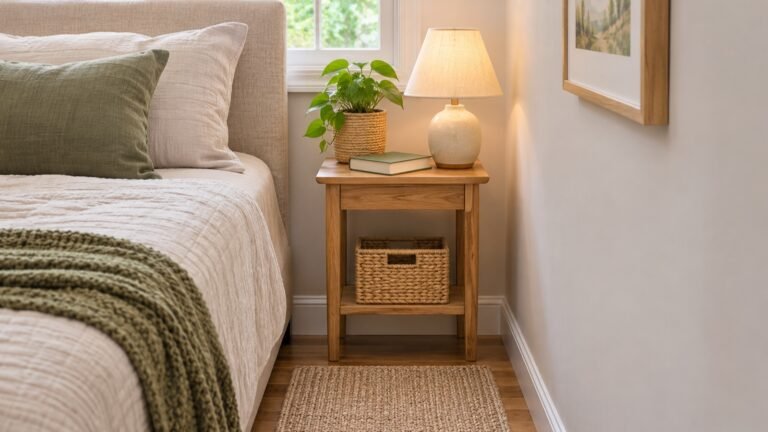
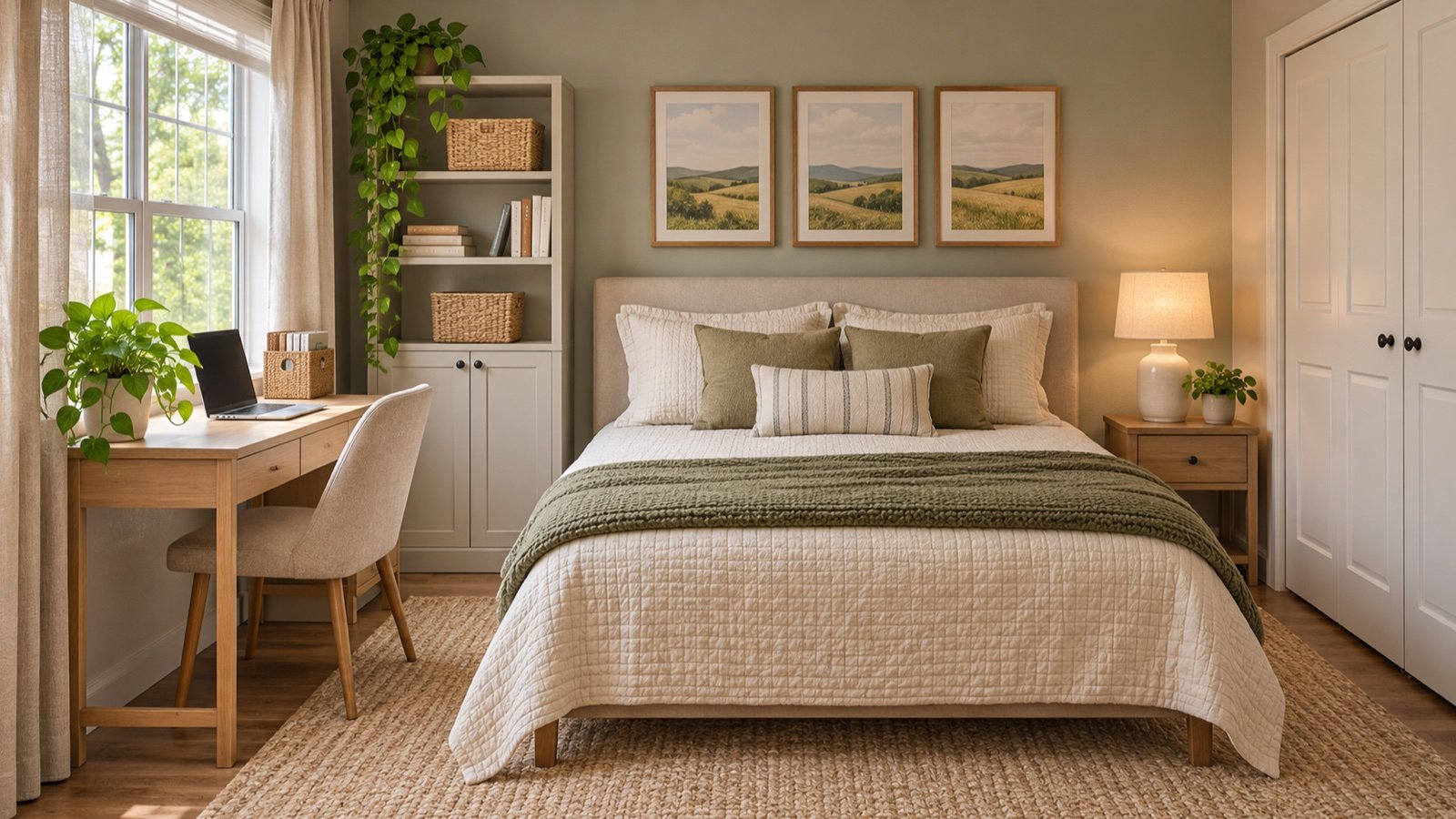
Featured image: AI-generated decorating inspiration, not a photograph of a tested makeover or a specific reviewed product.
Choose the work footprint with the chair included
Measure the desk, chair and space you use to sit down and stand. Include drawers and any storage doors. Check the path to the bed and bedroom door with the chair in its normal position. A desk that fits against the wall can still make the room awkward if its operating footprint is missing from the plan.
Use daylight without assuming the window solves everything
Test the screen and work surface at your normal working time. Notice glare, privacy and access to the window. Keep coverings and any required opening usable. If you need a separate task light, choose a suitable fixture and route its cord safely. A pleasing window view should not require you to block the only practical route around the furniture.
Give work supplies one defined category
Keep the items used most often together on a shelf, in a drawer or in a portable caddy. Return occasional equipment elsewhere as appropriate. Avoid storing every household paper beside the bed because the desk happens to have drawers. A small deliberate work category is easier to close down than a broad miscellaneous storage zone.
Plan the visible cable route
Locate suitable outlets before positioning equipment. Keep power leads clear of traffic, bedding and moving furniture. Follow the equipment's ventilation and connection instructions. Cable sleeves or reusable ties can organize a suitable route, but they do not make an unsafe route acceptable. Leave access to disconnect devices without moving the whole desk.
Try a closed-down evening arrangement
Decide where the laptop, notebooks and small tools go when work ends. A portable tray or a suitable drawer may be enough. Take the chair back to its intended position and clear the bed. This is a practical room-use routine, not a promise that hiding equipment will improve sleep or productivity.
Separate the visual zones lightly
Repeat one color between desk storage and bedding so the room feels connected. Use a small artwork or a restrained surface arrangement if desired. Avoid adding a bulky divider before testing the layout; the divider itself needs floor space. A calm view can come from fewer visible supplies rather than a second set of furniture.
Compare the options
| Option or situation | Useful starting point | Check before choosing |
|---|---|---|
| Work most days | Dedicated compact desk | Chair movement and safe power access |
| Occasional short tasks | Portable work caddy and suitable existing surface | Comfortable task position and storage afterward |
| Shared bedroom | Agreed work area and closing routine | Other person's movement, storage and preferences |
| Very tight layout | Reduce equipment before adding furniture | Whole operating footprint |
A worked planning example
In an illustrative 10-by-11-foot room, draw the bed and door first. Then add a 40-by-20-inch desk plus the actual chair position. Do not assume the remaining rectangle is usable simply because the desk fits in it. Open a drawer and walk to the bed. If the desk interrupts those tasks, compare another wall or a smaller equipment setup. The numbers are a planning example, not a universal room layout.
What to compare when shopping
The links below open Amazon searches for product categories, not verified exact-product recommendations. Check the specific listing, size, variant and manufacturer instructions before purchasing. No price, availability or physical testing is implied. The pictured examples below link to the specific products shown; compare their current listing details before buying.
Compact desks
Compare complete dimensions, stability and drawer operation.
Compare compact desks on Amazon Example pictured: Pamray 32 Inch Small Computer Desk with 2 Drawers for Bedroom Study Writing Home Office Table for Small Spaces Black. View pictured product on Amazon.
Portable work storage
Choose capacity for everyday work items only.
Compare portable work storage on Amazon Example pictured: Tiawudi Multipurpose Caddy Organizer, Plastic Caddy with Handle, Stackable Desk Organizer for Stationery, Marker and Pencil, Office Supplies Organizer, Dorm Caddy. View pictured product on Amazon.
Cable organizers
Use compatible products along an already suitable cable route.
Compare cable organizers on Amazon Example pictured: SOULWIT 50Pcs Bundling Multiple Cable Management Clips – Black. View pictured product on Amazon.
For more ideas, explore small bedroom ideas and cozy bedroom styling.
Frequently asked questions
Can a bedroom also be a useful office?
Yes, if the working footprint, storage and room access fit the space and household routine.
Where should a desk go in a small bedroom?
Compare available light, outlets, chair movement and access to the bed and doors rather than choosing a position from appearance alone.
How do I hide work equipment at night?
Create a defined drawer, shelf or portable caddy and a simple closing routine. Keep equipment stored as its instructions require.
Do I need a room divider?
Not necessarily. A divider consumes space. Test clear storage categories and furniture placement first.