Bathroom Drawer Organization Around Pipes, Tall Bottles And Daily Tools
This post contains affiliate links. As an Amazon Associate, I earn from qualifying purchases at no extra cost to you.
Bathroom drawer organization is easiest when you measure the drawer's usable shape before buying inserts. Plumbing notches, shallow upper drawers and tall containers can turn a rectangular organizer into the wrong fit. The best layout usually starts with fewer daily items and a clear place to return them.
Empty one drawer, identify the items used at the sink and measure around every obstruction. Choose removable trays or suitable dividers that let the drawer close normally. Keep products identifiable and follow storage instructions for toiletries and electrical items rather than treating the drawer as a general hiding place.
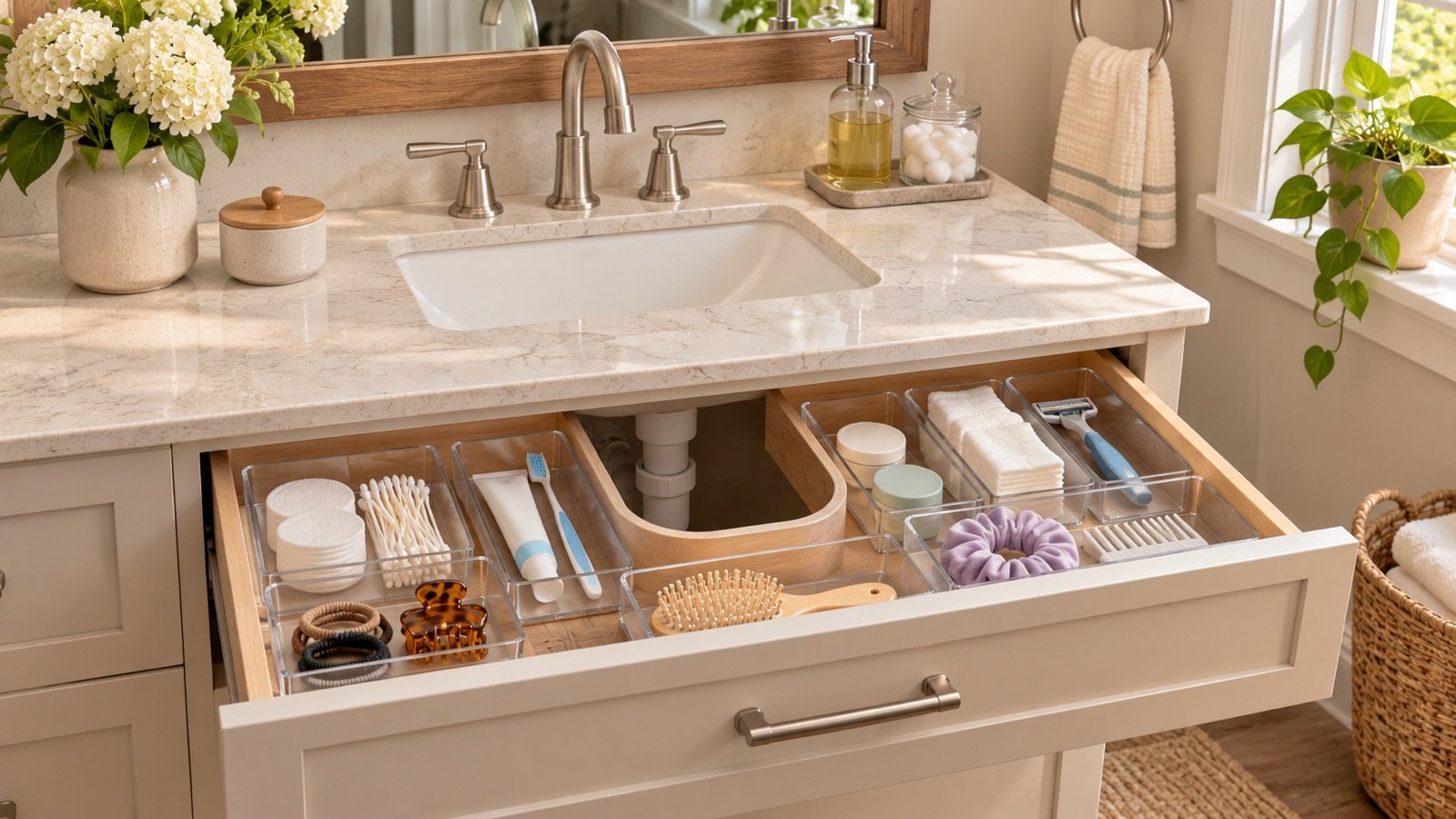
Featured image: AI generated decorating inspiration. It does not show a tested makeover or the exact products linked below.
Product Examples To Compare
Specific pictured items to compare after checking your own measurements and requirements.
These are product examples, not hands on test results or a ranked best products list. The picture and button for each example open the exact listed product. Check the current variant, dimensions, materials and instructions on Amazon before buying. Prices and availability can change.

Example pictured: VaeFae 6 Pack Adjustable Bamboo Drawer Dividers, Expandable Drawer Organizer for Kitchen Utensils, Clothes, Bathroom, Office Fits Drawer Interiors 16.6" to 21.8"
Check drawer dimensions, plumbing clearance and the divider's location and care requirements.
Choose One Daily Routine For The Drawer
A drawer works better with a defined job. For personal pieces that need their own suitable dry storage, these jewelry organizer ideas compare shallow trays and separate necklace compartments.
Group the products and tools used together, such as the ordinary morning sink routine. Separate spares, occasional accessories and items that belong elsewhere.
Keep labels, warnings and identification visible. Avoid decanting toiletries into lookalike containers simply for a uniform appearance. A shallow daily drawer should not have to hold the household's entire supply of backup products.
- Group by the actual routine.
- Move backups to suitable separate storage.
- Keep products identifiable.
Measure Around Plumbing And Hardware
The useful drawer is not always a simple rectangle.
Measure the clear base area, side height and any plumbing cutout. Check the path of the drawer as well as its fully open position.
A tray that fits at the front may strike a support farther back when the drawer closes. Use a cardboard outline for a first trial if helpful, then confirm actual dimensions before ordering inserts.
- Include plumbing notches.
- Check side height and supports.
- Test the closed position.
For the related room plan, see our under sink organization.
Match Tray Depth To The Contents
Small tools should be visible without stacking them in layers.
Lay out the daily items in the proposed compartments and leave room for fingers. A long compartment may suit a brush while a smaller section keeps loose accessories together.
Check the tray's material and cleaning instructions for the actual location. A deep bin is not automatically better just because it holds more; it may bury the items the drawer is meant to make accessible.
- Fit the longest everyday tool.
- Leave finger space.
- Choose cleaning compatible materials.
Separate Damp And Dry Jobs
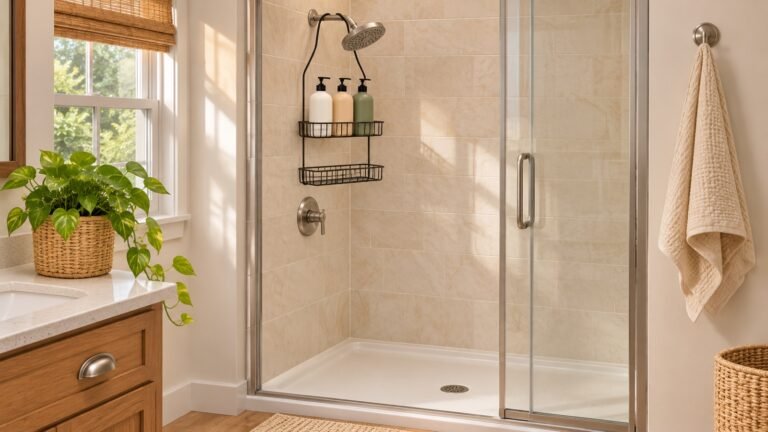
A storage drawer should not become a drying container. Plan the bottles used in the shower with these shower storage ideas, checking the supports, usable bottle height and drainage.
Put items away in the condition specified for them and keep the drawer suitable for their storage requirements. Follow instructions for electrical appliances, batteries and toiletries.
Do not trap warm equipment or damp materials in a crowded compartment to clear the counter quickly. If an item needs a different cooling, drying or storage routine, give that routine its own appropriate location.
- Follow item specific instructions.
- Keep inappropriate moisture out.
- Separate storage from cooling or drying.
Use Dividers Only Where Items Drift
The simplest layout may need fewer pieces than an organizer set provides.
Try a small number of trays rather than filling every inch with compartments. A compatible adjustable divider can define a larger zone, but check its fit and attachment requirements.
Leave the drawer mechanism unobstructed. Keep small accessories in removable suitable containers if that makes cleaning easier. Do not add unused compartments merely to complete a matching grid.
- Start with a few useful zones.
- Check divider fit.
- Keep mechanisms and the drawer edge clear.
Try A Full Morning And Evening Reset
The real test is whether the layout still makes sense after use.
Use the drawer normally and return each item without rearranging the neighbors. Notice which compartment is awkward or consistently overfilled.
Adjust the layout around those observations. Clean and review the contents as appropriate for the items and household. A practical drawer can be slightly varied in appearance while still being easy for everyone to understand.
- Test retrieval and return.
- Adjust the crowded section.
- Keep the daily group limited.
Compare The Options
Use the same actual room and belongings to compare each approach.
| Situation | Option to Compare | Check First |
|---|---|---|
| A shallow daily drawer | Low removable trays | Tool length and closing height |
| A plumbing notch | Several smaller suitable containers | Clear areas around the obstruction |
| A deep drawer with small accessories | Defined accessible upper zones | Visibility and normal retrieval |
A Worked Planning Example
Illustrative measurements explain the method rather than establish a universal rule.
A drawer may look 18 inches wide externally while offering only 15 inches of clear interior width and a plumbing notch at the back.
Three trays that total 18 inches will not fit. Measure each usable zone separately and check the drawer with its normal contents fully closed.
Frequently Asked Questions
Answers to related questions found in the keyword research.
How Do You Organize Bathroom Drawers?
Define the daily routine, measure the usable interior around plumbing and choose suitable removable compartments. Test the drawer closed and keep stored products identifiable. For the wider context, see our under sink organization.
How Do You Organize Deep Bathroom Drawers?
Group items into reachable zones and use suitable containers that make the contents visible. Avoid burying small daily tools under several layers of backup products. For the wider context, see our under sink organization.
Keep The Practical Choice
Choose the version that serves the way the household actually uses the room.
Keep the layout around the routine rather than the organizer. When one everyday drawer is easy to use, it becomes clearer which spare items need a different home.