Bedroom Rug Placement: Under The Bed, Alongside It Or As Runners?
This post contains affiliate links. As an Amazon Associate, I earn from qualifying purchases at no extra cost to you.
Bedroom rug placement is about the way you move around the bed, not simply choosing a rug size that appears in a decorating chart. Nightstands, door swings and the side where you get dressed can change which arrangement is useful. Draw the actual room before ordering a large textile.
Compare a rug partly under the bed, a larger rug under more of the furniture, and separate suitable bedside runners. Mark the complete furniture footprints and door movement. Choose the arrangement that gives you a useful landing area without creating awkward edges or obstructing the room.
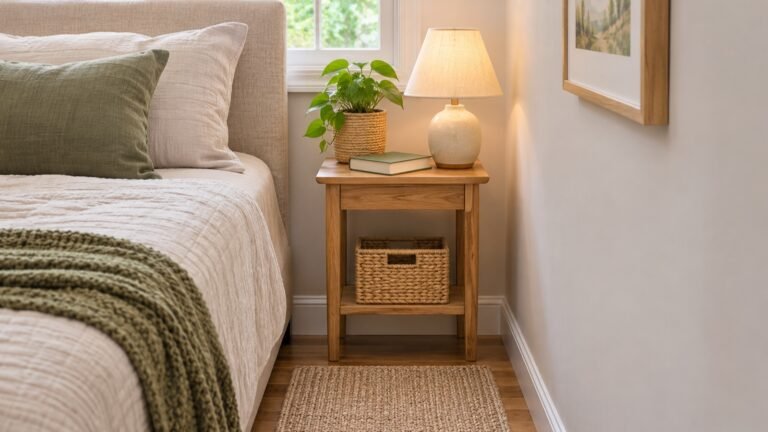
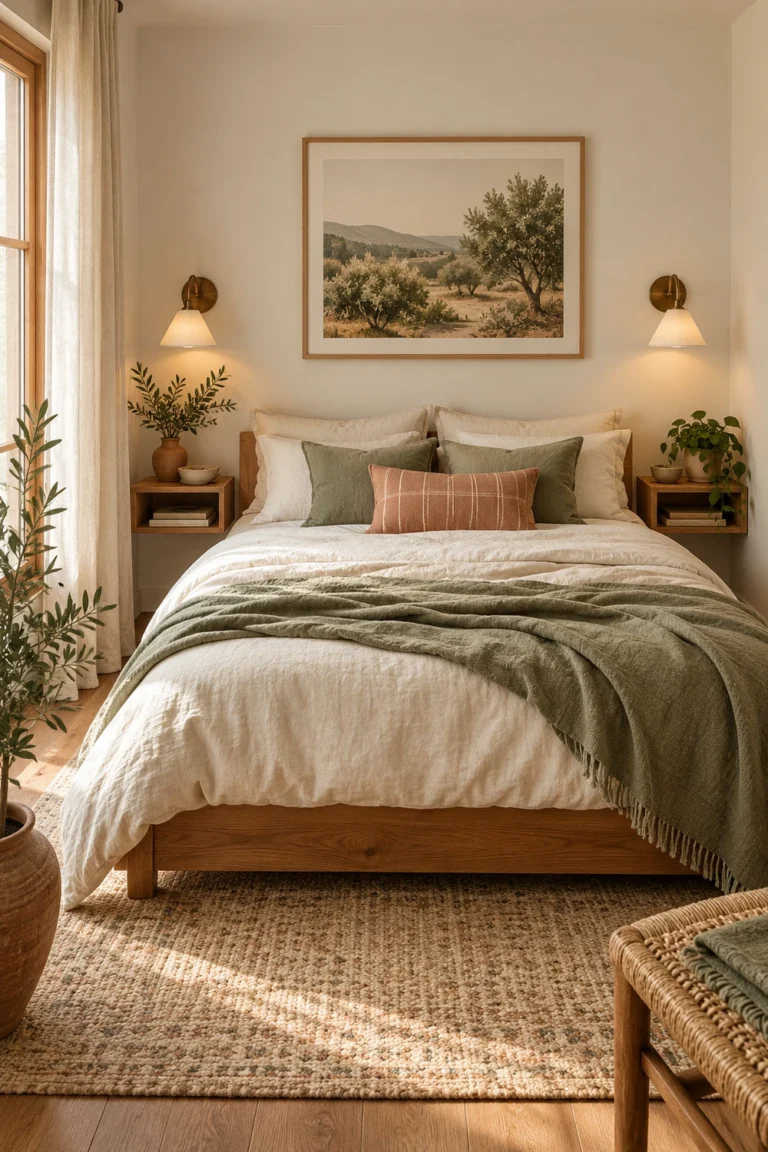
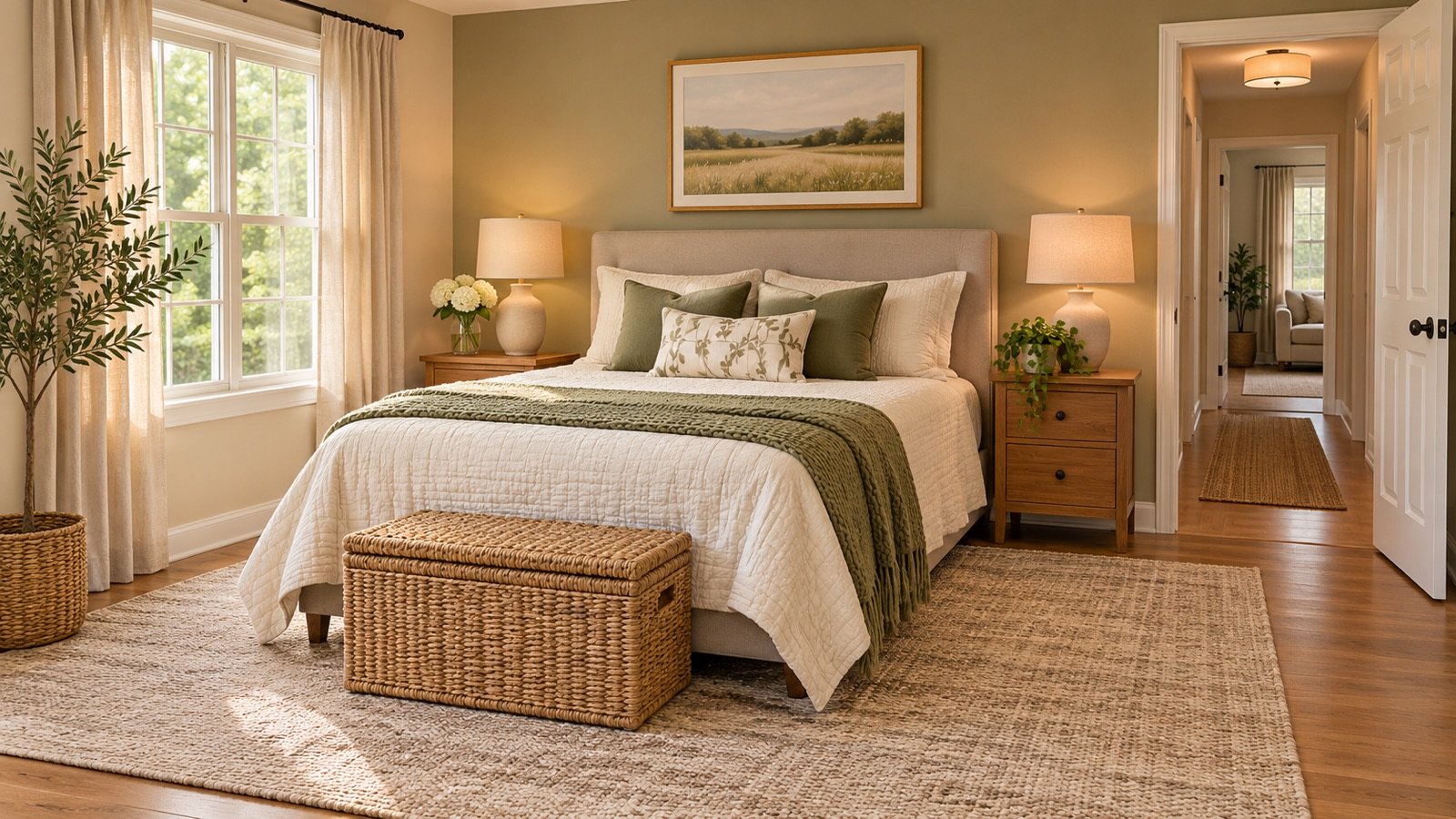
Featured image: AI generated decorating inspiration. It does not show a tested makeover or the exact products linked below.
Product Examples To Compare
Specific pictured items to compare after checking your own measurements and requirements.
These are product examples, not hands on test results or a ranked best products list. The picture and button for each example open the exact listed product. Check the current variant, dimensions, materials and instructions on Amazon before buying. Prices and availability can change.

Example pictured: Area Rug 8×10 Living Room Rugs: Washable Modern Rug Large Non Slip Soft Rugs Stain Resistant Printed Rug Indoor Carpet for Bedroom Kitchen Dining Room Nursery Playroom Home(Beige, 8'x10')
This is a rug example, not a verified fit for a particular bed. Confirm the exact size variant, floor and pad compatibility.
Draw The Bed Frame Rather Than The Mattress Alone
The furniture footprint may extend beyond the sleeping surface.
Measure the actual frame, projecting corners and any drawers. Include the nightstands and the position needed to open them.
A rug chart based on a mattress size cannot see a wide upholstered frame or a storage drawer. Mark these features on a simple plan so the rug can be compared with the complete bed in its usual position.
- Measure the whole bed frame.
- Include drawers and projecting corners.
- Add the nightstand footprints.
Decide Where A Soft Landing Is Useful
Start with the sides of the bed you actually use.
Notice where you stand when getting up, making the bed and getting dressed. A rug hidden mostly beneath furniture may add less useful surface than you expect.
Compare the exposed area with your own routine. If one bed side is against a wall, the arrangement may differ from a room with access on both sides. Symmetry is optional when the room does not work symmetrically.
- Mark the usual standing positions.
- Compare accessible bed sides.
- Keep the useful exposed area in view.
For the related room plan, see our small bedroom ideas.
Compare Partial And Larger Under Bed Placements
The rug position changes which furniture sits on it.
A rug starting below the nightstands creates a different boundary from one extending beneath them. Check how the furniture rests and follow rug, pad and flooring guidance.
Avoid an arrangement that leaves a piece of furniture supported unevenly. Moving a bed to install a rug also requires a suitable handling plan, especially with a heavy frame or connected equipment.
- Compare the exact start position.
- Check consistent furniture support.
- Plan appropriate installation handling.
Consider Bedside Runners For A Different Layout
Two smaller pieces are an alternative, not an automatic solution.
A suitable runner may fit an accessible bed side without placing a large rug beneath the frame. Measure the full exposed length and width and consider the transitions around its edges.
Check pad compatibility and flooring instructions. Keep runners away from a door swing that catches them. The smaller purchase still needs a complete layout plan.
- Measure each usable side separately.
- Check edge transitions.
- Follow pad and floor compatibility guidance.
Check Doors And Storage With The Whole Rug System
Pile and pad together determine the finished height.
Open the bedroom door and any wardrobe or underbed storage through their full normal movement. Include the rug's construction and the chosen pad rather than comparing bare floor clearance with rug pile alone.
Do not force a door over a textile that catches. A different size or position may solve the problem without changing the door or buying another large rug.
- Include rug and pad height.
- Open all nearby storage.
- Keep normal door operation.
Test The Outline Before Ordering
A simple temporary plan makes the tradeoffs visible.
Use a paper plan or a suitable removable floor outline that will not damage the surface. Walk around the bed and compare the proposed exposed rug area.
Keep the outline clearly a planning aid, not a claim about required clearance. Review the layout with bedding hanging normally. A rug that looks centered on an empty plan can feel different in the occupied room.
- Test with normal bedding in place.
- Walk the everyday routes.
- Check the final outline from the doorway.
Compare The Options
Use the same actual room and belongings to compare each approach.
| Situation | Option to Compare | Check First |
|---|---|---|
| Useful side and foot coverage | A suitable rug partly under the bed | Exposed area and furniture support |
| A larger unified floor area | A suitably sized larger rug | Room boundaries and installation |
| Different access on each side | Appropriate individual runners | Edges, pad and door movement |
A Worked Planning Example
Illustrative measurements explain the method rather than establish a universal rule.
For an illustrative 60 by 80 inch mattress, the actual bed frame may be wider and longer. Draw the measured frame and nightstands first, then place a proposed 8 by 10 foot rug outline on the plan.
Compare the visible landing areas and door movement. This example illustrates the method and does not establish a universal rug size for every queen bed.
Frequently Asked Questions
Answers to related questions found in the keyword research.
Where Do You Place A Rug In A Bedroom?
Compare the actual bed frame, usable standing areas and door swings. A rug partly under the bed, a larger placement or suitable bedside runners can work depending on those conditions. For the wider context, see our small bedroom ideas.
Keep The Practical Choice
Choose the version that serves the way the household actually uses the room.
Choose the rug position that works when the bed is made and the doors are open. The mattress name alone cannot decide the room's layout.