Rug Pad Thickness: Balance Cushioning, Door Clearance And Floor Compatibility
This post contains affiliate links. As an Amazon Associate, I earn from qualifying purchases at no extra cost to you.
Rug pad thickness changes the finished rug height, the feel underfoot and the way nearby doors move. A thick pad can look like an obvious upgrade until it makes an edge bulky or prevents a door from opening normally. Start with compatibility and clearance before choosing cushioning.
Check the flooring and rug manufacturers' requirements first, then compare the combined height of rug and pad in the actual location. Choose a pad intended for both surfaces and the room's use. Thickness by itself does not establish grip, floor protection or suitability.
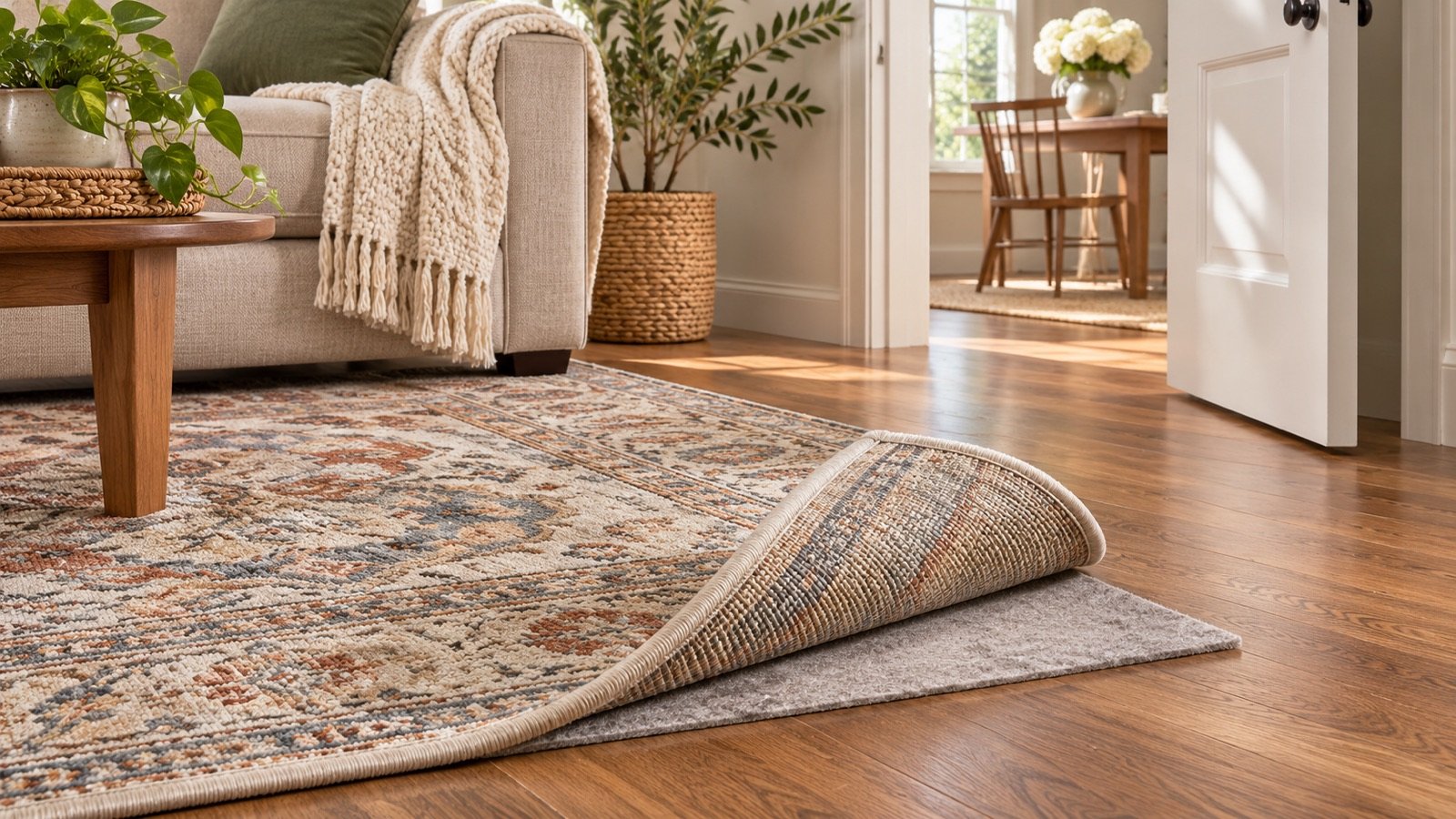
Featured image: AI generated decorating inspiration. It does not show a tested makeover or the exact products linked below.
Product Examples To Compare
Specific pictured items to compare after checking your own measurements and requirements.
These are product examples, not hands on test results or a ranked best products list. The picture and button for each example open the exact listed product. Check the current variant, dimensions, materials and instructions on Amazon before buying. Prices and availability can change.

Example pictured: Mohawk Home Rug Pad 8' x 10' 1/4" Thick Protective Cushioning
Confirm compatibility with your actual flooring and rug. The listed thickness does not establish universal suitability.
Start With Floor And Rug Compatibility
Material compatibility comes before a comfort preference.
Identify the actual flooring finish and rug backing, then read their guidance for pads and contact materials. Do not assume a product suitable for one hard floor is appropriate for every other surface.
If the finish or installation is uncertain, confirm with the relevant manufacturer before placing a pad. A broad claim on a product title should not override the floor's specific care requirements.
- Identify the flooring and finish.
- Check the rug backing.
- Confirm compatible contact materials.
Measure The Whole Rug System
The door encounters rug plus pad, not the pad alone.
Compare the rug's actual construction and the pad's stated thickness together. Open doors through the full normal swing and check furniture or storage that moves nearby.
A gap that clears the bare floor does not establish the finished arrangement will fit. Keep any temporary outline or sample appropriate for the surface and remove it after the trial.
- Include both rug and pad.
- Check the full door swing.
- Consider nearby moving furniture.
For the related room plan, see our living room rug size.
Compare Cushioning With Edge Transitions
More height changes the boundary as well as the center.
Look at the exposed edge and the way the rug sits over the pad. Follow the pad maker's sizing and trimming guidance where applicable.
A thick system can be unsuitable in a busy transition even if it feels pleasant in the middle. Do not assume any pad makes a rug slip proof or eliminates the need to monitor how the rug lies during normal use.
- Inspect exposed edges.
- Follow sizing instructions.
- Avoid universal slip proof claims.
Check Furniture Support Across The Rug
Feet should rest in a consistent planned arrangement.
Mark the furniture positions and compare the loaded rug outline. A chair or table partly supported by an unexpectedly high edge can behave differently from the same piece on an even surface.
Test the arrangement appropriately and follow the furniture and rug instructions. Adjust the rug plan rather than relying on a thicker pad to correct an unsuitable layout.
- Map the actual furniture feet.
- Check consistent support.
- Review edges near seats and tables.
Read The Pad'S Intended Use
Products with similar thicknesses can have different constructions.
Compare the materials, size, backing and care of the exact pad. A felt layer and a combined construction should not be treated as identical merely because they share a nominal thickness.
Check whether the product is suitable for the chosen floor and rug type. Keep product details with the household care record if the flooring needs particular treatment.
- Compare construction details.
- Check exact size and backing.
- Keep relevant care information.
Choose The Least Complicated Suitable Setup
A pad should support the rug's job without creating another problem.
After confirming compatibility, choose the thickness that fits the space and preference. A low clearance room may lead to a different suitable choice from an open seating area.
Inspect the installed edges and door operation after placement, and maintain the system as instructed. There is no single ideal thickness for every room, rug and floor.
- Choose around actual clearance.
- Inspect after placement.
- Maintain according to instructions.
Compare The Options
Use the same actual room and belongings to compare each approach.
| Situation | Option to Compare | Check First |
|---|---|---|
| Limited door clearance | An appropriately specified lower profile setup | Combined height and compatibility |
| An open seating area | A suitable cushioning option | Edges and furniture support |
| An unfamiliar floor finish | Confirm manufacturer guidance first | Contact materials and care |
A Worked Planning Example
Illustrative measurements explain the method rather than establish a universal rule.
If an illustrative door has 3/8 inch of available clearance, comparing that only with a 1/4 inch pad misses the rug placed above it.
Add the actual rug construction and test the complete suitable system. The example explains why combined height matters; it does not establish a required gap or approve a particular pad.
Frequently Asked Questions
Answers to related questions found in the keyword research.
How Do You Choose Rug Pad Thickness?
Check floor and rug compatibility, then compare the combined rug and pad height with door movement and furniture placement. Choose a suitable construction for the actual location rather than a universal thickness. For the wider context, see our living room rug size.
What Thickness Rug Pad Should You Get For A Living Room?
That depends on the rug, floor, edges and clearances. An open seating area and a nearby doorway may require different suitable choices, so measure the complete setup. For the wider context, see our living room rug size.
Keep The Practical Choice
Choose the version that serves the way the household actually uses the room.
Choose compatibility first and cushioning second. A pad that suits the surfaces and leaves the room functioning normally is more useful than the thickest option in the product list.