Ottoman Vs Coffee Table: Compare Feet Up Comfort, Serving And Storage
This post contains affiliate links. As an Amazon Associate, I earn from qualifying purchases at no extra cost to you.
Ottoman vs coffee table is really a comparison of what happens in front of your sofa. Feet up, a board game, a drink, a laptop and hidden storage do not all need the same surface. Decide which activities matter most before choosing the centerpiece of the room.
Compare a coffee table's firm usable surface with an ottoman's intended seating or footrest role and any specified storage. Check the complete footprint, manufacturer limits and everyday reach. A tray can be useful on an appropriate surface, but it does not turn every soft ottoman into a stable table.
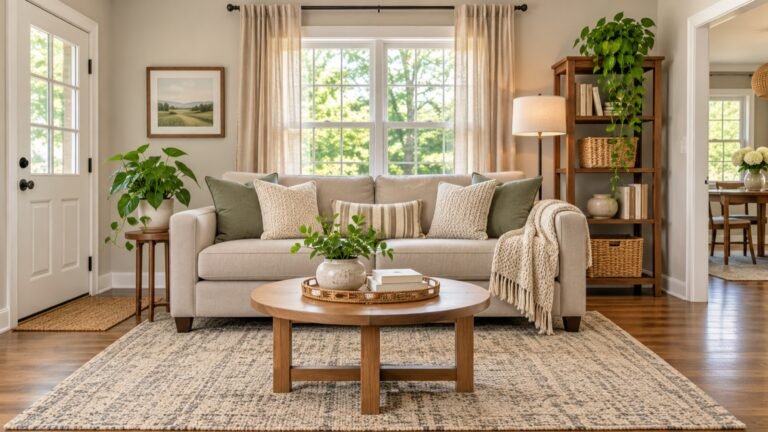
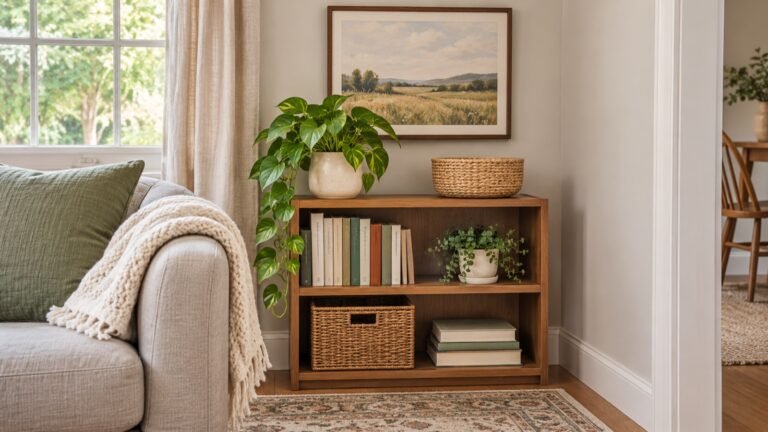
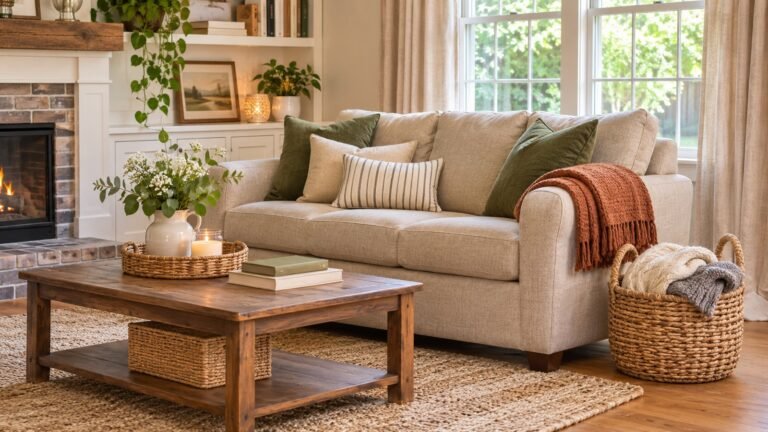
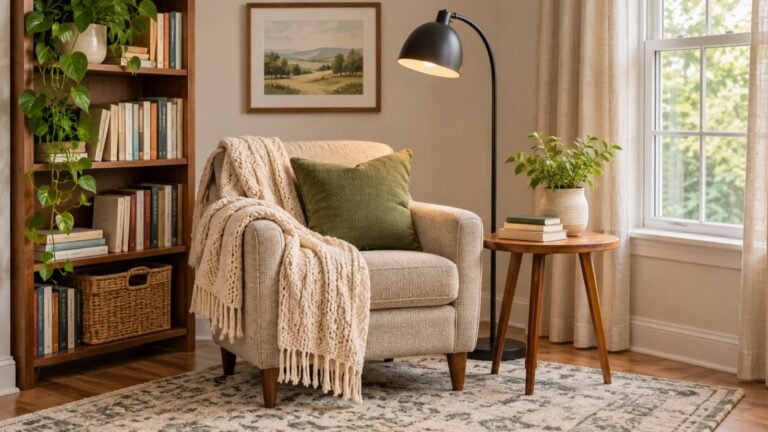
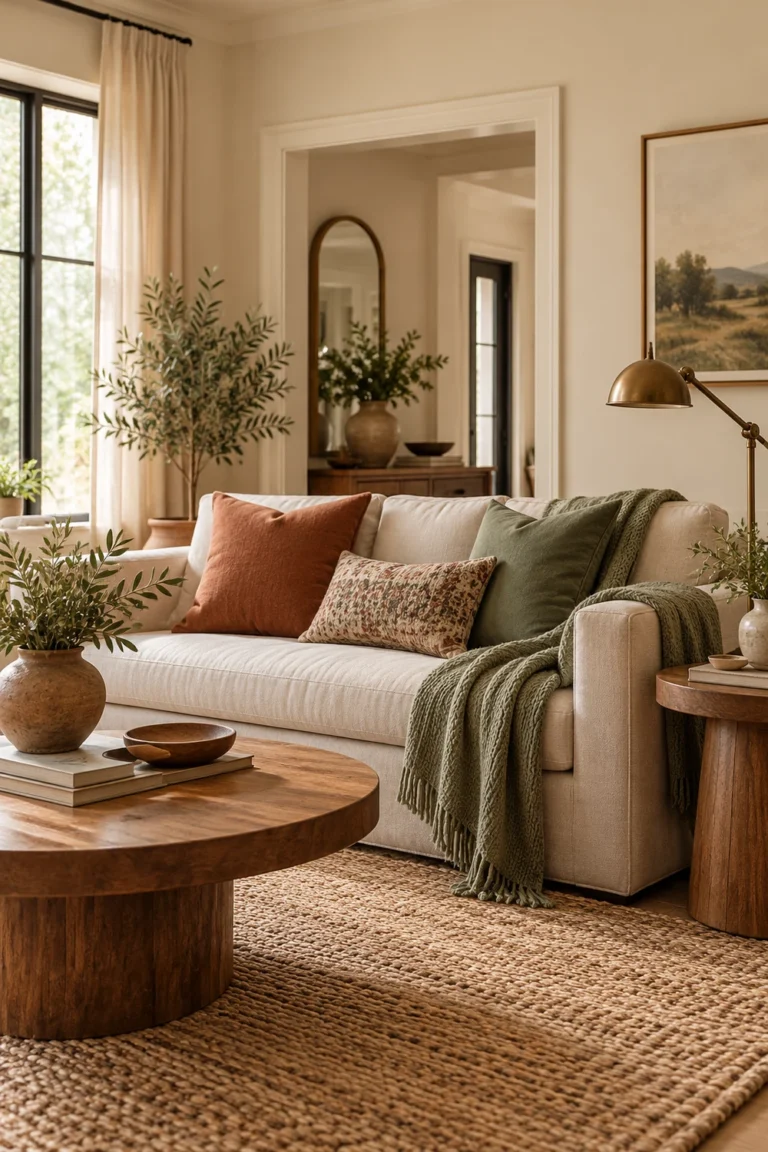
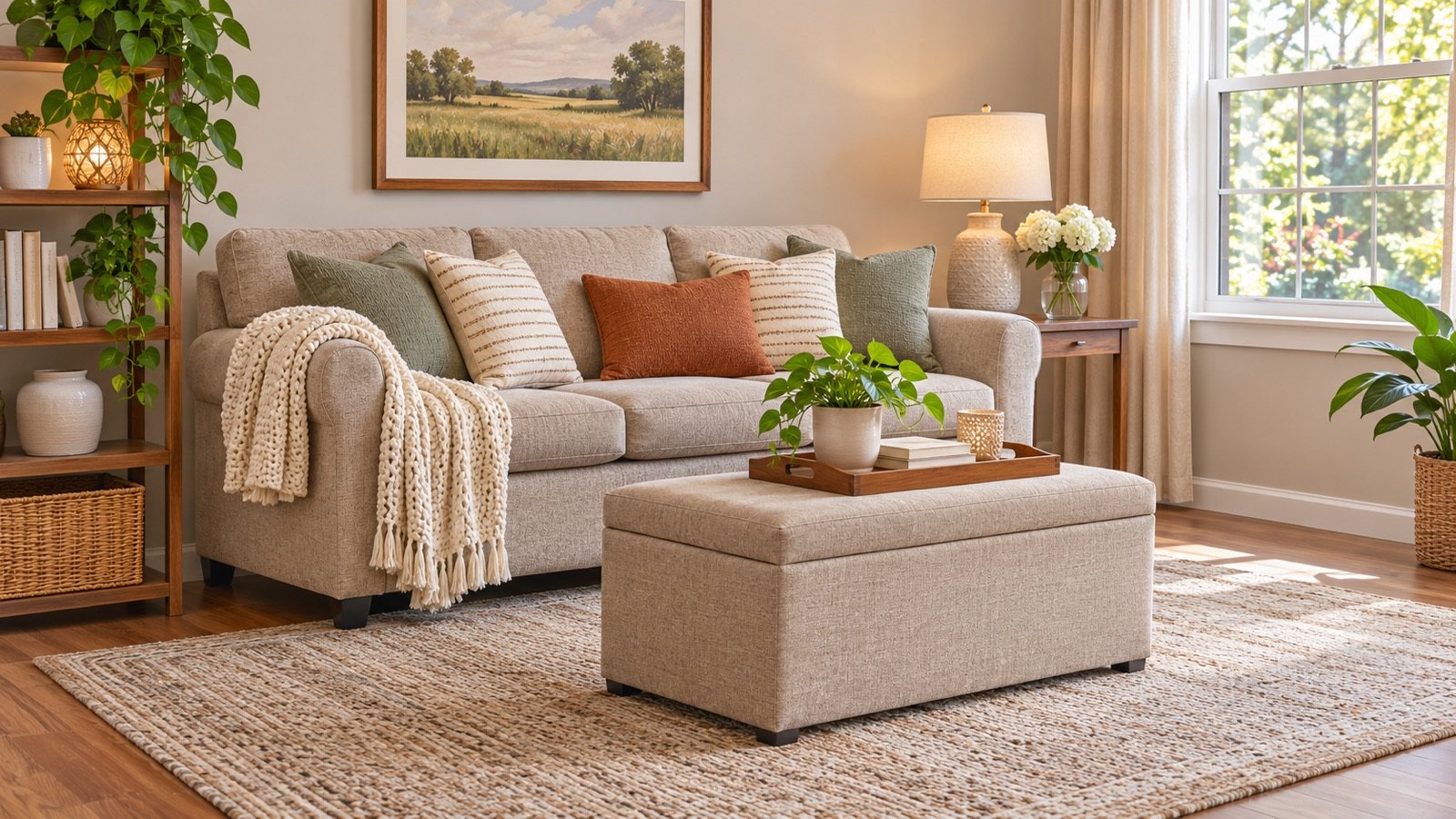
Featured image: AI generated decorating inspiration. It does not show a tested makeover or the exact products linked below.
Product Examples To Compare
Specific pictured items to compare after checking your own measurements and requirements.
These are product examples, not hands on test results or a ranked best products list. The picture and button for each example open the exact listed product. Check the current variant, dimensions, materials and instructions on Amazon before buying. Prices and availability can change.

Example pictured: 30 Inch Round Storage Ottoman, Ottoman Coffee Table with Lift Off Lid, Boucle Modern Ottomans with Storage for Living Room, Bedroom, Apartments (Beige)
Compare each piece's intended use, complete footprint, load limits and storage opening. Do not infer that any tray is stable on every upholstered top.

Example pictured: VASAGLE Farmhouse Coffee Table with Storage, Flip Top Lids
Compare each piece's intended use, complete footprint, load limits and storage opening. Do not infer that any tray is stable on every upholstered top.
List The Activities The Center Piece Must Support
Begin with ordinary evenings instead of the styled photograph.
Notice whether the household mainly serves drinks, rests feet, plays games or needs a place for spare throws. Choose the most important jobs rather than trying to solve every possible use.
A small separate side table may serve a drink while another piece handles the footrest role. You do not have to force one object to do jobs it is not designed for.
- Identify the regular activities.
- Separate firm surface needs from footrest use.
- Consider existing side tables.
Compare The Complete Footprint
Upholstered edges and projecting legs both occupy room.
Measure the whole object, including legs, handles and any lid movement. Draw it beside the actual sofa and chairs.
Check the route past the seating group and the way people stand up. A storage compartment adds value only if it can be opened in that arrangement. Avoid choosing a piece by its advertised compactness without checking your room.
- Measure every projection.
- Include storage lid movement.
- Keep ordinary circulation usable.
For the related room plan, see our cozy living room ideas.
Check The Intended Use And Load
The name does not establish what the furniture can support.
Read whether an ottoman is designed for feet, seating or another stated role, and follow the limits. Do the same for a coffee table's top and any lower shelf.
Decorative photographs are not instructions for standing or sitting on furniture. Keep the manufacturer's guidance central when comparing a lightweight occasional piece with a sturdier product.
- Read intended use.
- Check load and care guidance.
- Avoid inferring use from a photograph.
Assess Trays As Their Own Surfaces
A tray needs suitable stable support below it.
Compare the tray base with the ottoman top and the intended contents. Do not place liquids on an arrangement that rocks or sinks unevenly.
A separate firm table can be the better answer for serving. Keep handles and tray edges out of the normal movement route. The attractive layered look should not require constant careful balancing during an ordinary evening.
- Check the complete tray support.
- Keep serving surfaces stable.
- Use a separate table when more appropriate.
Treat Hidden Storage As A Usable Compartment
The opening matters as much as the volume.
Check internal dimensions, the lid mechanism and the way the contents will be removed. Follow instructions for the household and intended use.
A large compartment can still be inconvenient if the tray and decorations have to be cleared every time a throw is returned. Store only items suitable for that location and keep the furniture's daily job intact.
- Measure the usable cavity.
- Check access with the room arranged.
- Keep the return routine manageable.
Choose Around The Routine You Prefer
A practical room can use more than one small solution.
Compare the two candidates with the actual sofa height and reach. Try a temporary outline before purchase.
If the center piece is mostly a footrest, keep firm surface needs elsewhere where suitable. If it supports everyday games and serving, a coffee table may fit that routine better. Neither choice is automatically more sophisticated or more useful in every room.
- Test reach from the actual seat.
- Compare the daily reset.
- Choose function before a matching set.
Compare The Options
Use the same actual room and belongings to compare each approach.
| Situation | Option to Compare | Check First |
|---|---|---|
| Games and firm serving space | Suitable coffee table | Top size, reach and care |
| A stated footrest or seating role | Appropriate ottoman | Intended use and load limits |
| Need for spare throw storage | Specified storage furniture | Internal space and lid access |
A Worked Planning Example
Illustrative measurements explain the method rather than establish a universal rule.
An illustrative ottoman may fit the open floor rectangle while its storage lid cannot open beneath the intended tray arrangement.
Compare the closed footprint, access and serving routine separately. A smaller suitable table or a different storage location may meet the household's needs with fewer daily adjustments.
Frequently Asked Questions
Answers to related questions found in the keyword research.
What Is An Ottoman?
An ottoman is an upholstered furniture piece commonly used as a footrest and, when designed for it, seating or storage. Check the particular product's intended use rather than assuming all ottomans serve the same roles. For the wider context, see our cozy living room ideas.
Keep The Practical Choice
Choose the version that serves the way the household actually uses the room.
Choose the object around the activities you repeat most often. A room works better when its surfaces have clear jobs rather than one fashionable piece being asked to do everything.