Layering Rugs Without Creating A Bulky Edge Or Awkward Door Swing
This post contains affiliate links. As an Amazon Associate, I earn from qualifying purchases at no extra cost to you.
Layering rugs can add pattern to an existing room, but the attractive part is only one side of the decision. The edges, total height and furniture support need to work when people walk through the room. Start with the floor and the rugs you already have before adding another layer.
Check that both rugs, any pad and the flooring are compatible, then compare their complete footprints and transitions. Choose a clear base and accent relationship rather than covering the room with overlapping pieces. Keep door movement and ordinary walking routes central to the plan.
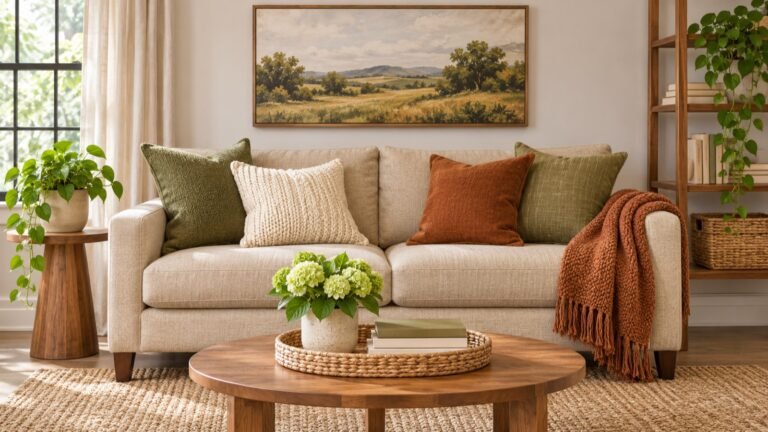
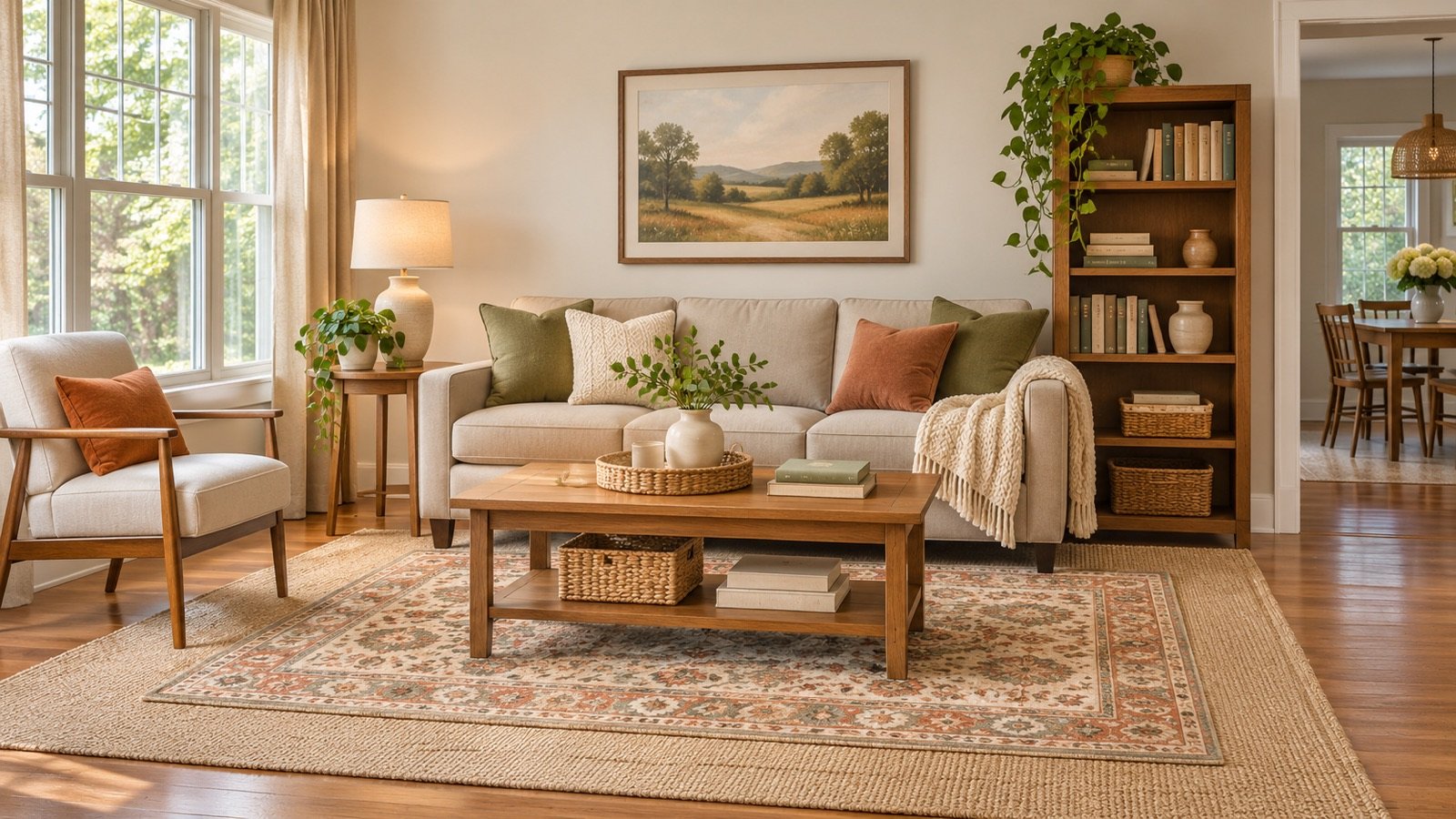
Featured image: AI generated decorating inspiration. It does not show a tested makeover or the exact products linked below.
Product Examples To Compare
Specific pictured items to compare after checking your own measurements and requirements.
These are product examples, not hands on test results or a ranked best products list. The picture and button for each example open the exact listed product. Check the current variant, dimensions, materials and instructions on Amazon before buying. Prices and availability can change.

Example pictured: Area Rug 8×10 Living Room Rugs: Washable Modern Rug Large Non Slip Soft Rugs Stain Resistant Printed Rug Indoor Carpet for Bedroom Kitchen Dining Room Nursery Playroom Home(Beige, 8'x10')
This rug example is not approval for placing it over another rug. Follow the instructions for every contact layer.
Begin With Compatible Materials
The visual pairing should not outrun the product guidance.
Identify the flooring, the backing of each rug and any pad in the proposed arrangement. Read the manufacturers' instructions for contact materials and intended use.
A rug suitable directly on a floor is not automatically suitable over another rug or carpet. If the proposed combination is not supported by the relevant guidance, choose a simpler single rug arrangement instead of improvising.
- Check every contact layer.
- Read the intended use.
- Prefer one suitable rug over an unsupported stack.
Give The Base And Accent Different Jobs
A clear relationship helps the room avoid visual clutter.
The larger rug can define the seating area while a smaller piece introduces a pattern or texture. Compare their scale with the actual sofa and table.
Keep an area of the base visible if that is the intended effect, but do not use a fixed border rule without considering the room. A paper plan can help you compare several layouts before moving heavy furniture.
- Define the seating area first.
- Use one clear accent.
- Compare footprints on a plan.
For the related room plan, see our living room rug size.
Inspect The Exposed Edges
A good photograph does not show every transition underfoot.
Consider where each rug edge falls in relation to the normal route. Follow appropriate sizing and pad guidance and keep the rugs lying as their instructions require.
Avoid an arrangement that repeatedly bunches or curls. Do not claim that a particular accessory makes any layered setup slip proof. If the edges cannot work properly in the room, change the layout rather than adding more decorative layers.
- Keep transitions in the plan.
- Check for bunching and curling.
- Avoid unsupported grip promises.
Keep Furniture Support Consistent
A table or chair should not straddle an awkward height change.
Draw the positions of the furniture feet and check the combined surface below them. The top rug should not unexpectedly lift only part of a piece that needs even support.
Review the instructions for the furniture and textiles. Try the arrangement appropriately before settling on it, including how a chair moves during normal use. Adjust the rug positions if the support feels uneven.
- Mark the furniture feet.
- Check moving chairs.
- Review uneven height changes.
Check Doors With The Complete Stack
Two rugs and a pad can change the room's clearances.
Open nearby doors and drawers through their normal movement. Include every layer in the finished height.
A doorway that worked with the original rug may not suit the added textile. Avoid forcing a door across a catching edge. The useful solution may be moving the layered area farther from the opening or keeping a single appropriate rug there.
- Include all layers.
- Check the full swing.
- Keep doors functioning normally.
Treat The Style As An Option Rather Than A Rule
You can enjoy texture without following a trend formula.
Try the smallest change that gives the room the intended contrast. If the larger rug already provides enough pattern, a different throw or cushion may be the easier update.
Review the arrangement after ordinary cleaning and household use. A layered look is successful only if the room remains easy to move through and maintain.
- Try one accent at a time.
- Review after normal use.
- Keep the single rug option available.
Compare The Options
Use the same actual room and belongings to compare each approach.
| Situation | Option to Compare | Check First |
|---|---|---|
| A quiet base needing pattern | A compatible restrained accent rug | Edges and furniture position |
| Limited doorway clearance | A suitable single rug arrangement | Finished height and swing |
| An existing rug with enough visual detail | Change another small textile instead | Avoid unnecessary additional layers |
A Worked Planning Example
Illustrative measurements explain the method rather than establish a universal rule.
A proposed smaller rug may look centered on a larger one while its edge lands exactly where a chair is pulled out.
Mark the actual chair movement on a plan and adjust the position. The example compares practical footprints; it does not establish a universal rug border or approval for every layered combination.
Frequently Asked Questions
Answers to related questions found in the keyword research.
How Do You Layer Rugs In A Living Room?
Confirm material compatibility, compare full footprints and give the base and accent distinct roles. Check exposed edges, furniture support and doors with every layer in place. For the wider context, see our living room rug size.
Is Layering Rugs Still In Style?
It remains a decorating option rather than a requirement. Choose it when the visual effect and the practical conditions suit the room, not because a trend label says every room needs it. For the wider context, see our living room rug size.
Keep The Practical Choice
Choose the version that serves the way the household actually uses the room.
Keep the arrangement that works in motion, not only from the camera angle. The room does not need a second rug to be finished.