25 Cozy Bedroom Ideas for a Warm, Relaxing Space
A cozy bedroom does not need layers of expensive bedding or a room full of decorations. Often, it begins with a clear bedside table, a comfortable blanket, and lighting that feels gentler in the evening.
The aim is to make the room pleasant to use as well as inviting to look at. A chair covered with clothes or cushions you have nowhere to put can make an attractive scheme feel inconvenient. Start with the things you touch and use every day, then add color and texture around them.
These cozy bedroom ideas cover simple changes for small rooms, shared bedrooms, and spaces you cannot renovate. They are decorating suggestions, not promises about sleep or health.
Before you begin
Look at the room in daylight and again with the evening lights on. Note the surfaces that collect clutter, the places that feel bare, and any furniture that interrupts movement around the bed.
Choose a small starting palette using something already in the room: the floor, a favorite cover, or a piece of art. You can make the space feel connected without replacing furniture or repainting every wall.
1. Begin with bedding you enjoy using
Choose a comfortable everyday bedding combination before adding decorative layers. Consider laundering, storage, and the temperature of your room. A simple duvet cover that washes easily may be more practical than a complex layered arrangement you have to dismantle every night.
2. Add one textured throw
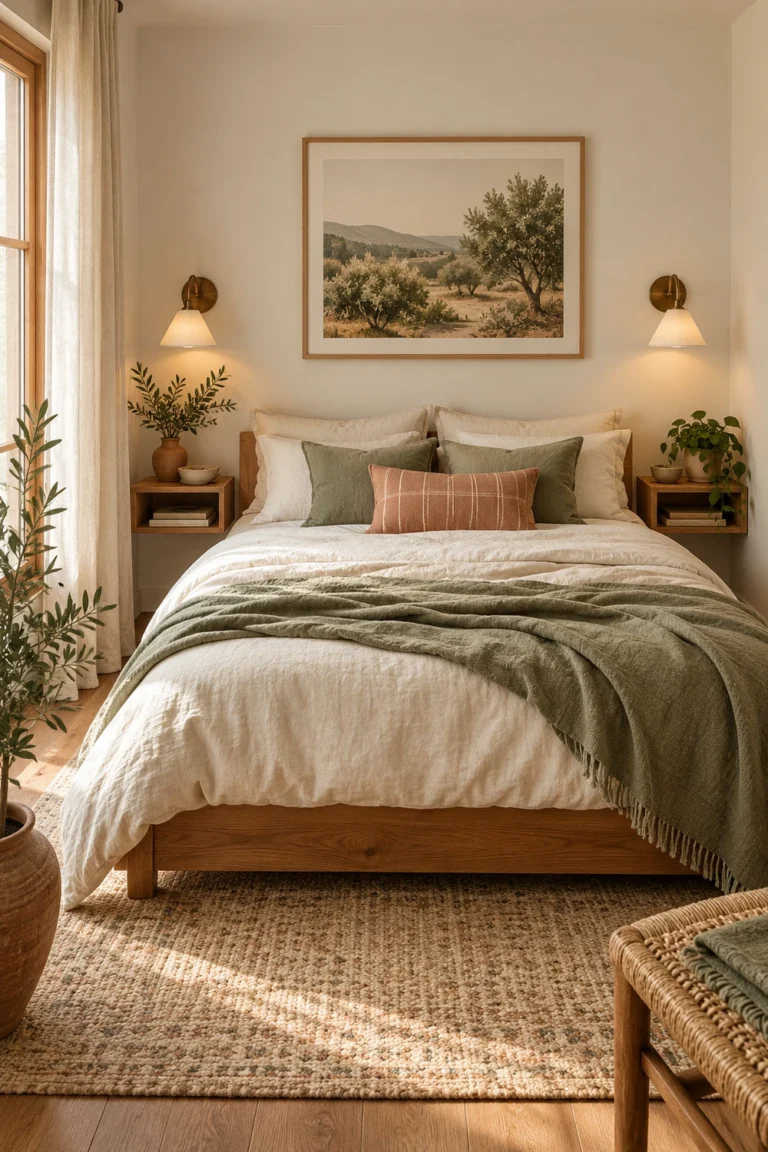
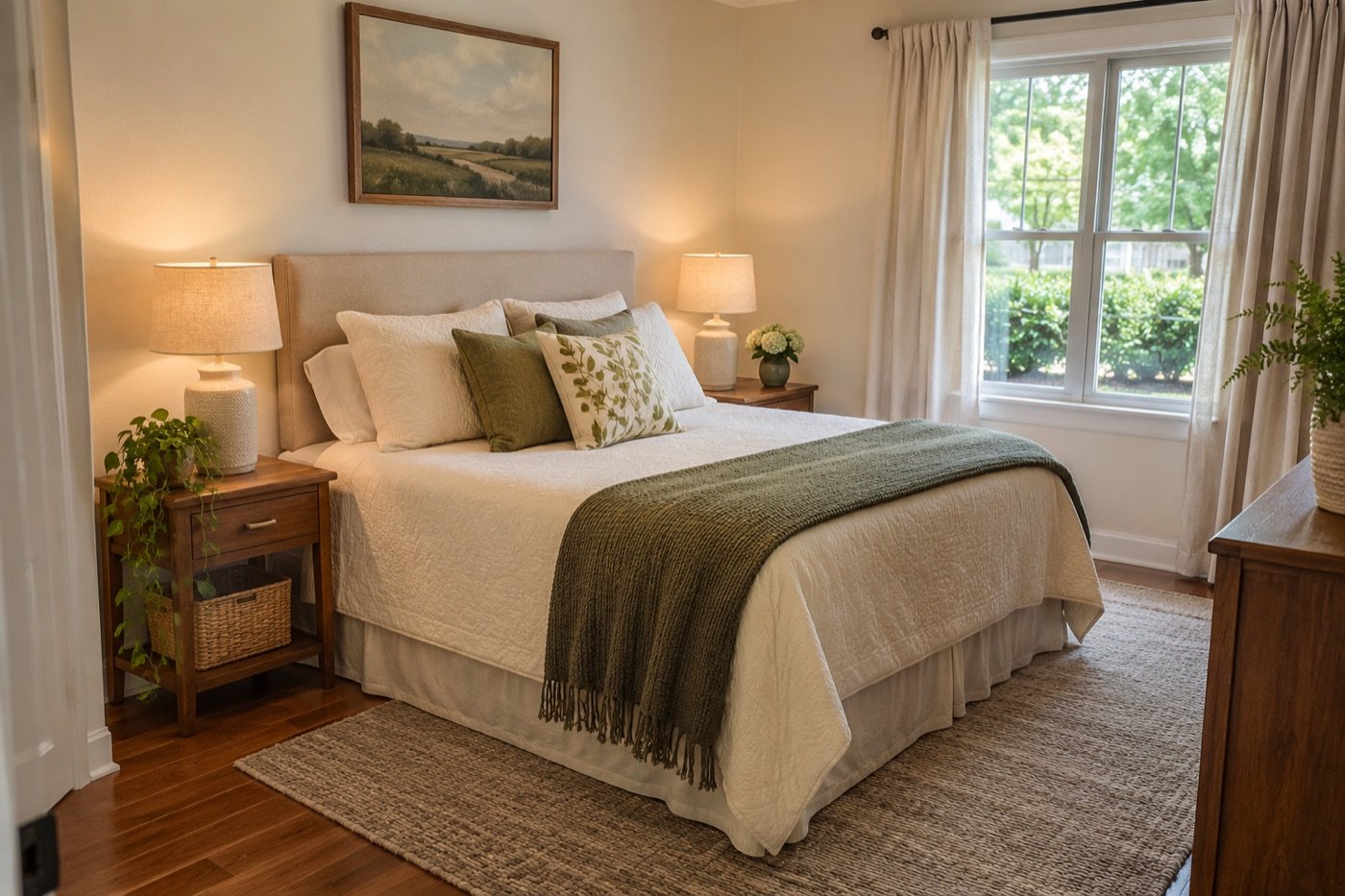
Fold a throw across the foot of the bed or drape it over a reading chair. Keep its size manageable so it does not trail into the walkway. A knit, woven cotton, or softly textured fabric can change the look without requiring a full bedding replacement.
3. Reduce the pillow routine
Use only as many decorative cushions as you can comfortably store at night. A pair may be enough to introduce pattern. If the floor becomes their regular overnight home, remove some or give them a dedicated basket that does not obstruct movement.
4. Try warm neutral bedding
Cream, oatmeal, tan, and soft brown can form a gentle starting palette. Compare fabric samples beside your walls and flooring rather than assuming all neutrals work together. Add contrast through one darker cushion or wood tone so the room still has definition.
5. Introduce muted green
A sage or olive accent can sit comfortably beside wood and natural-looking textures. Try a cushion cover, artwork, or a throw before committing to paint. Repeat the color in a second small place to make it feel intentional rather than isolated.
6. Use a deeper accent sparingly
A deep blue, burgundy, or chocolate detail can give pale bedding more depth. Start with one small textile or framed print. Keeping the larger pieces simple makes it easier to change the accent later without replacing the whole room scheme.
7. Create a useful bedside surface
Leave room for the things you actually need: a light, a book, and perhaps a glass of water placed securely. Move decorative objects elsewhere if they crowd that space. A bedside table feels calmer when you can use it without rearranging a display first.
8. Contain small bedside items
A small tray or shallow dish can gather loose everyday objects. Keep it proportionate to the surface and empty it regularly. The tray should reduce scattered clutter rather than become a container for everything that has no other home.
9. Use an adjustable reading light
Position a suitable lamp so it lights your book without taking over the bedside table. Check the fixture's bulb requirements and keep fabrics away from hot components. Choose the lighting arrangement for the way you read rather than for a photograph of the room.
10. Layer lighting by activity
Use a main light for dressing and cleaning, with a smaller light for quiet evening tasks. You do not need several new fixtures at once. Start by moving an existing lamp to the place where overhead lighting feels least useful.
11. Soften the window visually
Curtains can introduce color and texture even when blinds provide the main privacy. Check how they open and whether furniture blocks them. Keep fabric away from heaters and follow cord-safety guidance for window coverings, especially where children may be present.
12. Choose a rug around the walkway
If you add a rug, place it where your feet actually land when getting out of bed. Check door clearance and use a suitable method to keep it from slipping. A small loose rug that moves underfoot can be less useful than leaving the floor clear.
13. Let wood tones repeat
Repeat a wood tone in a frame, bedside table, or small accessory instead of trying to match every piece exactly. This can connect existing furniture. Compare pieces together in the room's light so the combination feels deliberate rather than accidentally inconsistent.
14. Keep the foot of the bed clear
A bench looks inviting only if there is room to walk past it and open nearby drawers. Mark its footprint before purchasing. In a compact room, a clear route may contribute more to comfort than another place to put decorative cushions.
15. Make a modest reading corner
Use an existing chair and a suitable light if you have space. Add only what you need to sit comfortably. A reading corner does not require a side table, basket, stool, and floor lamp if those pieces crowd the rest of the bedroom.
16. Give everyday clothes a landing place
A few hooks or a dedicated chair section can keep worn-but-not-ready-to-wash clothing from covering the bed. Set a limit and reset it regularly. The aim is to support your routine while keeping the room usable, not to create another permanent pile.
17. Display one meaningful artwork
Choose a picture you enjoy rather than filling a wall because it looks unfinished. Size and position it in relation to the furniture below. Use suitable hanging hardware, particularly over a bed, and avoid placing heavy objects where a failed fixing could cause injury.
18. Try a quiet headboard backdrop
A restrained paint color or simple wall treatment can define the bed area. Check samples at different times of day before committing. In a rental, choose changes your lease allows and do not assume removable finishes will suit every wall surface.
19. Use a small shelf for personal objects
A short display area can hold a few books or keepsakes without spreading them across every surface. Leave space between objects and keep heavier pieces safely supported. Rotate items if the shelf becomes crowded instead of immediately adding another shelf.
20. Make storage less visually busy
Use simple baskets or closed storage for belongings you do not want on display. Organize the contents before choosing matching containers. An attractive basket filled with unrelated things still creates a search problem when you need something quickly.
21. Keep a blanket within reach
Store an extra blanket on a shelf or in an accessible basket so you can adjust layers when needed. Make sure it is clean and dry before storing. Choose the location for convenience rather than putting it somewhere awkward simply to complete the room's styling.
22. Create a gentle seasonal change
Swap one cover or throw instead of replacing the whole room for each season. Keep a small palette that works with your existing bedding. This limits storage demands and lets familiar pieces remain useful throughout the year.
23. Use books as a small accent
A few books on a bedside shelf can make the room feel personal and lived in. Keep the stack stable and leave space for actual reading items. Avoid using so many decorative books that you lose the surface you need every evening.
24. Bring in natural-looking texture
Woven baskets, a wood frame, or a linen-look fabric can add variation to smooth furniture. Choose one or two materials that suit your maintenance routine. You do not need delicate finishes or difficult-to-clean accessories to make a bedroom feel inviting.
25. Finish with a usable evening reset
Clear the bed, put laundry away, and return small items to their places before winding down. Notice which task is inconvenient and simplify that part of the room. Cozy styling lasts longer when the furniture and storage support daily habits.
Make a plan that suits your room
For a small bedroom, begin with useful bedside lighting, simple bedding, and an unobstructed route around the bed. For a larger room, create one comfortable extra zone rather than filling every wall with furniture.
A good first weekend project is to clear surfaces, choose one textile accent, and move a lamp where you need it. Live with those changes before deciding whether paint, a rug, or new furniture would add anything worthwhile.
For more ideas, explore small bedroom ideas and closet organization ideas.
Frequently asked questions
How can I make my bedroom cozy on a budget?
Rearrange lighting, clear bedside surfaces, reuse a favorite blanket, and choose one small accent color. Start with comfort and convenience before buying decorative pieces.
Can a small bedroom look cozy without looking cluttered?
Yes. Keep the walking route clear, limit decorative cushions, and use a few textures rather than many small accessories.
Which colors work for a cozy bedroom?
Warm neutrals, muted greens, soft blues, and deeper accents are possible starting points. Test colors beside your actual furniture and in the room's daylight and evening light.
Do I need matching bedroom furniture?
No. Repeating a color, wood tone, or simple shape can connect different pieces. Prioritize useful dimensions and comfortable movement over a fully matching set.