Cord Management for Living Rooms Without Hiding Equipment Vents
As an Amazon Associate I earn from qualifying purchases. This article contains affiliate links.
Living-room cord management should make equipment easier to use and inspect, not simply hide every cable. A decorative box that blocks ventilation or a cable routed beneath a rug can introduce a problem while making the room look tidier.
Start with the equipment, outlets and manufacturer instructions. Then organize an already suitable route with a few appropriate clips or ties. You may need fewer accessories once unused devices and unnecessary cable lengths are removed from the arrangement.
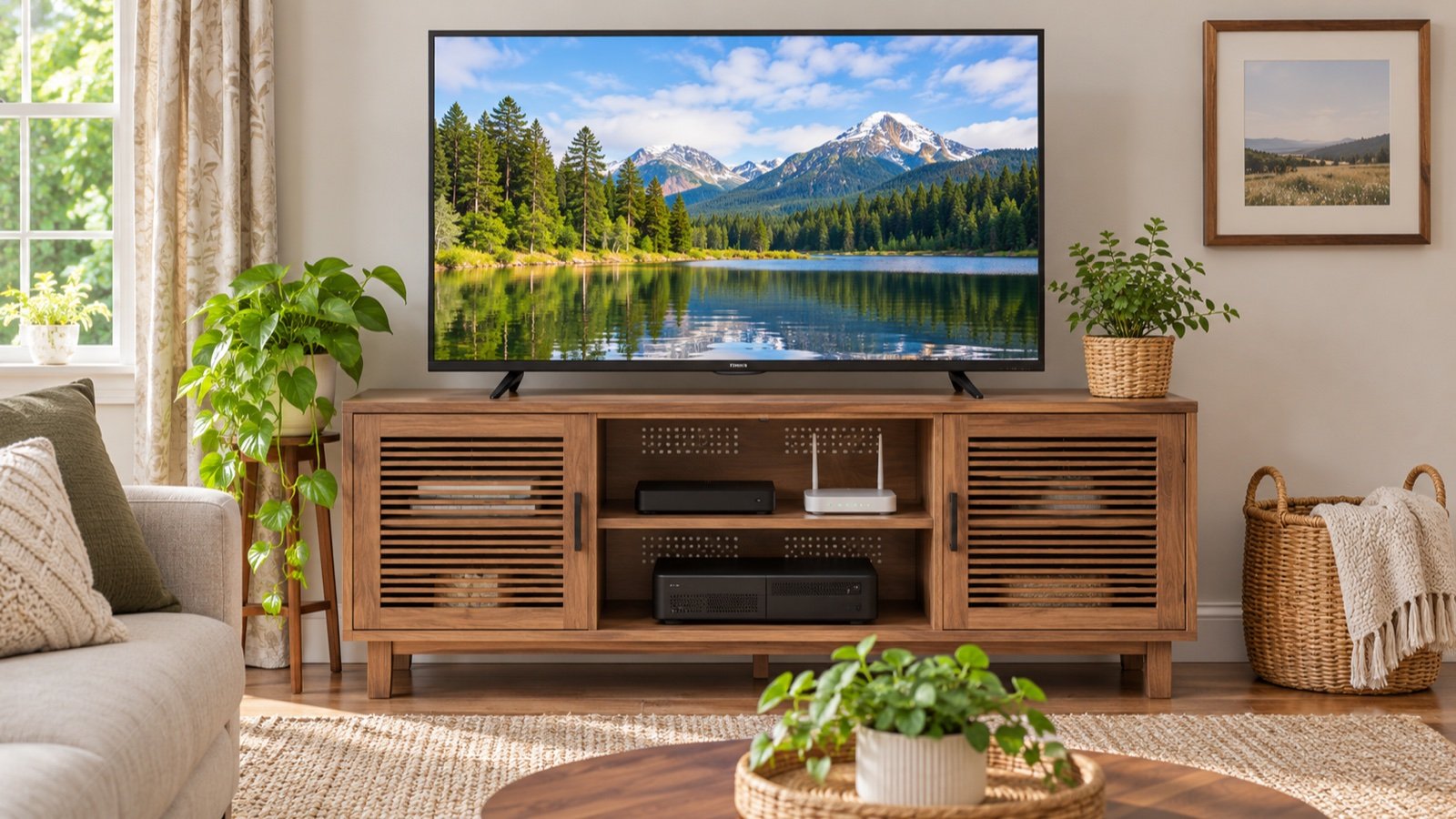
Featured image: AI-generated decorating inspiration, not a photograph of a tested makeover or a specific reviewed product.
Identify what each cable serves
Turn off or disconnect equipment only as directed and label suitable cables so you can identify them later. Separate unused accessories for review rather than pulling on unidentified leads. Keep the information simple and avoid covering safety markings. A clear inventory can remove redundant cables before you buy anything to conceal them.
Check ventilation before covering equipment
Read the instructions for the devices and power accessories in the TV area. Keep ventilation openings and required clearances available. Do not pack a power strip or adapter into a decorative container unless the product is expressly suitable for that use and conditions. Appearance does not establish electrical compatibility or safe operating temperature.
Choose the route before the organizer
Locate suitable outlets and plan a path that avoids walking areas, rugs, pinch points and moving furniture. Keep access to plugs. Do not improvise wiring changes or run power leads through walls. If the arrangement requires an electrical installation change, obtain appropriate professional help rather than treating a cable cover as a substitute.
Use clips for light positioning tasks
Choose clips intended for the cable and surface and follow their attachment instructions. Avoid tight bends, pulling or pressure on connections. Keep the removal method in mind on painted or rental surfaces. Clips can guide a suitable cable path; they do not make an otherwise inappropriate route safe.
Use reusable ties without compression
Group suitable cables loosely enough to avoid strain and follow relevant product guidance. Leave enough movement where furniture or adjustable equipment needs it. Do not tightly coil or bundle power leads contrary to instructions. Keep identification and access available so troubleshooting does not require cutting apart a decorative arrangement.
Keep the service area reachable
Leave a way to inspect equipment, clean the area and disconnect devices as directed. Avoid a layout that requires lifting a heavy television whenever a plug needs attention. Check furniture stability and anchoring instructions where applicable. A tidy room should remain maintainable after the cables are no longer visible from the sofa.
Compare the options
| Option or situation | Useful starting point | Check before choosing |
|---|---|---|
| A few visible loose leads | Compatible clips along a suitable route | No strain, sharp bends or pinching |
| Several suitable signal cables | Reusable ties or a suitable sleeve | Identification, access and equipment guidance |
| Ventilated equipment | Clear space around openings | Manufacturer operating requirements |
| Route crossing the room | Reconsider the layout | Do not hide power leads beneath rugs |
A worked planning example
Suppose a console sits beside the only appropriate outlet but the lamp is across a doorway. A cable sleeve can improve the appearance of the lamp lead without fixing the route across the opening. Try relocating the lamp or choosing a suitable alternative arrangement. This worked example demonstrates why routing comes first; it is not electrical installation advice or confirmation that a specific product can be used with your equipment.
What to compare when shopping
The links below open Amazon searches for product categories, not verified exact-product recommendations. Check the specific listing, size, variant and manufacturer instructions before purchasing. No price, availability or physical testing is implied.
Cable clips
Match the cable type, surface and intended use.
Reusable ties
Organize without straining connections or contradicting equipment instructions.
Compare reusable ties on Amazon
Suitable sleeves
Check intended cable use, access and ventilation needs.
Compare suitable sleeves on Amazon
For more ideas, explore cozy living room ideas and small apartment layouts.
Frequently asked questions
Can I hide extension leads beneath a living-room rug?
Do not route power leads beneath rugs. Choose a suitable safe route and follow relevant instructions.
Does a cable box make power equipment safe?
No. Check suitability and ventilation for the exact equipment and enclosure rather than assuming concealment solves the issue.
Should I tie every cable tightly together?
No. Avoid strain, pinching or bundling contrary to instructions. Keep connections and identification accessible.
When should I get professional help?
Use appropriate professional help for electrical installation changes or problems beyond straightforward use of compatible consumer accessories.