Handbag Storage Ideas Without Stacking Every Bag On One Shelf
This post contains affiliate links. As an Amazon Associate, I earn from qualifying purchases at no extra cost to you.
Handbag storage ideas need more than enough shelf width. A bag may have a structured base, a soft body, a long strap or delicate hardware, and those details change how it should rest. Organizing everything into one tightly packed row can make the collection look neat while making the everyday bag difficult to reach.
Check each bag's care guidance, separate the current rotation from occasional pieces and measure the complete stored shape. Compare suitable dividers, supports and protective covers without assuming every bag should hang from its handles. Keep access simple enough that returning the bag does not become a separate project.
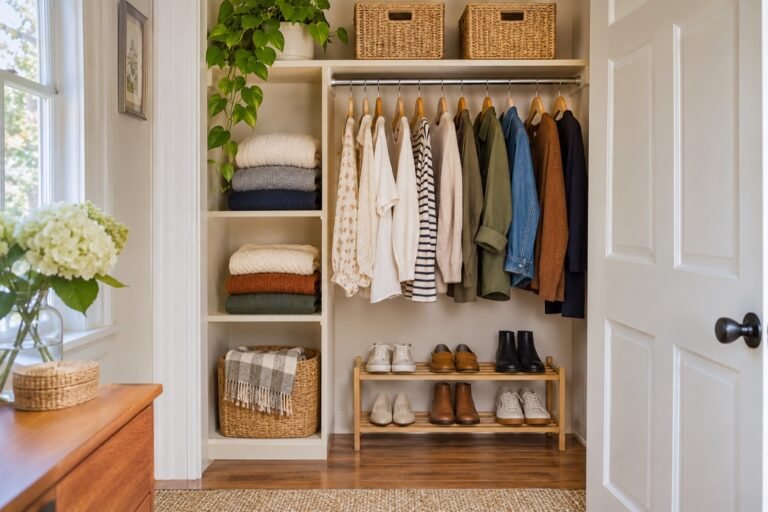
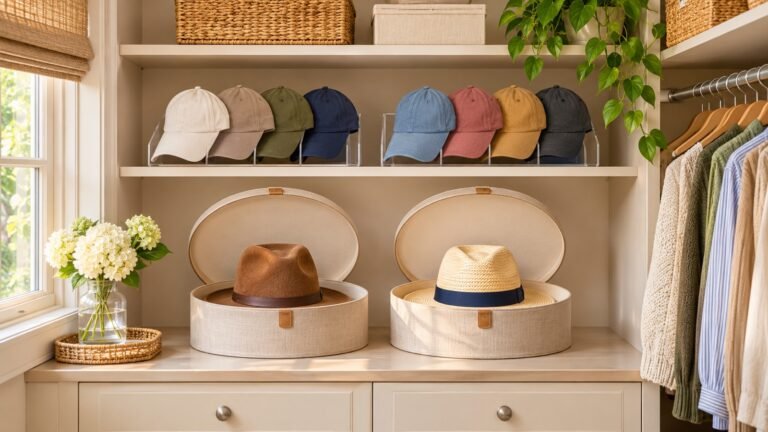
Featured image: AI generated decorating inspiration. It does not show a tested makeover or the exact products linked below.
Product Examples To Compare
Specific pictured items to compare after checking your own measurements and requirements.
These are product examples, not hands on test results or a ranked best products list. The picture and button for each example open the exact listed product. Check the current variant, dimensions, materials and instructions on Amazon before buying. Prices and availability can change.

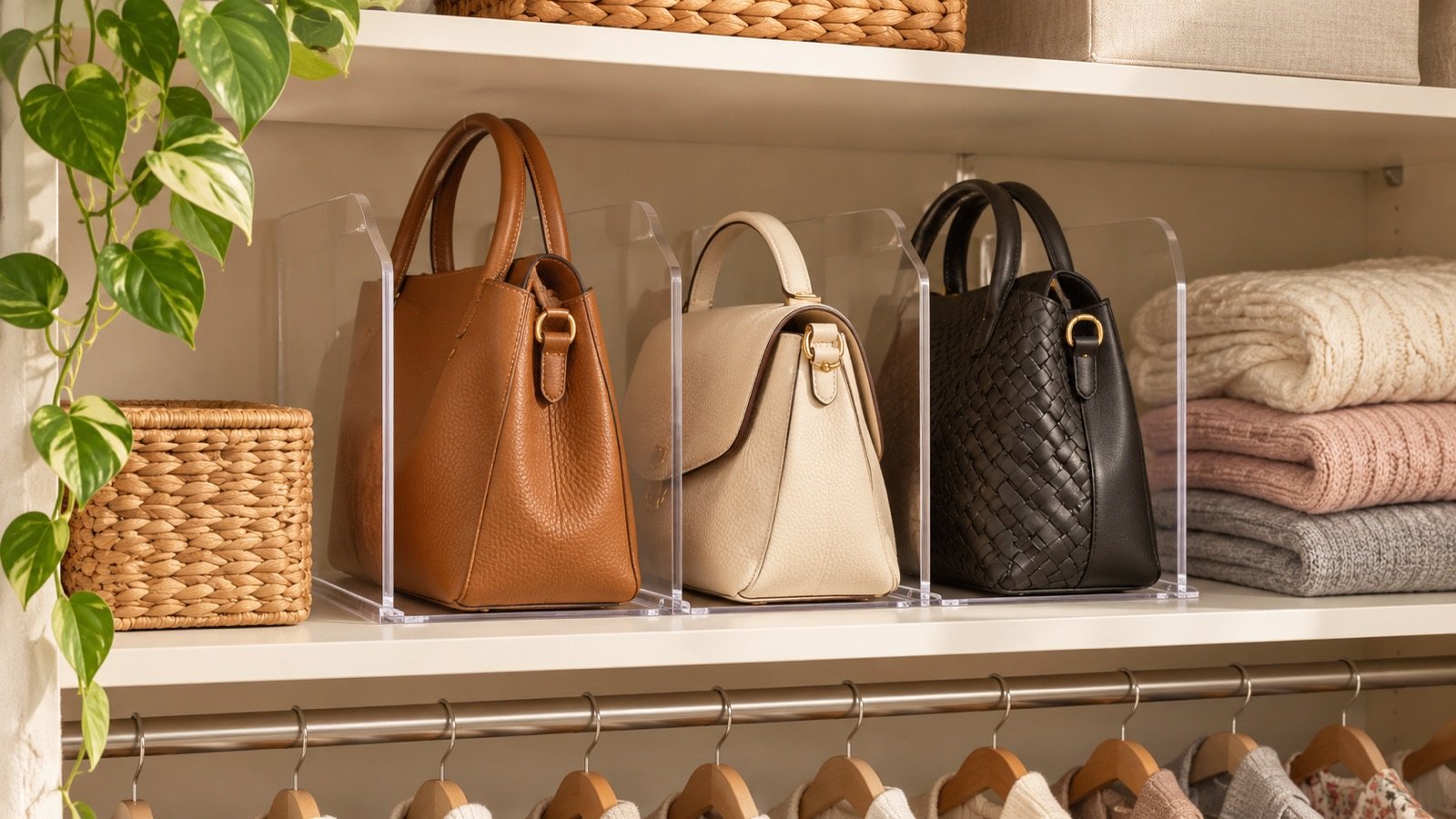
Example pictured: Lifewit Purse Organizer for Closet, Adjustable Clear Handbag Shelf Dividers
Check actual divider spacing and each bag maker's support guidance.
Start With The Bags You Actually Use
Keep the regular rotation distinct from occasional storage.
Choose a reachable location for the bags used this week. Empty and prepare them according to their care guidance before putting them away.
Keep important contents and small accessories in their own suitable home so they do not become part of the bag storage system. A few daily bags may need a simple shelf section while occasional pieces need different protection and support.
- Identify the regular rotation.
- Follow the bag's care guidance.
- Separate loose contents before storing.
Measure The Whole Stored Shape
Straps and handles take space even when the bag body fits.
Measure the bag in its recommended resting position, including handles and projections. Check shelf height and the opening through which it must pass.
A bag that fits beneath the shelf may still catch when tilted forward for removal. Keep heavier pieces where they can be handled appropriately. Avoid using a tight gap that presses on the bag just to create a uniform line.
- Include handles and projecting details.
- Check the removal angle.
- Avoid tightly wedged storage.
For the related room plan, see our closet organization ideas.
Use Dividers To Define Space Rather Than Force Shape
A shelf boundary is not a substitute for proper support.
Choose a compatible divider with surfaces and edges suited to the bag. Check its shelf attachment and intended use.
Leave enough room between dividers that the bag can be removed gently. An adjustable gap can be helpful for a changing rotation, but it should not squeeze the bag into a smaller outline. Follow the maker's advice about support within the bag itself.
- Check shelf compatibility.
- Leave gentle retrieval space.
- Follow guidance for internal support.
Be Selective About Hanging Storage
Handles do not all have the same storage requirements.
A hanging organizer may work for some suitable items, but it is not a universal solution for every material or construction. Read both the bag and organizer guidance.
Consider the loaded position, attachment and whether long straps can catch other belongings. If the method leaves a bag pulled into an awkward shape, use a more appropriate shelf or container arrangement.
- Check the bag's recommended position.
- Read the organizer's limits.
- Keep straps away from moving doors.
Keep Protective Covers Identifiable
Protection should not make the collection invisible.
Use the cover or storage method recommended for the particular bag. A small label on the storage zone can identify a covered piece without attaching anything to its finish.
Keep occasional items accessible enough to inspect as directed. Avoid assuming every plastic box or sealed bag creates suitable conditions. Material specific care takes priority over a general organizing photograph.
- Use suitable covers.
- Label the shelf or container rather than the bag.
- Keep occasional pieces accessible.
Test The Return Routine
The system should work after an ordinary day out.
Return the current bag with neighboring pieces in place. If a divider moves, a handle catches or two other bags must be taken out first, adjust the spacing.
Keep the daily group small enough to understand at a glance. Review the arrangement when the collection changes instead of continually filling the same shelf more tightly.
- Test retrieval and return.
- Leave space around the daily group.
- Review before adding more storage.
Compare The Options
Use the same actual room and belongings to compare each approach.
| Situation | Option to Compare | Check First |
|---|---|---|
| A small daily rotation | Reachable suitable shelf zone | Complete stored shape and return routine |
| Neighboring bags falling together | Compatible gentle dividers | Space and correct bag support |
| Occasional delicate pieces | Maker appropriate protection | Conditions and inspection access |
A Worked Planning Example
Illustrative measurements explain the method rather than establish a universal rule.
On an illustrative shelf with 12 inches of height, a bag body 10 inches tall may fit while its rigid handles do not.
Measure the recommended complete stored position and the removal movement. A different shelf can be a better answer than forcing the handles sideways under the shelf above.
Frequently Asked Questions
Answers to related questions found in the keyword research.
How Do You Store Handbags In A Small Space?
Keep a limited daily rotation reachable and store occasional pieces according to their care guidance. Measure complete shapes, including handles, and avoid compressing the collection to fit one tight shelf. For the wider context, see our closet organization ideas.
Keep The Practical Choice
Choose the version that serves the way the household actually uses the room.
An organized bag shelf should make choosing and returning a bag easier while respecting its construction. Uniform containers are optional; a suitable resting position is not.