Curtain Length Explained: Floor-Length, Sill-Length and In-Between
As an Amazon Associate I earn from qualifying purchases. This article contains affiliate links.
Curtain length is a decision about the window, the room and daily use. A panel that looks elegant in a still photograph may drag through a doorway, collect debris or interfere with a heater in your actual home.
Measure the finished drop from the point where the fabric will hang, not simply from the top of the window. Then choose the look that makes sense for the location. Sill-length and floor-length curtains can both be deliberate choices when they suit the job.
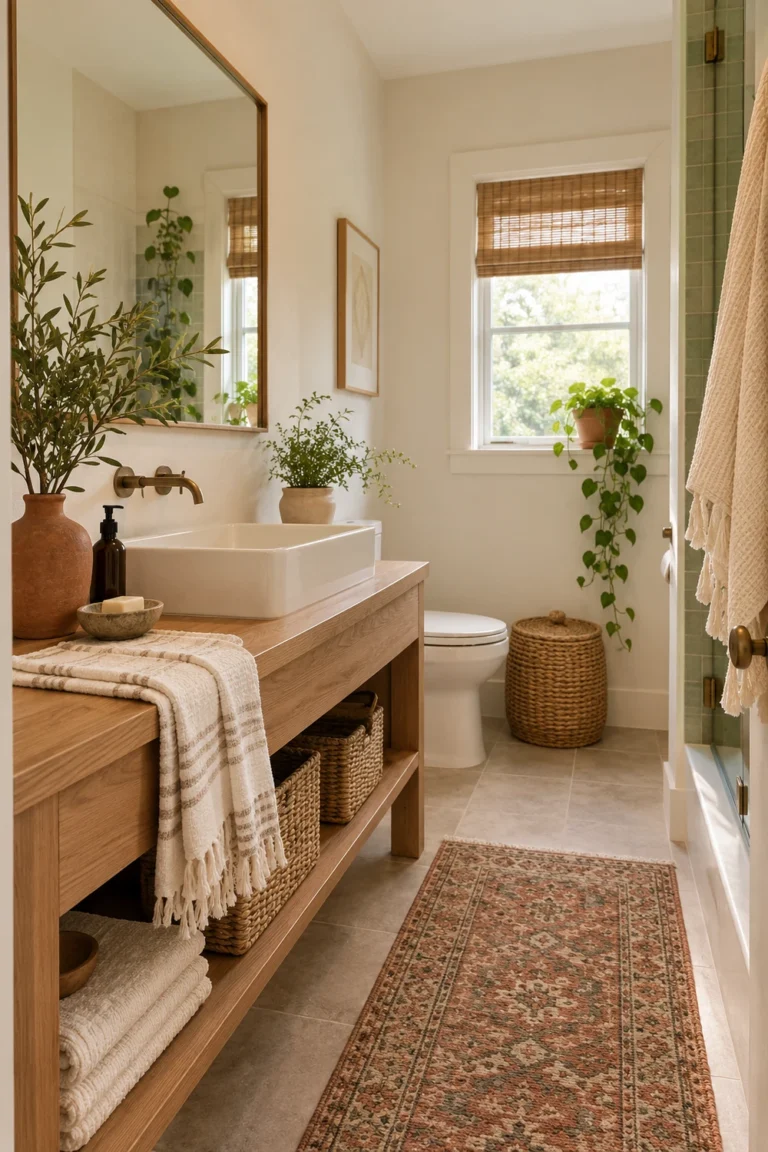
Featured image: AI-generated decorating inspiration, not a photograph of a tested makeover or a specific reviewed product.
Decide where the curtain will hang
Choose a permitted, suitable mounting position before measuring fabric. Account for the rod, rings, hooks or heading type that affects the hanging point. Check the exact hardware and curtain specifications. Measuring from an imagined rod position and shopping before it is confirmed is an easy way to get the wrong length.
Measure at more than one point
Floors, window trim and mounting points may not be perfectly level. Measure the drop at several points across the intended span and note any difference. Use those measurements to plan the finish rather than assuming one number describes the whole opening. Follow product and alteration guidance for the final fabric length.
Consider a floor-length finish
Long panels can connect a window to the larger wall and introduce a substantial textile element. Check how the lower edge relates to the actual floor and whether doors, furniture or cleaning equipment catch it. In a busy room, a deliberately controlled hem may be more practical than fabric pooled on the floor. Suitability matters more than recreating a photograph.
Use a sill-length option with purpose
A shorter curtain can suit some windows where long fabric would interfere with a surface below. Measure the actual sill and any projecting trim. Check heat sources and manufacturer guidance before selecting the arrangement. Short does not automatically mean safe or convenient; the fabric still needs an appropriate position and enough room to open normally.
Check the width as a separate measurement
Length does not determine coverage or fullness. Review the panel's usable width, the number of panels and its heading arrangement. Keep the curtain from pulling taut merely to cover the opening unless that is its intended design. Check the manufacturer's measuring guidance rather than assuming one standard multiplication works for every fabric and style.
Test color and light in the real room
The same curtain can look different beside warm wood, pale walls or a cool floor. Use a sample where available and check the room at the time of day you normally use it. Read the product description for privacy and light-control properties; a color name or a styled photo does not establish how much light a fabric blocks.
Plan care and everyday movement
Choose a fabric and finish you can maintain. Consider washing instructions, possible dimensional changes stated by the maker, and how easy it is to remove the panels. Leave access to window handles and required openings. If the practical route conflicts with the intended curtain, change the arrangement before buying a second set of hardware.
Compare the options
| Option or situation | Useful starting point | Check before choosing |
|---|---|---|
| Floor-length | A full-wall textile effect | Floor variation, traffic and doors |
| Sill-length | A defined shorter window treatment | Trim, surfaces below and nearby heat |
| Existing rod retained | Measure from actual fabric attachment | Heading, rings and hooks |
| New mounting arrangement | Confirm hardware first | Surface suitability and permissions |
A worked planning example
If the chosen fabric attachment point is 90 inches from the floor, that number is not automatically the correct product length. A ring or hook arrangement may change where the curtain's top sits, and your preferred finish may leave fabric above the floor. Draw the actual hanging method and compare it with the manufacturer's definition of panel length. This example illustrates the measurement sequence, not a universal hem allowance.
What to compare when shopping
The links below open Amazon searches for product categories, not verified exact-product recommendations. Check the specific listing, size, variant and manufacturer instructions before purchasing. No price, availability or physical testing is implied.
Curtain panels
Compare actual panel length, width, heading and care instructions.
Compare curtain panels on Amazon
Compatible hanging hardware
Check compatibility and how it changes the fabric drop.
Compare compatible hanging hardware on Amazon
Measuring tools
Measure the actual position before ordering.
Compare measuring tools on Amazon
For more ideas, explore small apartment decorating and cozy bedroom ideas.
Frequently asked questions
Where should I measure curtain length from?
Measure from the actual fabric attachment point and account for the chosen heading and hardware.
Are floor-length curtains always better?
No. Choose a suitable length for the room, window, traffic and nearby fixtures.
Does panel width matter when choosing length?
Yes. Width controls coverage and fullness and must be measured separately.
Can I rely on a product photo for privacy?
No. Check the exact fabric's stated properties and use a sample where appropriate.