Kitchen Drawer Organization for Utensils, Lids and Everyday Tools
As an Amazon Associate I earn from qualifying purchases. This article contains affiliate links.
A kitchen drawer can be neatly divided and still be difficult to use. If the measuring spoons live behind a heavy stack of tools or the tray wastes most of the depth, the layout is organized for appearance rather than cooking.
Start with the task beside the drawer. Everyday utensils, food-preparation tools and occasional gadgets do not need equal space. A clear category and a divider that fits the actual interior can make an ordinary drawer easier to maintain.
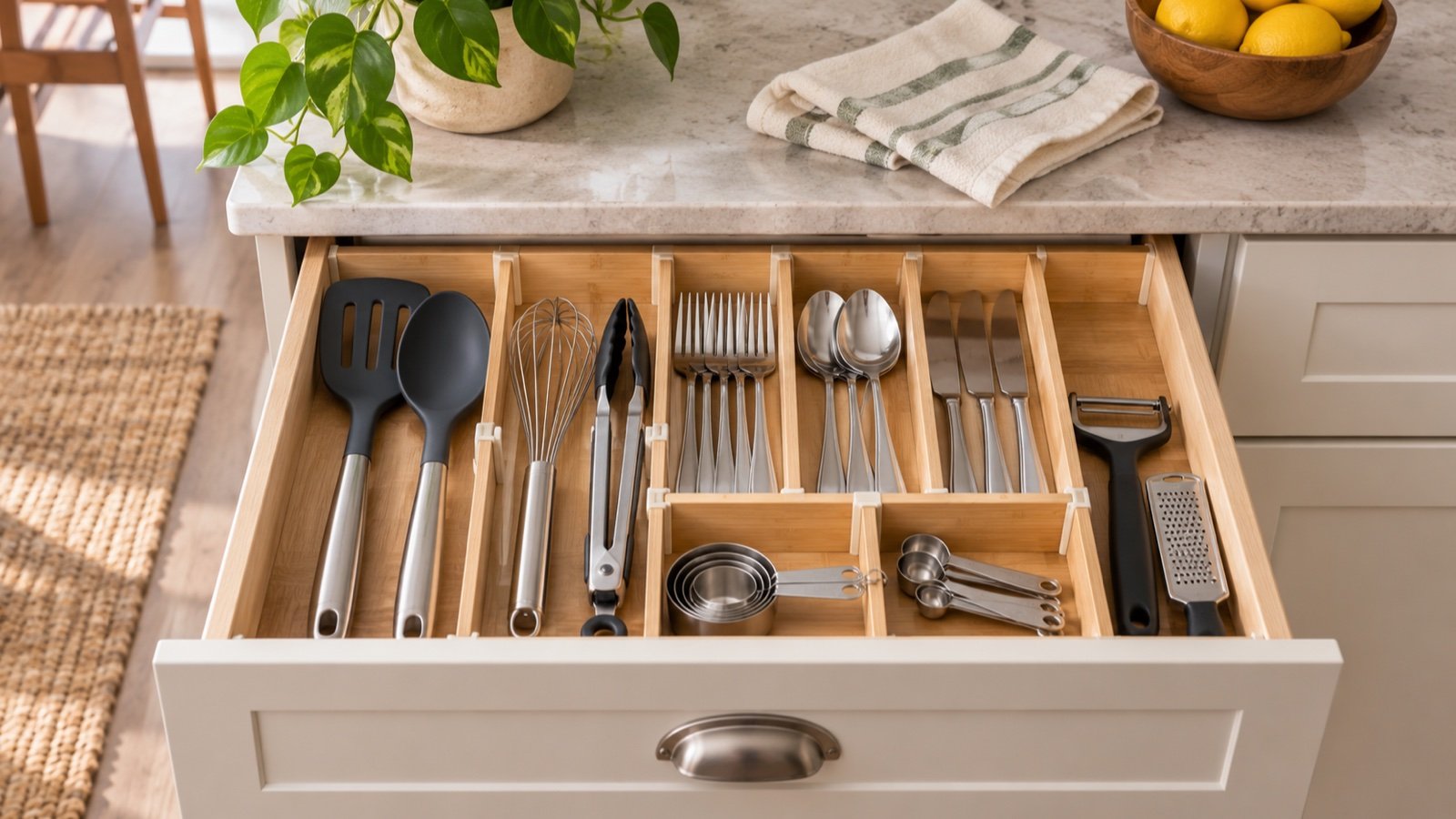
Featured image: AI-generated decorating inspiration, not a photograph of a tested makeover or a specific reviewed product.
Empty one drawer and identify its job
Choose whether the drawer should support cooking, preparation, serving or another clear task. Remove unrelated objects and check which tools are actually used there. Keep a small review group for duplicates rather than returning everything automatically. One completed drawer gives you a useful test before you buy inserts for the rest of the kitchen.
Measure inside the drawer box
Record usable width, depth and height, including any hardware that reduces space. Check the opening and how far the drawer extends. A tray's outside size must fit, while its internal compartments must fit the tools. Do not measure only the cabinet front and assume that is the storage dimension.
Compare a fixed tray with adjustable dividers
A tray gives a clear set of compartments but may leave unused strips around its edge. Adjustable dividers offer flexibility if they suit the drawer and remain secure as directed. Compare the actual tool categories before choosing. Neither system works well when its smallest compartments are filled with items too long to remove easily.
Keep long utensils together
Check the complete length of spatulas, tongs and other long tools, including handles. Give them a usable compartment or choose appropriate storage elsewhere. Avoid forcing a diagonal pile across several categories because the tray was purchased first. The layout should let you remove one tool without pulling out several others.
Store sharp items appropriately
Use storage intended for the specific sharp tools and follow product guidance. Do not leave loose blades mixed with everyday utensils. Consider who uses the kitchen and how the drawer is reached. A decorative arrangement is not a substitute for suitable protective storage and household precautions.
Give lids and bulky tools their own test
A lid rack or deeper compartment may work better than a shallow utensil tray for awkward objects. Measure complete shapes and check the drawer closes without pressure. Keep heavier items manageable and follow drawer load guidance. If an item repeatedly jams the drawer, change its storage rather than compressing the rest of the contents around it.
Reset the drawer after ordinary use
Cook with the new arrangement for a few days. Notice which tools get left on the counter or returned to the wrong section. Adjust the category or compartment before adding another organizer. A drawer works when putting the tool away is straightforward, not when the contents stay permanently arranged for a photograph.
Compare the options
| Option or situation | Useful starting point | Check before choosing |
|---|---|---|
| Small repeated utensils | Suitable fixed tray | Compartment length and easy removal |
| Mixed tool sizes | Compatible adjustable dividers | Secure fit and usable categories |
| Large lids or bulky tools | Dedicated appropriate organizer | Complete shape and closed-drawer clearance |
| Sharp tools | Purpose-designed safe storage | Protection and household access |
A worked planning example
Suppose a drawer has 17 inches of usable width and an expanding organizer is labeled 13 to 20 inches. That range does not tell you how its compartments will fit your tools at 17 inches. Check the internal arrangement at the intended width, including any side sections. Sketch the longest utensil beside the tray before ordering. This is a worked fit check, not a review of a particular insert.
What to compare when shopping
The links below open Amazon searches for product categories, not verified exact-product recommendations. Check the specific listing, size, variant and manufacturer instructions before purchasing. No price, availability or physical testing is implied. The pictured examples below link to the specific products shown; compare their current listing details before buying.
Utensil trays
Compare internal compartments and complete outside dimensions.
Compare utensil trays on Amazon Example pictured: Pipishell Expandable Bamboo Silverware Organizer, Large Kitchen Drawer Tray. View pictured product on Amazon.
Adjustable dividers
Check expansion range, fixing and drawer compatibility.
Compare adjustable dividers on Amazon Example pictured: SpaceAid Bamboo Drawer Dividers with Inserts and Labels, Kitchen Adjustable Drawer Organizers, Expandable Organization for Home, Office, Dressers, 4 Dividers with 9 Inserts (17"-22" Natural). View pictured product on Amazon.
Lid organizers
Measure the full lids and closing clearance.
Compare lid organizers on Amazon Example pictured: Joseph Joseph DrawerStore Expanding Cookware Organizer, Space saving storage for pan lids, baking trays – Grey. View pictured product on Amazon.
For more ideas, explore coffee bar organization and small-space home ideas.
Frequently asked questions
Should I buy drawer organizers before sorting utensils?
Sort first. The categories and tool sizes determine the organizer rather than the other way around.
What should I measure for a drawer insert?
Measure usable internal width, depth and height, the opening, and the tools that must fit its compartments.
Are adjustable dividers always better?
No. They are useful only if they fit securely and suit the categories. A fixed tray may be simpler for repeated small tools.
How do I keep an organized drawer practical?
Use it normally and adjust the sections where tools keep returning to the wrong place or getting left out.