Water Bottle Storage For Tall Tumblers, Lids And Everyday Bottles
This post contains affiliate links. As an Amazon Associate, I earn from qualifying purchases at no extra cost to you.
Water bottle storage gets difficult when tall tumblers, short bottles and loose lids all share one shelf. An organizer may hold the bottle bodies but leave the straws or handles in the way. The useful starting point is the collection you regularly use, including its awkward parts.
Group the bottles by usable shape, keep matching lids identifiable and measure the cabinet opening before choosing racks or dividers. Store reusable drinkware clean and dry according to the manufacturer's care instructions. This guide concerns household drinkware organization, not long term storage of drinking water.
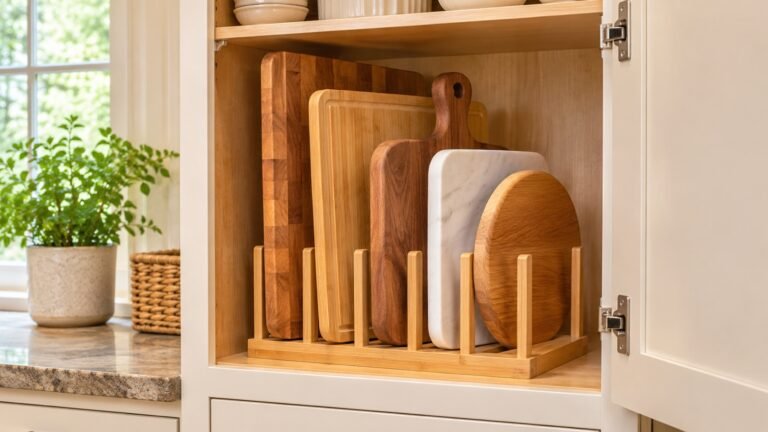
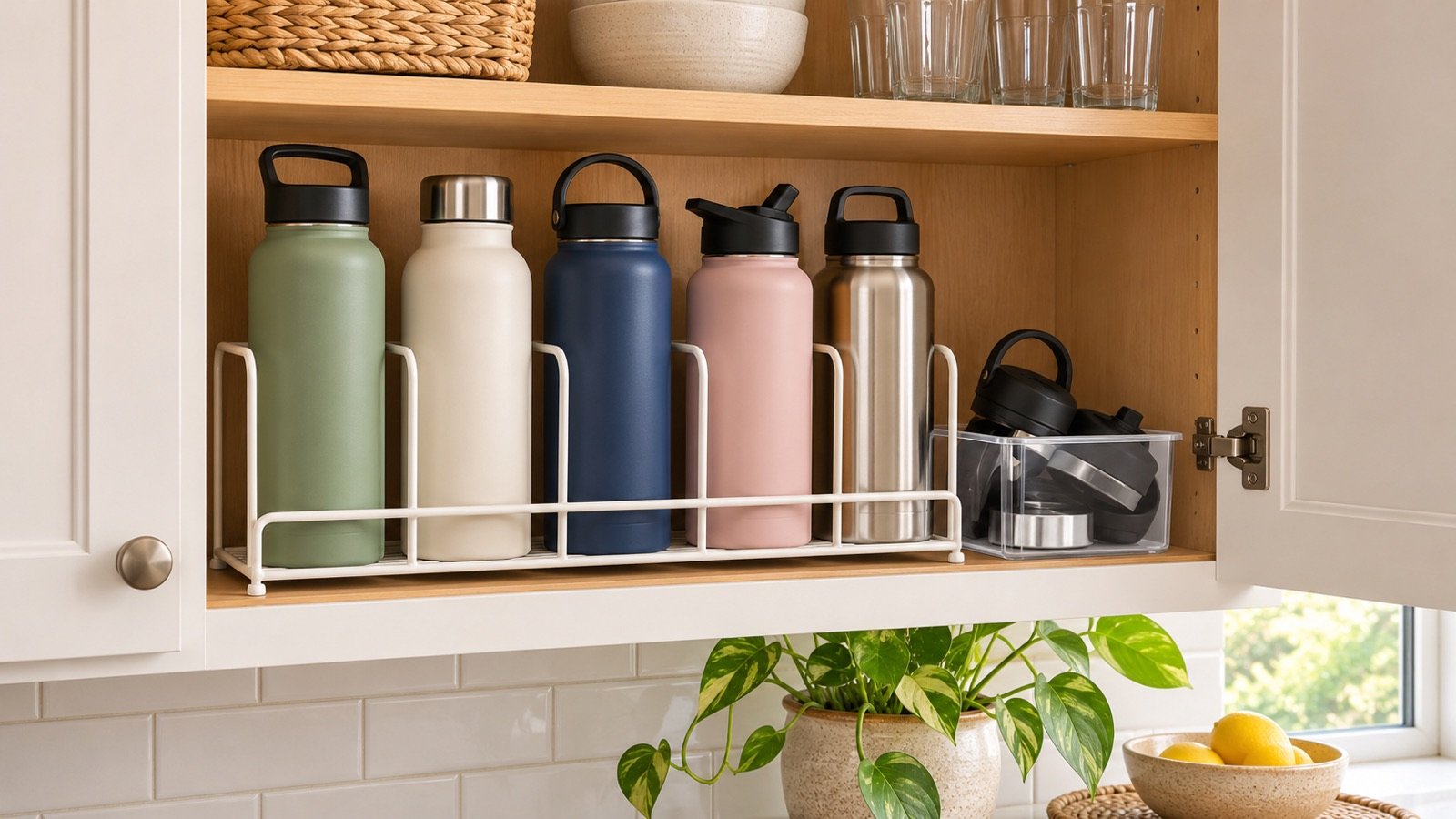
Featured image: AI generated decorating inspiration. It does not show a tested makeover or the exact products linked below.
Product Examples To Compare
Specific pictured items to compare after checking your own measurements and requirements.
These are product examples, not hands on test results or a ranked best products list. The picture and button for each example open the exact listed product. Check the current variant, dimensions, materials and instructions on Amazon before buying. Prices and availability can change.

Example pictured: LARGER Compartment Stackable Water Bottle Organizer Holder for Stanley & Others' Large Tumbler Clear Wine Rack, Cup Bottle Holder for Cabinet Home Countertop Fridge Pantry Shelf, 3 Tier Hold 9
Check each bottle body, handle and lid against the actual organizer cradles and permitted stack.
Keep The Regular Rotation Together
Begin with the bottles that actually leave the house.
Pair each reusable bottle with its compatible lid and any required small parts. Set aside pieces that do not belong to the current collection so the organizer is not designed around unusable extras.
Keep manufacturer instructions for unfamiliar components. A household with a few daily bottles may only need a defined shelf section and a small lid container instead of a dedicated multi level rack.
- Match bottles with their own lids.
- Separate daily use from occasional spares.
- Keep small parts identifiable.
Measure The Tallest And Widest Variants
Handles and lid shapes can change the required space.
Measure the complete bottle in the position you intend to store it. Include a handle, projecting lid and any straw that remains attached under its care guidance.
Check cabinet depth and the space beneath an upper shelf. A rack described for ordinary bottles may not accommodate a wide handled tumbler. Compare the actual slot or cradle dimensions rather than relying on the product category name.
- Include handles and projections.
- Measure the opening and shelf above.
- Check the actual organizer slot.
For the related room plan, see our kitchen counter organization.
Compare Upright And Horizontal Arrangements
The storage position should fit both the bottle and the shelf.
Upright storage can work on a sufficiently tall shelf, with a divider to prevent the group spreading. A purpose designed horizontal rack can make bottles visible if their shapes sit properly in its supports.
Follow the rack's limits and the drinkware's storage instructions. Do not assume a stackable rack can be built to any height or that a round bottle will sit securely on an improvised shelf.
- Check how each bottle rests.
- Follow stacking instructions.
- Keep the loaded arrangement stable.
Give Lids A Small Visible Home
A separate container should make matching easier, not create a new mystery box. If a shallow drawer suits the loose parts better, use these kitchen drawer organization ideas to check compartment depth and everyday access.
Keep compatible lids together and avoid filling the bin with unidentified spares. A shallow tray can be easier to scan than a deep container.
Store cleaned components as directed and keep them dry before putting them away. If several bottles look alike, a simple household label on the storage zone may help without covering any needed product information.
- Use a shallow view where possible.
- Avoid unidentified spare parts.
- Keep labels on the storage zone.
Test The Cabinet With Its Door Closed
A neat open shelf can hide a clearance problem. For boards stored in the next section, our cutting board storage guide covers slot width, handles and cabinet-door clearance.
Place the actual bottles in the proposed arrangement and close the door normally. Check the hinge area and the route used to remove the largest bottle.
A rack that fits at the center may interfere with a hinge or a curved cabinet frame. If the tall item makes every other bottle difficult to reach, give that item a separate suitable location rather than redesigning the whole shelf around it.
- Check the hinge area.
- Try removing the largest item.
- Do not force the door closed.
Keep The Daily Return Simple
The system needs to work after washing, not just before a photograph.
Try putting away the clean dry collection after a normal wash cycle according to the product guidance. If there is no obvious place for lids, or the rack must be dismantled to return one bottle, simplify the arrangement.
Keep a little space for a bottle temporarily in use. A defined capacity also makes it easier to decide whether the household needs another new tumbler.
- Test returning all cleaned components.
- Keep a defined capacity.
- Review the system when bottle shapes change.
Compare The Options
Use the same actual room and belongings to compare each approach.
| Situation | Option to Compare | Check First |
|---|---|---|
| A few similar bottles | A defined upright shelf zone | Usable height and base stability |
| Several compatible round bottles | Purpose designed horizontal rack | Cradle fit and stacking limits |
| Mixed lids and accessories | A shallow separate tray | Identification and dry storage |
A Worked Planning Example
Illustrative measurements explain the method rather than establish a universal rule.
A cabinet may have 11 inches of usable height while a handled tumbler stands 12 inches tall. A horizontal rack could be considered only if the complete tumbler fits its cradle and the shelf depth.
Measure rather than assuming that rotating the bottle solves the problem. A different shelf position may be the simpler choice.
Frequently Asked Questions
Answers to related questions found in the keyword research.
How Do You Store Water Bottles In A Kitchen?
For reusable drinkware, identify the matching lids, measure the complete shapes and choose a reachable cabinet arrangement that fits them. Follow the drinkware care instructions and put components away clean and dry. For the wider context, see our kitchen counter organization.
Keep The Practical Choice
Choose the version that serves the way the household actually uses the room.
The best bottle storage lets you take one complete bottle without disturbing the rest. Keep the arrangement around your regular collection rather than an idealized matching set.