Jewelry Organizer Ideas: Drawers, Trays Or A Small Wall Display?
This post contains affiliate links. As an Amazon Associate, I earn from qualifying purchases at no extra cost to you.
Jewelry organizer ideas work best when they separate the pieces that tangle from the pieces that disappear. A necklace needs a different arrangement from a pair of small earrings, and an attractive open display may not suit every material or household. Begin with the items you wear regularly and their care requirements.
Compare a shallow drawer tray, a suitable necklace stand and a small closed case by piece size, care and access. Keep daily items visible enough to find without crowding them together. For valuable or delicate pieces, follow the jeweler's care and storage advice rather than assuming one organizer protects everything.
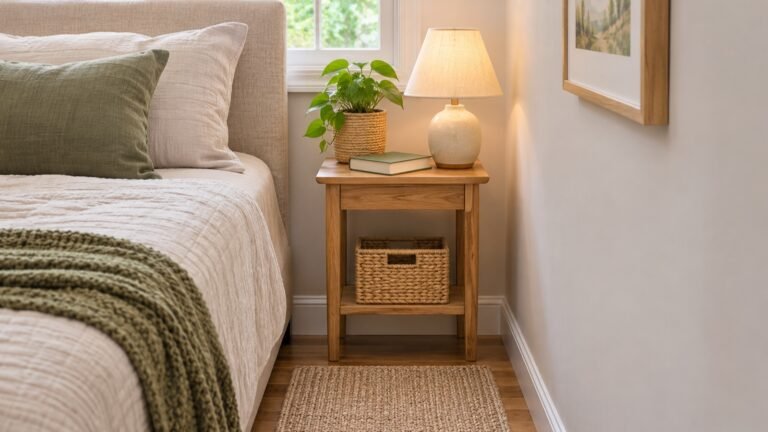
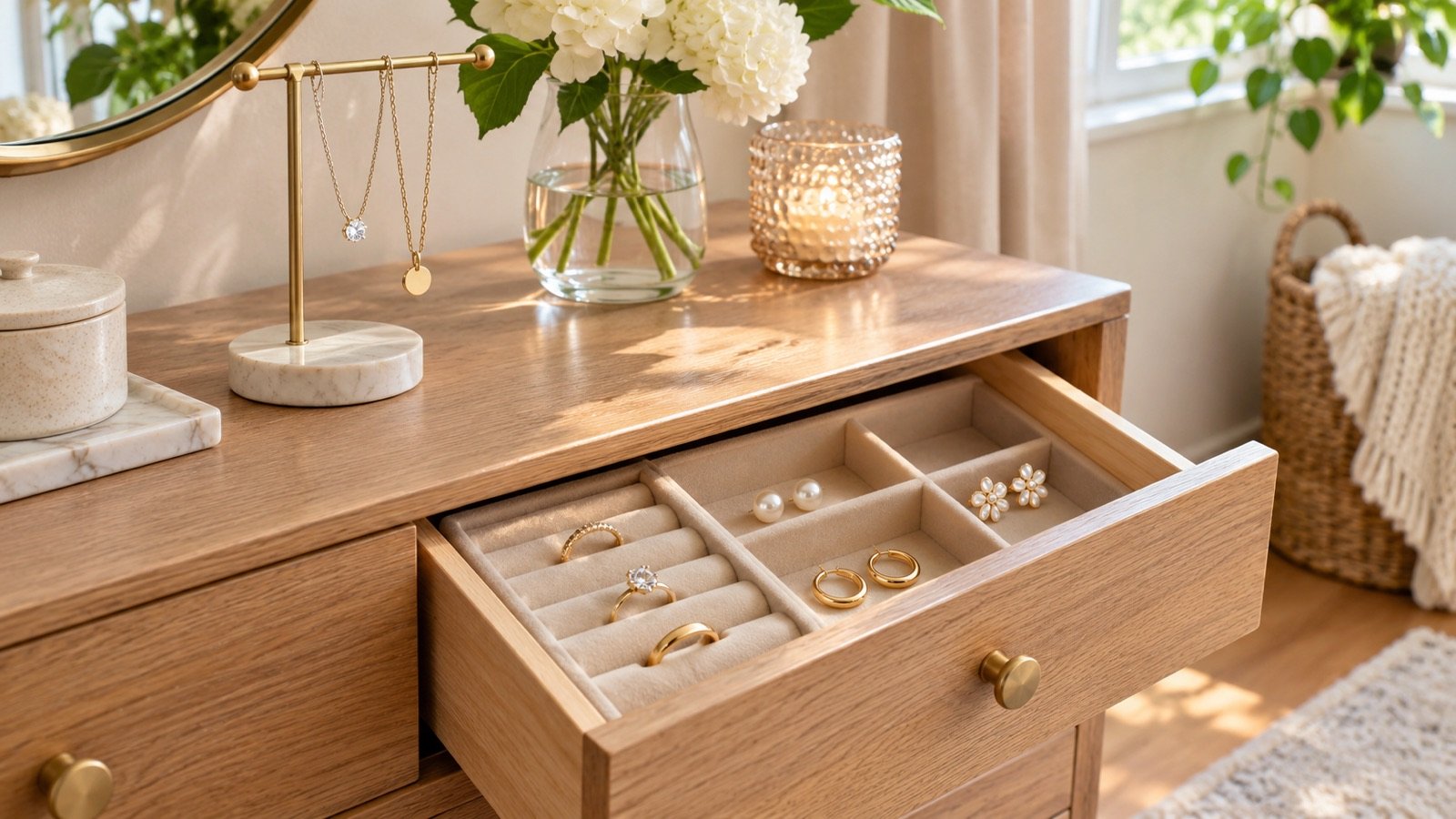
Featured image: AI generated decorating inspiration. It does not show a tested makeover or the exact products linked below.
Product Examples To Compare
Specific pictured items to compare after checking your own measurements and requirements.
These are product examples, not hands on test results or a ranked best products list. The picture and button for each example open the exact listed product. Check the current variant, dimensions, materials and instructions on Amazon before buying. Prices and availability can change.

Example pictured: Jewelry Trays for Drawer,Set of 9 Jewelry Organizer and Storage
Check compartment dimensions and suitable contact materials for your particular jewelry.
Sort By How The Pieces Need To Rest
Shape and material are more useful than a matching color scheme.
Separate necklaces, earrings, rings and larger accessories. Identify pieces with individual pouches or specific care instructions.
Keep unfamiliar materials out of a shared treatment routine until their guidance is clear. The organizer should make the collection easier to see without bringing incompatible pieces into unnecessary contact. A small group used every day can have a different home from occasional jewelry.
- Separate pieces that tangle.
- Keep individual care instructions.
- Define the daily rotation.
Use Shallow Trays For Small Items
Visibility matters more than the maximum compartment count.
Check each compartment against actual pieces, including earring backs and wider rings. A very small grid can leave no useful room for larger items.
Choose lining and contact surfaces suitable for the jewelry. Make sure the tray fits the drawer and that the drawer closes without touching projecting pieces. A removable tray can be useful if it remains stable and easy to handle.
- Check actual compartment sizes.
- Match contact surfaces to the pieces.
- Test the drawer fully closed.
For the related room plan, see our closet organization ideas.
Compare A Necklace Stand With Separate Compartments
Length and tangling risk influence the arrangement.
A suitable stand can display a few necklaces where the location and care requirements allow it. Check the longest piece and the available drop so it does not bunch at the base.
A closed individual compartment may be a better option for other items. Avoid turning a stand into a dense cluster of chains simply because it has several hooks.
- Measure the longest drop.
- Keep chains individually accessible.
- Use closed storage where appropriate.
Check The Location Before Creating An Open Display
The environment is part of the storage choice.
A dressing area and a damp bathroom do not offer the same conditions. Follow material specific guidance about moisture, light and storage.
Keep the arrangement appropriate for children, pets and the household's security needs. Do not assume a decorative organizer is a security device or that an attractive lining prevents tarnishing without verified product and material information.
- Check environmental requirements.
- Consider household access.
- Avoid unverified protection claims.
Give Occasional Pieces A Separate Identifiable Home
Everyday access should not disturb the whole collection.
Keep items used less often in suitable individual protection where advised. A simple inventory of locations can help you find them without opening several cases.
Keep original product or care details where useful. Do not label valuables conspicuously or turn a private storage system into a public display simply for a decorating effect. Practical discretion can be part of a calm dressing area.
- Separate occasional pieces.
- Retain useful care details.
- Keep the location system simple.
Test The Getting Ready Routine
You should be able to select and return a piece gently.
Try the arrangement during a normal morning. Notice whether an earring back falls through a gap or a necklace catches on another piece.
Adjust the compartment size or reduce the display. Keep a defined place for the item you remove in the evening, if that fits its care guidance. The arrangement should reduce searching without encouraging rushed handling.
- Try the morning selection.
- Check small removable parts.
- Make evening return straightforward.
Compare The Options
Use the same actual room and belongings to compare each approach.
| Situation | Option to Compare | Check First |
|---|---|---|
| Rings and small earrings | Suitable shallow tray | Compartments and material contact |
| A few appropriate necklaces | Correctly sized stand | Drop, spacing and location |
| Occasional delicate pieces | Jeweler recommended individual storage | Material guidance and access |
A Worked Planning Example
Illustrative measurements explain the method rather than establish a universal rule.
A necklace with an illustrative 16 inch hanging drop will bunch on a short stand if the usable clearance is less than that.
Measure the actual piece and stand, including the base. A separate appropriate compartment may be easier than folding the chain into a crowded display.
Frequently Asked Questions
Answers to related questions found in the keyword research.
How Do You Store Jewelry?
Separate pieces by shape and care needs, avoid tangling or unnecessary contact and follow the jeweler's material specific guidance. Choose suitable trays, individual compartments or stands around those requirements. For the wider context, see our closet organization ideas.
Keep The Practical Choice
Choose the version that serves the way the household actually uses the room.
Choose an organizer around the pieces you own rather than filling a large organizer with more pieces. A small arrangement with clear boundaries can be easier to use and care for.