Entryway Shoe Storage: Bench, Rack or Slim Cabinet?
As an Amazon Associate I earn from qualifying purchases. This article contains affiliate links.
Entryway shoe storage works only if people will use it when they arrive home. A closed cabinet can look tidy while being inconvenient for wet boots, large shoes or a busy family routine. An open rack may be less decorative but easier to use.
Compare a bench, rack and slim cabinet by the footwear you actually store. Count everyday pairs, measure the largest ones and decide where occasional shoes belong. The right system is the one that keeps the route clear without requiring a complicated reset each evening.
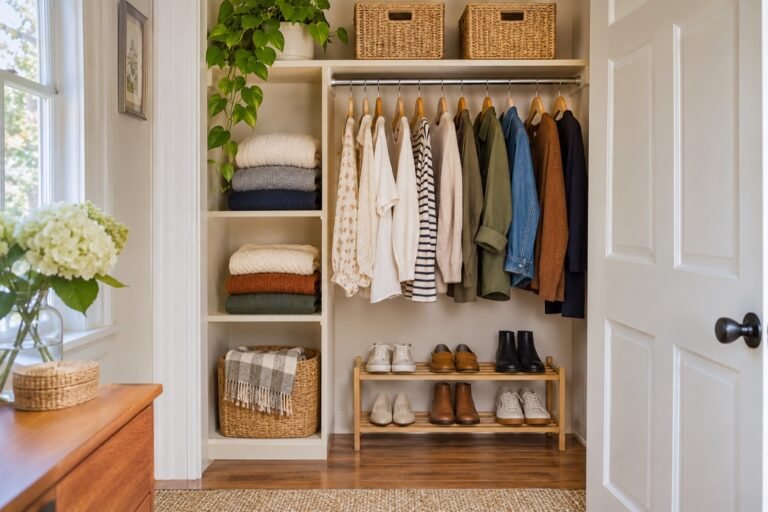
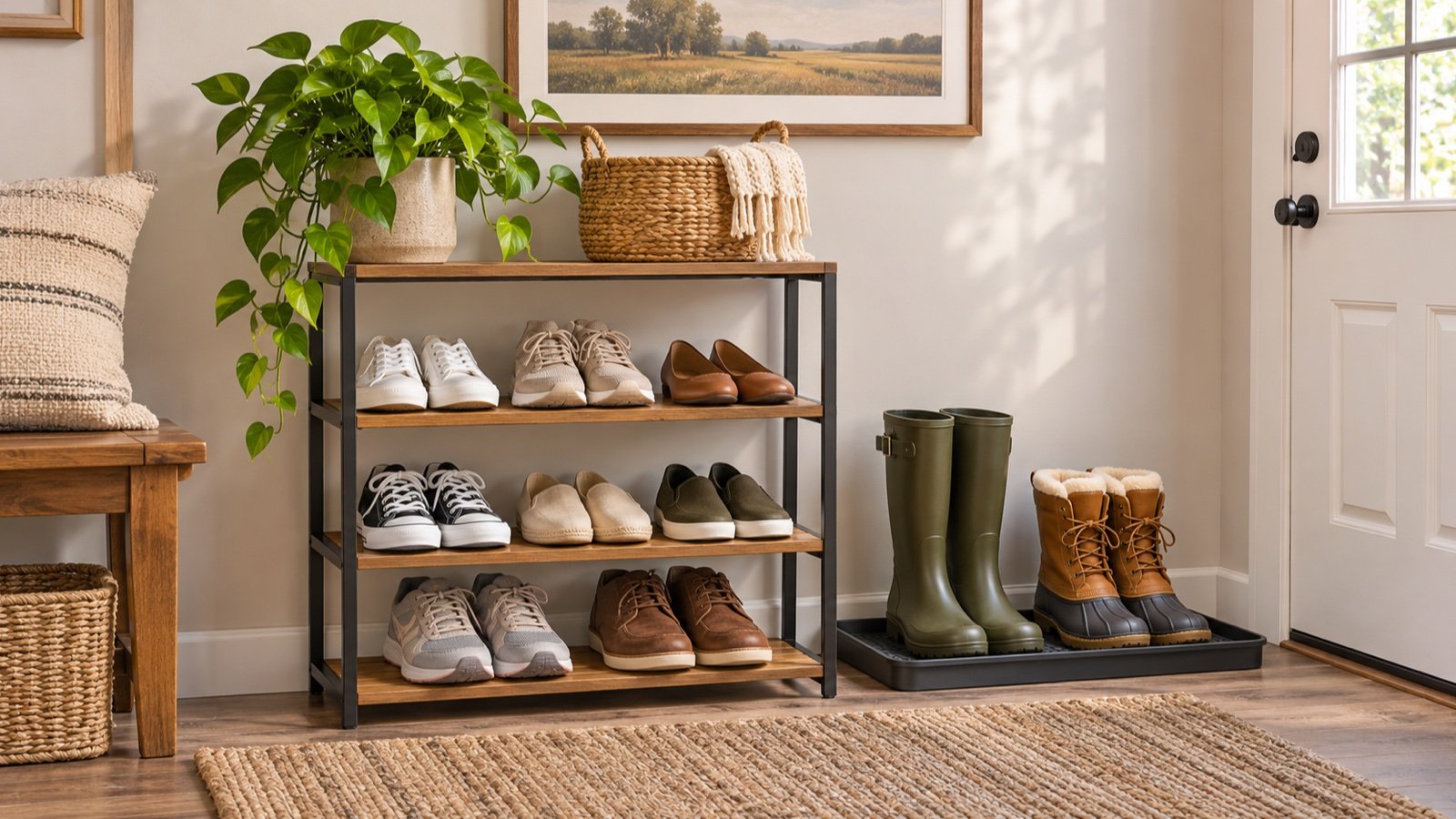
Featured image: AI-generated decorating inspiration, not a photograph of a tested makeover or a specific reviewed product.
Count everyday pairs before buying capacity
Separate the shoes worn regularly from occasional footwear. Choose a realistic entryway quantity and store the rest elsewhere if appropriate. Product capacity labels often depend on shoe size and arrangement. Measure actual pairs rather than assuming a photograph shows the same footwear as your household. Leave room to take one pair out without disturbing everything around it.
Choose an open rack for simple access
A rack keeps footwear visible and can be convenient for daily use. Check shelf depth, spacing and the way longer shoes sit. Make sure nothing projects into the walking route. Open storage also shows the contents, so a smaller clearly defined group may look calmer than a larger rack filled beyond its intended capacity.
Use a bench when sitting is a real need
A suitable stable bench can combine a seat with shoe storage. Check its intended seating use, rated load and usable space below. Make room to sit and stand without catching the door. If the seat becomes a permanent landing place for bags, consider whether separate bag storage would keep the bench useful.
Inspect the internal geometry of a slim cabinet
Tilt-out or shallow cabinets can have internal arrangements that suit some shoes better than others. Review usable compartment dimensions and the maker's capacity guidance. Include door opening and installation requirements. Follow anchoring instructions; a slim footprint does not eliminate stability considerations. Do not assume every shoe cabinet is suitable for wet footwear or the conditions beside an exterior door.
Give wet or dirty footwear a suitable place
A boot tray can contain a limited number of shoes while keeping the walking route clear. Check the tray's dimensions and care needs, and allow footwear to dry as appropriate for its materials. The tray should be easy to remove and clean. Avoid sealing damp items inside storage simply to hide them from view.
Plan the handoff to the rest of the home
Use the entryway for current needs and return occasional shoes to a closet or other suitable location. Give household members an agreed limit. Reassess the system when seasons change rather than adding another rack whenever boots arrive. Keep the route and door swing visible as the collection changes.
Compare the options
| Option or situation | Useful starting point | Check before choosing |
|---|---|---|
| Open rack | Quick access and visible pairs | Shelf spacing and projecting shoes |
| Storage bench | Seating plus a limited shoe area | Rated seating use and room to stand |
| Slim closed cabinet | A quieter visual front | Internal fit, opening and anchoring |
| Boot tray | Suitable temporary wet-shoe area | Cleaning, drying and a clear route |
A worked planning example
A rack advertised for several pairs may not hold your largest shoes in the arrangement pictured. For a worked check, measure one pair at its actual stored width, then compare that with the usable shelf span. Include supports that take away space. Repeat with winter footwear before choosing the system. This comparison is more useful than assuming an advertised pair count describes every household.
What to compare when shopping
The links below open Amazon searches for product categories, not verified exact-product recommendations. Check the specific listing, size, variant and manufacturer instructions before purchasing. No price, availability or physical testing is implied. The pictured examples below link to the specific products shown; compare their current listing details before buying.
Open shoe racks
Compare usable shelf space and shoe projection.
Compare open shoe racks on Amazon Example pictured: 2-Tier Bamboo Small Shoe Rack Premium Stackable Shoe Shelf Storage Organizer for Hallway Closet Living Room Entryway Organizer (Natural Bamboo). View pictured product on Amazon.
Storage benches
Verify seating use, dimensions and load guidance.
Compare storage benches on Amazon Example pictured: SONGMICS Shoe Rack Bench, 3-Tier Bamboo Entryway Bench, 27.6 Inches Width. View pictured product on Amazon.
Boot trays
Check complete footprint, cleaning and material suitability.
Compare boot trays on Amazon Example pictured: Stalwart All-Weather Outdoor or Indoor Boot Tray, Black. View pictured product on Amazon.
For more ideas, explore closet organization and small apartment decorating.
Frequently asked questions
Is a shoe cabinet better than an open rack?
It depends on access, shoe fit, ventilation needs and the appearance you prefer. Compare usable capacity rather than outside size alone.
Can I trust an advertised shoe-pair count?
Treat it as product guidance for a particular arrangement. Check the size of your actual footwear and usable compartment dimensions.
Does a narrow shoe cabinet need anchoring?
Follow the exact manufacturer's installation and anchoring instructions. Narrow furniture can still require secure support.
How many shoes should stay by the door?
Keep a manageable everyday selection and move occasional pairs elsewhere if space is limited.